Showing posts with label guest post. Show all posts

Thursday, 16 April 2020

Guest Post: 5 Must-Do Book Marketing Tips


Today I have a guest post from author Jenn Gott with some helpful marking tips.
Enjoy.


Image by mohamed Hassan from Pixabay


5 Must-Do Book Marketing Tips to Action Before Your Book Launch

So you’ve written and edited your book to perfection, and now you’re finally ready to take the plunge. Launch day is the moment every writer dreams of — but before you go planning the perfect launch party and acceptance speeches for the many prizes you hope to win, you need to make sure that people actually find out about your new book. And the only way to do that is through marketing.
I can hear some of you groaning already, but I promise: marking doesn’t have to be a chore. In fact, the fundamentals of how to market a book really aren’t that bad! The trick is to understand what actually works, and which common suggestions are just wasting your time and money. With that in mind, let’s take a look at the 5 key things you’ll want to get right before you launch.

1. Commission a cover that sells


There’s no getting around it: your cover is a powerful marketing tool. It’s the first thing most people see, and the single biggest way to get someone to go “ooh, that looks cool!” in a sea of Amazon search results.
A great cover is a work of art, but that doesn’t mean they’re created in a vacuum. Effective covers all share several key elements that make them truly “work,” such as:
  • A clean, striking font that is readable at thumbnail size
  • Artwork and design in line with the covers of bestsellers in your genre
  • A clear sense of the book’s tone
  • Appropriate balance of the various cover elements (title, images, author name, etc.)

If that seems like a lot to juggle, don’t worry; you don’t need to try to make the cover yourself. In fact, unless you’re already a graphic designer branching out into writing, you probably shouldn’t.
Luckily, there are more than enough cover designers out there who are fit for the job and your budget. When browsing their portfolios, make sure to consider not only the quality of the work itself, but whether they work in your book’s genre. While a good cover designer should be able to study a new genre and create something fitting, it will save them time (and save you money) if you choose someone who’s already comfortable in the style you’ll be asking them to convey.

2. Nail your book’s description


Once you’ve gotten them to click on your gorgeous cover, the next thing readers are going to do is read the book’s description. After all, they’ve gotten some sense that this is a book they’ll like, and now they’re looking to either confirm or deny it. This is the moment of truth, so it’s crucial that you get it right.
To craft your book description, try to go back to the core of what excited you when you first started writing the book. Was it the characters? The wildly inventive world? A plot with a twist that took your breath away? Chances are, whatever compelled you to write the book is likely going to be a hook you can use to snare readers’ attention, too. 
Identifying this draw will also help you identify the central promise that your book makes to the readers. It’s those two things — the hook and the promise — that you’ll want to build your description around, as these are elements that make books irresistible to readers.

3. Choose your Amazon categories wisely


If there’s one marketing technique that new authors fail to maximize, it’s this. So many people don’t even consider their categories until they go to upload their book, and by then they’re so exhausted by the publishing process that they don’t necessarily do a good job.
I mean, I get it. You know your book’s genre the whole time you’re writing it, so surely picking a category is just a matter of finding that genre on Amazon’s list… right?
Not exactly. For one thing, there’s an abundance of subgenres in there to choose from — a lot more than you’d think, if you’ve never sat down and browsed them before. You might know you’re writing a fantasy, but is it sword & sorcery, alternate history, or dark fantasy? Is it a coming of age? Does it feature dragons and magical creatures? It is an Arthurian fantasy, a military fantasy, or a romantic fantasy?
This is just a small sampling of the many ways your book can be categorized on Amazon. Each of these categories has a different number of titles to compete with, and each of them also has a different number of fans that you’re all vying for — the trick is to find that “sweet spot” where there’s a lot of interest, but not as much competition.

Of course, you don’t want to lie and misfile your book just because it’s an easy category in which to climb the ranks. That isn’t fair to people who are actually writing in that subgenre — and ultimately won’t help you either, once reviewers start complaining that your book isn’t what it claims to be.
But there may easily be multiple categories that can apply to your book (say, a coming-of-age romantic fantasy about dragons). You’ll want to pick the ones that provide you with the best chance of success, while remaining truthful to what the book is.

4. Gather early reviews 


When it comes to reviews, there really is no such thing as too early. Well, okay — you shouldn’t be trying to get people to leave you a review before you’ve even written the book, but so long as you have a complete story that is at least 95% the same as it will be on release day, there’s no reason to hold back!
Putting together an early review copy of your book really isn’t significantly different than creating a final version. Just be sure to label it as an advanced proof, and make sure that anyone who’s reviewing it knows it’s still subject to a few changes. Then just start reaching out to people. Whether you approach book bloggers, try to form a street team, or use an editorial review service, there are plenty of readers ready and eager for a free copy of a pre-release book.
And if you’ve never seriously considered preorders before, now’s the time. Preorders will not only allow early reviewers the ability to post reviews before release day, but they’ll also give you time to adjust your description and Amazon categories to see what works best for your audience, effectively raising your sales rank before your book has even launched. It’s a single action that packs a triple-combo marketing punch.

5. Prepare your author mailing list 


Selling your book is great, but you know what’s even better? Ensuring that you’ll be able to sell those same readers your next book as well.
Enter the author mailing list, easily one of the most valuable tools in your marketing arsenal. Why? Because it provides access to your previous readers with minimal additional effort, so you can spend most of your time reaching out to new readers. You can then add these readers to your mailing list, so that they’re already taken care of when your next book comes out, and you can spend your time reaching even more readers. It’s snowball marketing, constantly adding to your reader base as you charge ahead.
That said, simply having the mailing list isn’t going to cut it. To properly utilize the marketing power of this approach, you’ll need to make sure that enough readers want to actually sign up!
To that end, you should create a “reader magnet” — essentially, a free sample of your work that serves to a) entice new readers to give you a try, and b) reward loyal readers for their dedication to your work. This can take the form of a free chapter (or several, if you’re trying to get people interested in multiple books at once), a short story, or even a whole book.
Then it’s just a matter of getting the word out! Be sure to mention the reader magnet everywhere you link to your mailing list, such as all your social media profiles, as well as the front and back matter of your books.

And there you have it! By putting in just a little marketing time at the launch of your book, you’ll lay the foundation for healthy, sustainable book sales, which will ultimately free up time to do the next important part: writing the sequel.


Jenn Gott is an indie author and a writer with Reedsy, a platform that connects authors with the world's best publishing resources and professionals. In other words, Jenn basically spends all her time either writing books or helping people learn how to write books! She firmly believes there is no writing skill you cannot learn with practice and the right guidance.

Monday, 17 September 2018

Scath Oran Blog Tour: The Banshee

Today, the blog is a stop on the Scath Oran book tour and I have a guest post by author Stacy Overby on one of my favourite subjects, the Banshee. I also have a look at Stacy's new poetry book, Scath Oran, so enjoy.


The Banshee


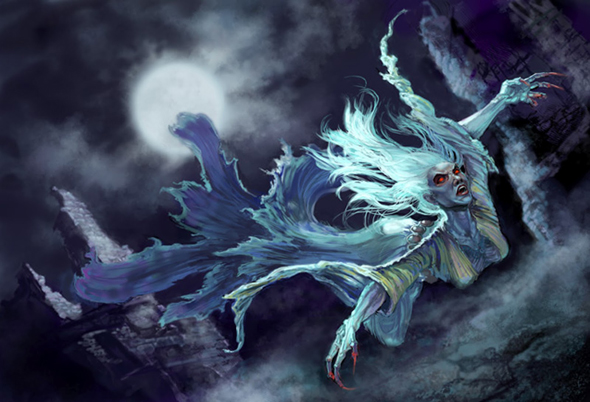
Banshees. They’re the quintessential mythical creature when it comes to creepiness and death. Many movies and stories include them, but what—beyond their shriek—do the stories tell about banshees? That question drew me to explore the myths surrounding banshees when writing Scath Oran.


Banshee Origins

The origins of the banshee are somewhat clouded, but one drew my attention. It is said that the banshees came from women who died during childbirth. These women-turned-banshees roamed, portending death, until they reached what would have been the end of their natural life. None of the myths talked about what happened from there, but the implication is that they passed into their version of Heaven or paradise. Other legends talk about banshees being created from women who were murdered. It seems that, regardless of the method, legends say banshees are created from women who meet tragic ends.
With this origin myth, the banshees would presumably appear as young women. While that was sometimes the case, it did not always hold true. This is one place where the Celtic belief in Maiden, Mother, Crone shows up. Just as often as the banshee appeared young, she also would appear as an older woman to an old “hag”. Another image from Scotland painted of the banshee was a woman washing bloodied clothes at the ford in a river. The one who saw her there washing the bloodied clothes would soon die.


The Banshee Cry


The keening and wailing of the banshee is perhaps the most classic aspect of the banshee, and the one most often thought of when the banshee are mentioned. Most legends agree that this cry is about warning someone of impending doom. Some legends say the banshee only cry at the death of a true blood Milesian Irish. Others talk about the number of banshee keening signified the greatness or holiness of the person who died.
Scholars believe the wailing of the banshee stems from a different Irish tradition. At funerals, the Irish would hire keeners to wail laments at a death. The better the keener, the more in demand she was. With this association with death and funerals, it is easy to see how this tradition crossed the line to become something more in legends.


The Fairy Connection

Another interesting aspect of banshees is that some Irish believed the banshee was a fairy woman who would bear the news of a loved one’s death. This held true even when the person died far from home and family. Thus, the banshee would be the herald bearing the news of the death before any human messenger could bring the sad tidings.

Also Known As

The banshee had multiple other names as well. She could be known as the bean chaointe, or keening woman. Bean nighe, or other variants, meaning little washerwoman or washer at the ford, is a Scottish variation to the banshee myth. The hag of the mist was yet another variation of the banshee stemming from Welsh legends. Which name was used depended on the region in which the story originated.


Other Facts


The intentions, and dangerousness, of the banshee also varied depending on the legend being studied. Some banshees were said to be closely tied to their families and their cries were sorrowful laments of the loss to the family. Other banshee legends talked of angry and vengeful female spirits who frightened and tormented those who heard her cries. A few even speak of the banshees causing the deaths they sang of, rather than just reporting them.
One of the most intriguing pieces of information on the banshee I found was about the beliefs in banshee. For many centuries, not believing in banshee was blasphemous in the British Isles—Ireland in specific. While this has waned in modern times, there are still those who believe in the existence of banshees as something more than myth and legend.


So, there you have it, a brief history of the banshees. They are featured several times in Scath Oran, including a story about how one banshee came to be. Scath Oran is available on Amazon and Draft2Digital. You can find me at www.thisisnothitchhikersguide.com.


Scath Oran: poetry from the Otherworld by Stacy Overby 


The Wee Folk. The Fae. Fairies.

Whatever you may call them, they have whispered secrets in this collection of poetry plucked from the halls of Tír na nÓg. But, be forewarned, not all is as it seems on a journey through the shining realm. Come, take a step into the fairy ring as songs of the Fae drift on the damp night air. 

Scath Oran: poetry from the Otherworld
releases September 22nd, 2018 and is available at
Draft2Digital


For more stops on the tour check out the list: Scath Oran Blog Tour


Tuesday, 10 July 2018

The Dark Archer Blog Tour: A Guest Post by Robert Cano

Today we join the blog tour for the new dark fantasy release, The Dark Archer by Robert Cano, with a look at the book and a delightful guest post by the author. Enjoy!


The Dark Archer by Robert Cano


~The light had no equal in this place, no balance with which to suffer the loss of day, and she wondered about the nighttime.  Is this why the stars were crying?~


All he wanted was the safety of his princess. What he received was eternal torment. 
Bereft of a soul, a wraith who should have no ties to humanity, Bene wants nothing more than release from his twisted existence. Trapped between life and nothingness, he hopes to reclaim his soul and find the death he so desperately desires.
Bene finds rare solace in the company of Feorin, a satyr war hero who chose exile over continuing the centuries long war with the Fae. He doesn't look at Bene with fear or contempt, but rather hope. If a wraith can find a path to redemption, perhaps he could as well…


The Dark Archer is available for pre-order at Amazon.
Also available at Smashwords and at Amazon Canada 

It releases July 26th, 2018.


~He felt an overwhelming sense of dread at the prospect of what his life had become in such a short time. Once in service to the greatest kingdom in the world, he was now a literal nothing with a physical form.~


 Darkness by Robert Cano


The worlds we have all come to love and know, whether based in our own world, or based in some form of fantasy setting, require some level of darkness; something antagonistic, to counter our favorite protagonists.   What constitutes darkness may change with every tale, and we are required to ask again: What is light?  What is darkness?  Is there only pure evil or pure good to be found in either? Over the last century, or so, we have seen a trend where darkness is not the result of pure evil, but of the inconsistencies in the human soul. Today fantasy gives us an opportunity to explore the human condition in magical and fantastical ways, but make no mistake, we are still exploring humanity, even if wearing another face.
When we look at authors like Tolkien, or perhaps Lovecraft, with his Cthulu mythos and the world surrounding that, we see Big Bads.  Pure evil is in the form of something tangible, with honor strewn throughout the world, found in the people, in the little things.  Gandalf, in The Hobbit, said, “Some believe it is only great power that can hold evil in check, but that is not what I have found.  It is the small everyday deeds of ordinary folk that keep the darkness at bay.  Small acts of kindness and love.  Why Bilbo Baggins?  Perhaps because I am afraid, and he gives me courage.”
And while there is a profound truth to be found in this statement, experience in the world teaches something quite different, doesn’t it?  What we find instead is that the evil resides within all of us, that the horrors of the world are of our own making, and not that of some devil or demons, that these demons are, in fact, our own, being manifested through the hells we have been made to endure as we traverse this life. 
Joseph Conrad once said, “The belief in a supernatural source of evil is not necessary, men alone are quite capable of every wickedness.”  Regardless of one’s personal belief system, any time spent on Earth will demonstrate the truth of this.  The greatest horrors and atrocities in the history of mankind were not done by the hand of God, perhaps in the name of one or more, but never by their hand.  Always it was at the hand of mankind.
In creating the darkness of a fantasy, we need go no further than the darkness of the human heart.  I have long believed that the beauty of Tolkien’s work was found in the light vs dark dichotomy.  In the idea that everyone is inherently good, and the evil of the world is found externally, from a specific source beyond ourselves.  That our evil can be traced back to the influence of that source.   However, there is a silver lining to be found in the evil of humanity, for then our tormentors wear a face we can fight against, but in that same vein, our tormentors can be anyone.
So how do we incorporate old world idealism with contemporary shifts in writing?  The idealism is no longer found in the light, but in the individual, within the actions one chooses to enact on their world, in the moment.  But herein also lies the darkness.  A choice, even a well-meaning choice, can easily lead down a path from which there is no redemption.  These are the ideas grounded in realism.  
I believe there are truly honorable people in the world, and I think George R. R. Martin does an incredible job of embodying this with Ned Stark’s character in the series, A Song of Ice and Fire, in which Lord Stark does what he believes is right, regardless of the circumstances.  But, there is a price for honor.  And usually that price is high.  The belief in one’s self actions as being that of utmost importance, or the idea that our role in this world is to embody the ideal, is something we see even in our current situation in the United States, and indeed much of the world.
The ‘us vs them’ mentality is spawned not from wrongness, but absolute belief in self, which is then worsened by surrounding oneself with others who think along similar lines.  The problem, then, is not light vs darkness, but a perceived light pitted against another perceived light, which are both also perceived darkness, from another’s point of view. 
Perception is everything.
When working on my stories I am keen to incorporate these aspects of thought and ideas into every piece of the proverbial puzzle.  It is important to question whether darkness is evil, or perhaps it is merely darkness.  Maybe darkness is a comfort: a source of something greater.  At the end, in my mind at least, the construct of good and evil is humanity’s attempt to explain away the evil within us all, with light and dark being of religious origin.
We have always been afraid of what we cannot see or understand.  Darkness is the purest example.  We fear new places, new things, we are frightened of the unknown.  Perhaps it is from this deep-seated fear that we find darkness likened to evil so often, especially in early texts…and this has bled over into today’s world, where we still hold on to superstitions en masse.  However, I think in today’s world, people are less inclined to believe the absolutes, and this has led to a desire to read something more realistic.

For the world of The Dark Archer, I created the concept of darklings, or those borne of dark magic.  They are often relegated to evil by the other races of the world, but they are what they are, and nothing else.  It is often said amongst writers that the antagonist is the hero in their version of the tale, an important concept to remember when trying to create believable characters. The darklings of this world include banshees, wraiths, and the Inklet (humanoid draconids).  The darkness in each of these species comes not from an existential evil, but from how their needs contrast with those of the rest of the world.
Hunger, that painfully stabbing hunger that overrides all functions of thought or reason…this is what a wraith is.  It will feed without pity, or remorse, or compassion, for it lacks all of these.  So then, is the wraith the antagonist?  Is it the conflict?  What is its purpose?  In lore, wraiths were pure evil, intent on stealing the souls of their victims, and this is where I pulled the idea of an entity without a soul.  For if you have lost something, the ultimate hope would be to regain it. 
This speaks to the conflict inherent in everyday life.  Whether the conflict is internal, or against nature itself, or between people (usually a mix of all three), our characters should reflect this fundamental element of life.  Struggles come in many forms, and exploring these struggles creates the most relatable characters, and isn’t that what we want?  To be able to see ourselves in the characters we love?  Or maybe we love these characters because we see ourselves in them…and not just the good aspects.
It is my duty as an author to keep these little life lessons in mind, close to heart, and to use them to the benefit of my readers, not only into the worldbuilding aspects, but into the characters themselves: into both the interactions between the characters and they with the world in which they find themselves.  Life is for the living, but in this world, it is also for those not willing to quite give up just yet.  For within the darkest times there is yet hope. 
And perhaps that is what hope is – a means of continuing even when the world has given up, even if forlorn and bereft of any real reason for hope, maybe, just maybe, it’s that perseverance that separates the hero, whether seen as good or evil, from the common man or the antagonist.  Or perhaps the protagonist’s worst enemy isn’t the antagonist at all, but his or herself…  After all, our greatest enemy is always ourselves. 


“Bene was not always a wraith, becoming a darkling was forced on him. He was once a captain of the guard for a kingdom, in service to his princess who betrayed his service and allowed him to suffer the greatest suffering known to the world.”


Wednesday, 23 May 2018

Moss and Clay Book Tour: American Legends and Urban Fantasy

Today we are a stop on the Moss and Clay (Book 1 in the Mab’s Doll Series) book tour. I spotlight this new release (out May 26th), a mythological fantasy novel by Rebekah Jonesy, as well as present a guest post by the author. Enjoy.


Moss and Clay (Book 1 in the Mab’s Doll Series) by Rebekah Jonesy


Moss, clay, and blood--that's how Gillian began.

A doll, crafted and given a mission by Danu. Given life by human and Fae blood.  First daughter of Mab, Queen of the Fae, Gillian must track down the rogue fae in the Americas and bring them back under Fae Law with only a volunteer kelpie to travel with her.

And no one knows what they’re in for. Not even the gods that sent them.


Get the free prequel story here: https://dl.bookfunnel.com/g7cjknwe9p

The book is available at: Amazon Kindle
on pre-order until May 26th 2018 when it goes live.


And now for the guest post


American Legends and Urban Fantasy


America is a crazy, mixed up, wild combination of everything. And I love it. From the food to the language to the legends and ghost stories; America is a tossed salad of everything.


And like American salads, that isn’t always a healthy thing.

Because what happens when you run into a four legged creature that stands taller than your car, has rows of sharp teeth, sounds like it has hooves, and is being chased by a thunderstorm? Do you cover your ears? Do you make the sign of the cross? Do you offer it three drops of blood? Or do you make sure you do not make contact of any kind?

Well that depends on if it is a bäckahäst, a kelpie, a nøkk, or a nix. In a land of mixed cultures like America is, it only makes sense that all of their monsters and legends should follow. But if that holds true then how is anyone supposed to know how to identify and protect themselves from the complex variations of imported or domestic legends?

Because of course, America had its own legends and myths before the Europeans came sailing in. What if the four-legged creature wasn’t a creature at all. But was instead a Navajo witch called a skin-walker?


Let’s just hope it’s a werewolf instead. We all know how to deal with those. Right?

Right?!

But America has a thousand such stories. Some very similar to each other. The White Ladies and La Llorona. Hasn’t everyone heard the ghost story of the local woman that drowned and still walks the river looking for her child? Some of those stories say that if she notices you she will start to scream and wail and you’ll be frozen in place, just like the banshees of Scotland.
We’re Americans though, so we don’t just stick to the old stories. Instead we make up new ones. The black eyed children that have to be invited in to do God knows what to you. The Slenderman myth that took on such a brutal life of its own when two girls committed murders to appease him. The Rake that sits at the foot of your bed and steals your ability to move and possibly even your life force. The black dog that chases down truckers and is an omen of imminent death. These are all new legends, birthed by Americans themselves. We have so many now that we even created a new term that covers all of them. Creepy Pasta.

It’s a crazy, mixed up, wild combination of everything. And I love it. Which is why I started a new urban fantasy series to address as many as possible. I’m not just relying on myself, though. I’ve started a Facebook group where we can all tell and share the stories we know and love. And I would love it if you would join me. Share your stories and read mine. Cause how else are you going to learn the difference between a pooka and a nix?


About the Author


Rebekah Jonesy knows stuff about things and isn't afraid to talk and write about it. Outside of the literary world, she is a mad scientist cook, gardener, Jill of all trades, and military spouse. Inside the literary world she is a devourer of books, publisher, and mentor.

“Rebekah has the best kind of rabies”- JD Estrada You can follow author Rebekah Jonesy at Twitter, Facebook, join her reader’s group, or her blog Heart Strong.


You can sign up for her newsletter here: Newsletter 

Or check her out on Amazon, Goodreads or Smashwords 

And of course you can find her books here for the free prequel to Mab’s Doll or grab your copy of the first book of the series, Moss and Clay 


And check out the other awesome stops in the Moss and Clay tour.


Thursday, 19 October 2017

The Thirst For Escapism And The Need For Fantasy: A Guest Post by Mark Maguire

Today I have an guest on the blog, Mark Maquire, author of the Alexandria Rising Chronicles, who chats about the importance of fantasy in literature.


The Thirst For Escapism And The Need For Fantasy

by Mark Maguire


“You should really work on publishing that semi-autobiographical book you wrote, “The Preacher’s Son.” There is a lot of good stuff in there on religion, race, Southern culture, fractured father-son relationships, real good dark stuff that could sell.”

I’ve heard that sentiment echoed the last several months. I did write said book, “The Preacher’s Son,” several years ago. And while it does have some strong story points, I am happy to leave it in my drawer. Dust laden and undistributed for a long time, perhaps, forever, its 120,000 words quietly collecting dust. Why? A few reasons.
First of all, It was great therapy to write that book. I needed it. But, it was also painful and now that it has been exhumed from my system, I have no desire to revisit it. Even attempting to re-edit it has proved to an exercise in dark exertion.
Secondly, after having a close-enough-to-death experience in a cycling accident a few years ago, I decided that life was too short to do something one did not like i.e. if I was going to write another book, I wanted it be fun.
Fun to write.
Fun to read.
The type of book I like to read.
  • Ludlum-laced tension. 
  • Tolkien-striving world creation. 
  • Dan Brown pacing. 
  • T.S. Eliot and Dante inspired symbolism. 
  • Mysteries. Clues. Hints. Loss of truth. 
  • Cold-blooded villains. Broken heroes. Mysterious maps.
I suppose it was that amalgamation in my conscious and subconscious of those elements that birthed, “The Alexandria Rising Chronicles.” It is a series I enjoy writing and as I have told people again and again, “I hope that shines through.”
(By the way, writing is fun, editing and proofing and researching are work)
Through many, many years of writing in many forms, I have discovered that reading to escape, to create and to – yes, it is very low brow to state – have fun is key to a pleasant existence.
And I say this, not as a naïve dreamer, but as a hardened English major who survived Victorian literature – if you ever have a chance to read, ‘Dombey and Son’ by Charles Dickens, don’t – and as someone who has worked in journalism for almost two decades.
So, like those who read to escape.
I write to escape.
You see, it is much more fun and healthier to slay a villain after verbally annihilating him, than it is to do so to a colleague or someone who cuts you off in traffic.
There is also the fact that sometimes we all need to escape. This world is not perfect, we’re all fighting some type of battle. Those we love die. Those we expect so much from, let us down. We let others down. Bills pile up. The car breaks down. Injustice and hypocrisy is everywhere.
So, again, back to the point.
Writing and reading to escape.
I often like to refer to J.R.R. Tolkien when I talk about this type of borderline apologetics for writing escapism. Tolkien went to World War I along with 17 of his classmates at Oxford.
Only two returned.
Two.
After surviving the gore of the Somme, he was quoted as saying:
“I have been a lover of fairy-stories since I learned to read,” he later wrote in an essay in which he passionately defended fantasy and “escapist” fiction: “Why should a man be scorned if, finding himself in prison, he tries to get out and go home? Or if, when he cannot do so, he thinks and talks about other topics than jailers and prison-walls?”
Here, here.
And as a side note, “The Alexandria Rising Chronicles” has just been the start of this new chapter – pun intended – in my creative life. I’ve also recently begun two young adult novels which take place on other planets. I suppose if one is to go all out, well, let’s go all the way.


For more on Mark Maguire and his books, please check out his Website.


Saturday, 14 October 2017

#OctoberFrights: Cemeteries and the Ghost of Marie Laveau


Welcome to Day Five of the October Frights Blog Hop!


I have a most delightful treat for you today, with a guest post from author Loren Roads who takes us to New Orleans with a tour of Saint Louis Cemetery #1 and its most famous resident, Marie Laveau. You can also check out her book, 199 Cemeteries to See Before You Die, featured at the end of the post. Enjoy!


Marie Laveau’s Ghost by Loren Rhoads


Like the cathedral in Jackson Square, New Orleans’ oldest surviving graveyard is named for Louis IX, the 13th-century king of France. He crusaded to the Holy Land twice and was canonized in 1297.

Despite its historic importance, Saint Louis Cemetery #1 is only a shadow of its former self. The Varney family pyramid, now near the cemetery’s Basin Street gate, once stood at the geographic center of the graveyard. Built around 1810, the pyramid is one of the oldest tombs to survive.

Some of the most unusual aspects of Saint Louis #1 are the so-called oven vaults that line its perimeter. The niches in these tombs can be reused after a year and a day. The extreme heat and humidity in New Orleans reduces a corpse placed in one of these vaults to bones within the span of a year, after which time a second coffin can be pushed inside. The back of the vault opens into a chamber called a caveau, where the bones of everyone buried in that vault reside, jumbled together. In the city’s earliest days, there was no division between black and white in its graveyards or its caveaus. Segregation began only after America made the Louisiana Purchase in 1803.

The most famous resident of Saint Louis #1 is Marie Laveau, the Voodoo Queen. Marie was a free woman of color born in New Orleans around 1801. In August 1819, she married Jacques Parris in a Roman Catholic ceremony. When he died seven years later, she began a relationship with Christophe Glapion that lasted the rest of her life. Together, Marie and Christophe had 15 children. Marie died on June 15, 1881.

Before her death, Marie worked as a hairdresser in New Orleans. She is credited with drawing the parallels between the Catholic saints and Voodoo loas and combining Voodoo with Catholicism. It’s said that Marie appears in the cemetery in the form of a large black crow or as a phantom hellhound. She grants wishes, sometimes, when it suits her.

Many believe Marie returns to life on Saint John’s Eve, which is celebrated on June 23. In the 1930s, a vagrant decided to spend the night in Saint Louis #1. He scaled a tomb and slept fitfully on its roof for several hours before being awakened by the sound of drums and chanting. As he wandered the labyrinthine cemetery, looking for the way out, he turned a corner to find ectoplasmic bodies writhing before a statuesque nude woman wrapped in a giant snake. Marie, in all her splendor, had come back to lead the dance.
Another evening, three young men who had been partying in the French Quarter dared each other to break into the cemetery and drive an iron spike into Marie Laveau’s tomb. Finally, after $30 had been held up as a reward, one man agreed. He jumped the wall and disappeared into the maze of tombs.

Half an hour passed. An hour. The men left behind began to sober up. They cursed their friend, whom they expected had fallen asleep somewhere inside the graveyard. When dawn came and the gates finally opened, they rushed into the cemetery, ready to rouse their comrade.

Instead, they found his corpse collapsed beside Marie Laveau’s tomb.

The dead man had hammered his iron spike into the tomb — through the tail of his coat. When he rose to collect his winnings, something unseen held him to the grave. He died in a panic.


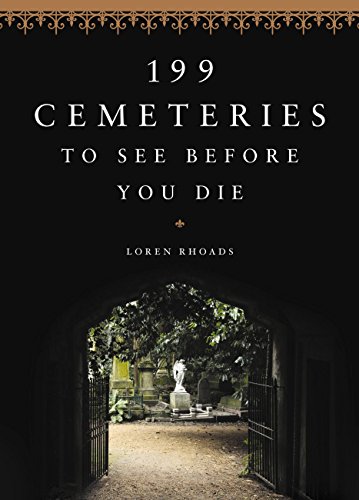
St. Louis Cemetery #1 is one of the 199 Cemeteries to See Before You Die by Loren Rhoads. She is also the author of Wish You Were Here: Adventures in Cemetery Travel and writes about graveyards for the Horror Writers Association. She blogs about cemeteries as vacation destinations at cemeterytravel.com.


199 Cemeteries to See Before You Die by Loren Rhoads


A hauntingly beautiful travel guide to the world's most visited cemeteries, told through spectacular photography and their unique histories and residents.

More than 3.5 million tourists flock to Paris's Père Lachaise cemetery each year. They are lured there, and to many cemeteries around the world, by a combination of natural beauty, ornate tombstones and crypts, notable residents, vivid history, and even wildlife. Many also visit Mount Koya cemetery in Japan, where 10,000 lanterns illuminate the forest setting, or graveside in Oaxaca, Mexico to witness Day of the Dead fiestas. Savannah's Bonaventure Cemetery has gorgeous night tours of the Southern Gothic tombstones under moss-covered trees that is one of the most popular draws of the city.

199 Cemeteries to See Before You Die features these unforgettable cemeteries, along with 196 more, seen in more than 300 photographs. In this bucket list of travel musts, author Loren Rhoads, who hosts the popular Cemetery Travel blog, details the history and features that make each destination unique. Throughout will be profiles of famous people buried there, striking memorials by noted artists, and unusual elements, such as the hand carved wood grave markers in the Merry Cemetery in Romania.


You can find 199 Cemeteries to See Before You Die at:


That's it for day five, be back tomorrow for the final day and my dark poetry corner. And don't forget to enter our giveaway and check out the other hop participants.


Monday, 9 October 2017

The October Frights Blog Hop Preview


Tomorrow begins the wondrous spookfest that is the October Frights Blog Hop. For the next six days, from the 10th-15th, I'll be posting about horror books, sharing creepy stories and poems, and bringing you a cemetery guest post. This year's theme on my blog is Things That Go Bump In The Night.


Here's the schedule.


Day 1, Oct 10 –A book spotlight on Dusk's Warriors by Emerian Rich

Day 2, Oct 11 –The Return of Drabble Wednesday: October Frights Edition

Day 3, Oct 12 – Two flash fiction stories under the theme, After Death

Day 4, Oct 13 –An author and book spotlight on The 13: Tales of Illusory by Stephanie Ayers

Day 5, Oct 14 –A guest post by Loren Rhoads on cemeteries and the ghost of Marie Laveau. 

Day 6, Oct 15 –My Dark Poetry Corner and a Horror Haiku Pas de Deux book spotlight


There's also a Giveaway.


And on the 10th, here's who will be joining in the fun with me.
So come on back tomorrow and walk the dark path.


Friday, 28 October 2016

Halloween Week: Killer Clowns?


Today, I welcome author Jim McDonald as a guest to talk a little Halloween, and to give a couple of quick shout outs to some charitable projects he’s involved in. Take it away Jim…


Over the last few weeks, the leaves have exposed their hidden colors and many have taken their quick trip to the ground to be blown to the wind. Others fight to hold onto their green color to soak up just a few more of the fleeting hours of sunlight.
I walk into the stores, and much like the trees, the shelves are shedding their aisles of horrors abound for ones laden in cheerful faces, colorful bobbles, and blinking lights. Which is the real nightmare?
Please, can’t we get through Halloween first?
Yes, I resist the urge to put devil horns on Santa, or a bloody dagger in the hand of an elf on the shelf. Mostly.
And what am I hearing the most about?
Nothing less than that beast of nightmares.
Am I speaking of vampires? Werewolves? Political pollsters?
No.
Clowns.


And no, no the variety running for office either.
I’ve never been a real big fan of clowns, but I’ve never been scared of them either. But I do know a lot of people who are. And I don’t just mean they don’t like clowns. A pure visceral reaction, worse than to spiders.
Being that I’m fascinated by people and behavior, I’ve often wondered about this. Granted, I’m the sick kind of person that will put up a picture of Pennywise from Stephen King’s IT with a note that says Happy Humpday.
Our culture often shows clowns as people to be feared. The Joker is a prime example.
And now?
We have a rash of clown sightings, not only in the US, but worldwide. Clowns hiding in the woods, allegedly attempting to kidnap people.
Is it a cultural meme whose time has taken hold? A PR stunt gone wrong?
No one seems to know, but now, many schools and localities have gone so far as to ban the clown costume.
Really?
So now we have taken to banning those things that scare us. Pass an ordinance, or a law.
Yep, that’s effective. How do we even really define “Clown?” Must we also ban the Joker?
But I digress.
Why do clowns scare us? Why is an image of something seemingly innocent so easily turned into something so terrifying, it should be banned?
Psychologists suggest it’s the twisting of the visual and verbal queues we rely on to communicate. A fixed and unchanging smile (or grimace). Oversized eyes. Bright and startling colors. It takes us back to our childhood, to a time when everything had the ability to scare us.
It’s also the power of having a mask. The clown makeup not only obscures the details of the person’s face, it allows the clown to step into a new identity, a new persona. We as people depend on understanding the people around us, especially the ones we don’t know. Instinctively, we see a person in a mask as someone having something to hide.
Clowns, under the guise of many names and many identities are one of the oldest and many ways most important functions in society. In tribal cultures, many of them have a clown-like figure who wears a mask to embody the fears of the tribe.  Court Jesters and harlequins served much the same purpose, but had even more power. They had the ability to mock and jeer the ruling elite, using humor and barbs to relieve the stress of the people and yet communicate with the ruling class in a mostly safe way. The comedians and political pundits of the day.
Even today, we have seen people don the guise for nefarious purposes (I’m looking at you, John Wayne Gacy).
But why do we seem to fear this costume over all others?
I think it’s all of the above.
Which is why it’s important.
Every culture of the world has a person or group that serves this purpose. We need to have that embodiment of our doubts and fears we can see and confront. That we can take out of the shadows. That wears a mask.
Halloween is the time of year every one of us is called to face our fears, and laugh at them. It’s why we dress up like the characters that frighten us. It gives us power.
So this Halloween, when you are debating between dressing like a princess, a politician, or a clown, pick the one that terrifies you.
But this year, I’d probably put some body armor underneath the clown costume while you hunt for the Great Pumpkin.
Or just go with a werewolf.  Clowns will always be in vogue.

Happy Halloween!


For others, this can be too much to handle. For those who have survived real horrors. I’ve been honored to contribute to the #HoldOnToTheLight campaign with over a hundred other authors writing about #MentalHealth, #PTSD, and #Depression. Please check out the web page

Also, just released, I was honored to be a contributor to We Are Not This: Carolina Writers for Equality. Please check out this charity anthology on Amazon


I want to thank Jim for appearing in my Halloween Week, and be sure to check out the website and his charity anthology.  You can also find out more about him and his books at his website. And come back tomorrow for a chat with Lizzie Borden.


Subscribe Now:

Search This Blog

Powered By Blogger

Monthly Pageviews