Showing posts with label Crimewave Press. Show all posts

Saturday, 22 April 2017

Interview With Author David Malcolm

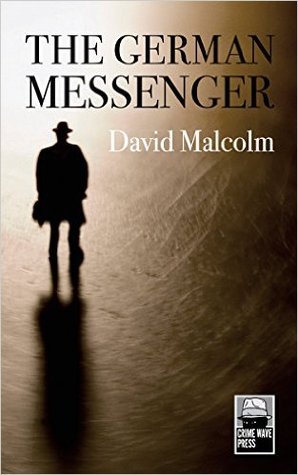
Today I have another great interview. This time author David Malcolm stops by to chat about his writing and his latest book, the spy thriller The German Messenger. Enjoy.


Interview with David Malcolm


Why don’t you begin by sharing a little about yourself.

I was born and grew up in Aberdeen in the north east of Scotland. I went to the same school as Lord Byron did briefly over a hundred years earlier. I went to university in Aberdeen, Zürich, and London. I worked for a while in rural Oxfordshire. Then I went to Japan, Poland, and the USA. I lived in Poland for four years in the mid-1980s, and after six years in the USA I went back there in 1994. I’ve lived in Poland ever since in a little seaside resort called Sopot, near Gdańsk.


Could you tell us a bit about your latest book?

The German Messenger is a spy thriller set mostly in England and Scotland in late 1916 and early 1917. There are sections that go back into the past and to continental Europe. The main character, Harry Draffen, is an agent of the British Empire who is asked to unravel a mysterious plot that the Central Powers seem to be weaving against Britain. He’s a clever but hugely damaged and embittered man, and in his investigations into the German plot he brings death and troubles with him everywhere.


Why did you decide to write in the spy thriller genre?

It’s all about lies, illusion, and betrayal. These seem to me to be what a lot of our lives are wrapped up in and made up of.


What is the hardest part of writing spy thriller fiction?

For me, it’s finding a plot that is complicated and credible enough. That’s because I’m more interested in setting, atmosphere, and character – both in the spy fiction that I write and that I read. But the demands of writing a good solid plot are much more difficult to meet than they were in, say, John Buchan’s day.


You write in several genres. Do you have a favourite? And if so, why?

I’ve been writing recently in lots of different genres and mostly short stories – crime, noir, supernatural, apocalyptic-future, Western, as well as thrillers. My favourite is, I suppose, the one that I’m writing just now. I like the possibilities that different genres lay out for you. You can go to the mean streets of LA one time, and to a post-apocalyptic England the next.


What was your inspiration?

The inspiration for The German Messenger  is clearly John Buchan’s The Thirty-Nine Steps, the classic thriller from 1915. I thought it would be interesting to rewrite that very good novel, with a very different narrator and some very different twists in the story. I’m also a great admirer of US movies from the 1940s and 1950s. Film noir has its echoes in The German Messenger even though it’s set in an earlier world.


What did you find most challenging about writing your book?

I find the time commitment required for writing a novel daunting. The novel gives you space to do all kinds of things. But it ties up years of your time – especially if you’re not a full-time writer. That’s why I like writing short stories. You finish them faster.


Did anything surprise you about the process of writing your book?

I was very surprised by some of the things that happened in the novel and what the characters did as I was writing it. Obviously that’s nonsense. I was writing it. I had the final word. But then a character would suddenly want to do something, and I would let him or her do it. It was very strange.


What’s your next project?

To finish the prequel to The German Messenger. I have part of it already. But there’s another section to be written, set in London, Paris, Lodz, and Reval (Tallinn) in 1908, involving anarhists, Tsarist agents, the Wilhelmstrasse, and the Bund (the Jewish workers’ organization). Then there’s all the other Draffen novels that are piling up in my mind. The Polish-Bolshevik War. Izmir/Smyrna. And a series of thrillers set in late 1940s and 1950s Europe with a Scottish secret agent digging into all the nastiness left over from the War. All I need is time.


You can find The German Messenger on Amazon


David Malcolm was born in Scotland. He was educated in Aberdeen, Zürich, and London.
For over thirty years he has lived and worked in Japan, the USA, and Poland. He currently resides in Sopot, Poland. His collection of short fiction, Radio Moscow and Other Stories was published by Blackwitch Press in 2015.


Tuesday, 18 April 2017

Interview With Author Tony Knighton

Today I have another great interview, this time with crime author Tony Knighton. He stops by to talk writing and his books, including his upcoming novel, Three Hours Past Midnight. Enjoy!


Interview With Author Tony Knighton


Why don’t you begin by sharing a little about yourself.

I’m a lieutenant in the Philadelphia Fire Department. I’ve been on the job since 1985. I began writing in the early morning hours at home, and work when I could. As I got serious about writing, I took some courses at the Community College of Philadelphia.
My novella and story collection Happy Hour and Other Philadelphia Cruelties was published in 2015 by Crime Wave Press. My story “The Scavengers” is included in the anthologies Shocklines: Fresh Voices in Terror, published by Cemetery Dance, and Year’s Best Hardcore Horror Volume One, published by Comet Press. My story “Sunrise” is included in the anthology Equilibrium Overturned, published by Grey Matter Press. I have also published short fiction in Crime Factory, Static Movement Online and Dark Reveries


Could you tell us a little about your latest book?

I’m happy to. My latest is a novel titled Three Hours Past Midnight and will be published this spring by Crime Wave Press. In the first few pages the narrator and his partner burglarize the home of a wealthy, jailed Philadelphia politician. Shortly, the partner is dead and the goods missing. The narrator spends the rest of the night hunting for his money and the killer.  Along the way, he learns this was a job best left alone.


Why did you write this book?  What was your inspiration?

There’s a private home in Philadelphia, a mansion near Center City, that everyone mistakenly thinks belongs to a real-life, notorious, long-time state senator. I liked the idea of a crew breaking into the house and stealing something from him.  As Eryk Pruitt says, some people in this world need to be robbed.


Do you have a favorite character?  If so, why?

Yes, my narrator from Three Hours. I first wrote this character into a story titled “Mister Wonderful,” from my collection Happy Hour and Other Philadelphia Cruelties. That story opens with him strapped in the driver’s seat of a car that has come to rest upside down in a shallow, icy streambed.  He’s got a broken collarbone and he hears a siren go by on the roadway above him.  The story was great fun to write, and one of the few that I began with only a premise – no clear idea of what was going to happen.  By the end, I knew I wanted to do more with him. I like him because he’s smart and resourceful, but very human. He makes mistakes. I get bored reading stories that feature a superman or know-it-all.


When did you realize you wanted to be a writer?

Early on.  I didn’t get around to it for a long time. I think I was afraid to try. I got started during a prolonged bout with insomnia. I needed to do something quiet that felt productive.


Do you have a favorite author, or writing inspiration?

I have many favorites; it would be unfair for me to name only one so I’ll pick out a few: I love the Richard Stark books, Jim Thompson, Dashiell Hammett and James Ellroy.  Ray Banks is really good.  I have a special fondness for George V. Higgins’ The Friends of Eddie Coyle.
My inspiration to write came while reading books poorly written.  I’d think, “I could do better than this.”


How do you research books?

I find someone who knows what I need and ask them questions. I have a network of experts – cops, a few lawyers, people in the trades, etc. People like to talk about what they know or what they do.  Often, I’ve gotten more than I expected – bits of information that took me in directions I didn’t anticipate.  No one has ever told me they didn’t want to talk. I know a locksmith who thanked me for asking.


What advice would you give beginning writers?

It takes a while to develop any skill, so don’t be discouraged if your early pieces fail to live up to your expectations. Keep writing. Revision is essential. Your stuff will get better.


Are you working on another book?

Two. I’ve started another featuring my narrator. He returns to the locale of the short story “Mister Wonderful.”  I’m also finishing a book that I’d left idle a while ago, a story about a fire investigator, set during a four-day political convention. 

Thank you for this opportunity – it was great fun!

~*~

You can find out more about Tony Knighton and his books on his Amazon profile.


Thursday, 23 March 2017

Interview with Author Benedict J. Jones

Today I have another interview, this time with multi-genre author, Benedict Jones. He stops by to chat about his books, and writing in the crime, horror and western genres. Enjoy!


Interview with Benedict J. Jones


Why don’t you begin by sharing a little about yourself.

Well, my name is Benedict J Jones and I’m a writer from London who works mainly in the genres of Crime, Horror, and the Western – often blending genres together. I’ve been published since 2008 and gradually worked my way up through various short story venues until Crime Wave Press published my novella “Skewered” and collected a fistful of my short fiction along with it in “Skewered: And Other London Cruelties”. Since then my Private Eye character, Charlie “Bars” Constantinou, has appeared in two novels from Crime Wave.
In amongst that I went back to my horror roots with a grind house novella from Dark Minds Press called “Slaughter Beach” and they also collected a bunch of my weird western tales in “Ride the Dark Country”.
When I’m not writing I work for a university assisting students all around the globe and try to travel and see as much of the world as I can. As well as that I read voraciously, watch an awful lot of films, and have an interest in martial arts.


Could you tell us a bit about your latest book?

My latest book is the novel – “The Devil’s Brew” and sees the return of my character Charlie Bars who has appeared in a clutch of short stories, as well as the novella “Skewered”, and the novel “Pennies for Charon”.
Unlike the previous stories it takes Charlie out of his comfort zone of the Badlands of south east London and plants him in the bleak and beautiful countryside of Northumbria, the most remote and sparsely populated county in England. In part, it deals with the mental fallout of the violence that Charlie has previously inflicted, and been on the receiving end of. It’s the run up to Christmas and as the weather turns colder Charlie finds himself caught up in a case of ritual horse mutilation and becomes the protector of a family in peril. You can expect a mix of rural noir and British folk horror – a kind of “Get Carter” meets “The Wicker Man”.


Do you have a favourite character? If so, why?

I think it would have to be Charlie Bars as he is the character that I have spent the most time with – three published short stories, half-a-dozen unpublished ones, a novella, two published novels (and a third one that is close to being completed).
What probably draws me to him is the amount of myself that I initially poured into him but since then he seems to have taken on a life of his own. I often wonder if we were sitting next to each other in a pub having a beer would we strike up a conversation – and, oddly, whether or not he’d like me. I’m not sure he would.
A lot of people have commented that it is his inherent decency that draws people to him which always surprises me as even before the stories start he has done some very bad things. But deep down he is a very moral man, albeit one whose morals don’t quite match up with those of society in general.


You write in several genres. Do you have a favourite? And if so, why?

Writing across several genres and occasionally mashing them up usually means that whichever one I’m writing in becomes my favourite at that moment. Really, the reason I write across genres and in several is that while sometimes they bring the same things most of the time they allow me to explore different aspects of people. The viewpoint of a lot of my fiction tends to be the dark but each genre allows a different approach to the human condition.
For example the western often lets me take a more heroic approach with someone who will stride into the danger allowing me show evil defeated in some way. Whereas my crime and horror fiction often revels in the darkness of the human condition – and can allow me to bring in fantastical elements as well.


Why did you write this book? What was your inspiration?

The initial inspiration for “The Devil’s Brew” was a single scene that came to me of Charlie walking alone down a country lane, twelve-bore shotgun over his shoulder, just as the snow begins to fall. I didn’t have a clue how I was going to use the scene but it stayed with me and I gradually began to think of how I could build a story around it. In the mean time I started what I intended to be a standalone crime novel about a criminal fleeing from London to hide out in the North East and ending up trying to help a nearby family. That began to run out of steam and I realised that the character I had used for it simply wasn’t driving the narrative – in steps Charlie, as he has a habit of doing.
I had already got a lot of information regarding the area from my good friend and fellow author Anthony Watson. The landscape of that area of England was a huge inspiration for the story.
As well as that I went and re-watched a lot of folk horror films (“The Wicker Man”, “Robin Redbreast”) as well as “Straw Dogs” which I think played a big influence on certain parts of the book.


Did anything surprise you about the process of writing your book?

I am always surprised about where a book goes once I start it. I normally have a few scenes in my head and usually have a point “A” to start from and a point “Z” I want to get to. What comes in between always surprises me!
In part that organic nature of the story is part of what brings me back to writing each time. I like the characters to grow and speak to me and, perhaps, diverge along paths that I hadn’t previously foreseen.
It’s extremely rare that I will plot a whole story out. I like to see where the words take me and what occurs to me as I write. This can sometimes be problematic and lead to stories stalling but on the whole I like it and I don’t think I could ever be one of those writers who plots every scene out before they start – but this is just what works for me, to each their own when it comes to the creative process.


When did you realize you wanted to be a writer?

That I think has always been with me. I have always written since I was old enough to hold a pen, and always made up stories in my head. When I was about nineteen I realised the urge and wrote a novella. Which then went into an envelope and onto a shelf. But the bug had truly bitten and I sporadically wrote pieces of short fiction which, again, I didn’t do much with.
Then about eleven years ago I decided that this was what I wanted to do and I got stuck into it. I wrote constantly and gradually began to work earlier ideas into readable stories. A ‘zine called “One Eye Grey” picked up my short story “Goin’ Underground” and then I just built from there.


How do you research your books?

That is very dependent on what I am writing. A lot of my crime fiction comes from things I see and have heard rather than from traditional research. But even in that there are things I want to know more about and get right. For instance, when I wrote “Pennies for Charon” I needed to brush up on my Greek myths, for “The Devil’s Brew” I watched documentaries on dog fighting and had a friend who lives in Northumbria send me pictures from his walks in some of the remote spots.
When it comes to my Westerns I probably do a lot more “book” research. Mainly because I hate seeing anachronisms in films or reading them in stories. One of my worst moments was when a reader of one of my early western shorts contacted me to say he thought that the hero fired one more shot than he had available to him. I checked and, well, let’s just say when the stories were collected for republication he fired one less… Thanks for spotting that one Ross Warren!


What’s your next project? Any upcoming book secrets you care to reveal?

I am working with putting the final touches to the next Charlie Bars book. This one touches on the British political establishment and one of the dark scandals that has dogged it for years. It is my attempt to make sense of certain things that have come to light and wondered how the hell they could have been allowed to happen. Mix in some British gangsters, the shady world of post 9/11 espionage and Charlie is once again up to his neck in grief.
Apart from that I have returned to my horror roots and have a couple of short stories coming out in a pair of projects that look to be very exciting. I’m also still working away on a pair of longer length works set during the second world – so many things on the go and so little time.


You can find all of Benedict Jones' books on his Amazon page.


About the Author:
Benedict J. Jones is an author of crime, horror and western fiction from south east London. His work has been published in various anthologies and magazines. Since 2008, he has published almost thirty short stories. His books include, Skewered: And other London Cruelties, Pennies for Charon, and The Devil's Brew
Check out his website for further info: www.benedictjjones.webs.com or follow Benedict on twitter @benedictjjones.

Tuesday, 21 March 2017

Interview With Author Chris Roy

Today I have an interview with crime author Chris Roy. Enjoy.


Interview with Chris Roy


Why don’t you begin by sharing a little about yourself.

I'll be 36 in June. As a kid growing up in Ocean Springs, Ms., I knew many freedoms. Some of them illegal.
I learned tools at a young age, repairing anything with wheels or an engine, and became a mechanic working at my uncle’s junkyards. At 17, I had to leave home and get my own place. I found a better job at a transmission shop. At 18, I attempted 12th grade for a second time, once more failing to earn my diploma. Not long after, in January, 2000, I was arrested.
Spent half my life in prison for a murder conviction. The appeal courts didn't care that it was a fistfight between a couple of teenagers. Nor did they care about the ineffective assistance of my public defender. I considered escaping, but wasn't committed to that idea until hurricane Katrina destroyed several homes in my family. My mom was living in a garage. Plans to leave, find work and help out were, on reflection, decisions of youth. I didn't realize that until after I was caught. The second time.
I've been on High Risk in the Mississippi Department of Corrections since 2005. Housed with Death Row - first in Unit 32 Supermax, now in Unit 29 maximum security - I've adapted to extreme inhumane conditions. Segregation in Parchman is desolate and deadly, a criminal finishing school for most, and a mind-eroding dungeon for all.
I maintain good mental health with punishing physical exercise. Over the years the discipline has allowed me to develop creativity, in art and fiction writing. I've been an advocate for prisoner rights, a GED tutor, and a mentor. Writing a series of short stories in 2007 changed my life, renewed the hope lost with the appeals and failed escapes. New Pulp Press signed me for two crime thriller trilogies. Book I of Shocking Circumstances was released in January, 2017.
Learning to write polished blog posts is my present focus. I'm used to hard boiled noir, and unused to writing about myself.
Overcoming the difficulties of self-marketing from Parchman, as an author convicted of murder, would be impossible without the help of my team of volunteer supporters. Over the last several months they have been working behind the scenes creating a website dedicated to raising awareness to the unjust circumstances of my murder conviction, with the ultimate goal of obtaining legal representation for another appeal. The site will also serve as the central hub for my writings and latest news, and can be found at www.unjustelement.com.
Most of the marketing for my novels will be done through their various social media platforms. I'll be available to write guest posts or do interviews with the Unjust group handling contacts.


Could you tell us a bit about your latest book?

Book I of Shocking Circumstances introduces Clarice “Shocker” Ares, a boxing legend that chooses to retire and develop her family and businesses.
An incident involving drugs, a major Mexican cartel and corrupt police officers results in her imprisonment. Losing her family, home and businesses was only the beginning of a 40 year sentence. The easy part.
She decides being a convict wasn't for her, and becomes the Shocker once more, earning money in a prison fight ring to finance her escape.


How long have you been writing, and how many books have you published to date?

In 2007, I wrote a dozen crime thriller shorts about two physically gifted scam artists, Razor and Blondie, that eventually became a collection titled, By Hook or Crook. A friend and I self published it on Amazon in 2012. Two trilogies followed. I’ve written several other shorts, mostly crime fiction, though a couple were dark fiction. Marsh Madness was published by Near to the Knuckle in January, 2017.


Of all the books you've written, do you have a favourite?

Book III of Shocking Circumstances. It opens with a scene based on my second escape in 2006. That part of the trilogy comes to mind whenever I think of sharing excerpts.


Do you have a favourite character? If so, why?

Shocker’s coach, Eddy. He is the kind of person that walks into a room—or gym—and people instinctively look to for direction. He’s an obstacles-are-challenges guy, able to make you feel like a ten foot tall champion of the world. His manner and profession (boxing trainer) are based on my old coach, Fred.
Fred taught boxing lessons that he also applied as life lessons, expanding the limits placed on myself as a kid dreaming no further than the mechanic shop. He literally taught me the definition of ambition, and that I had enough to share. And I often do, talking to younger convicts about their goals and using many of his motivational phrases as he did with me.


Why did you decide to write in the crime fiction genre?

I didn't decide on any particular genre. Never considered there were other choices, actually. I just knew I wanted to create a guy and his girlfriend that showed readers how to commit crimes—with smart, original style--and get away with them. I had plenty of material for those.
My personal experiences combined with crimes I've learned from others amount to a long list of reference material. After making an actual list I realized I could create an endless number of ways for my characters to do them without being caught. They were fun to write. Crook was written before I began studying fiction writing. Just picked up a pen and scribbled until my hand felt in danger of injury.
Creating the criminal acts. Writing out how to do a crime, as opposed to just thinking or talking about it, really lights up the innovative part of me. Thoughts aren't fully realized unless they are written out. Imagination suffers. And what is life without imagination?
Designing lives filled with crime is a creative outlet I enjoy even more than drawing or tattooing.


What did you hope to accomplish by publishing your book?

Freedom. Doing life in Parchman gives a guy a little free time. And there are only so many things to do in lockdown. Writing is one of them, and we can do that all we want. One day while brainstorming with friends, we talked about writing books, getting published, and using the royalties to get back in court.
That was little more than a fantasy back then. Signing six books with New Pulp Press has brought it closer to reality.


What is your greatest challenge as a writer?

Now that I'm published? Marketing. Becoming mainstream would be like getting struck by lightning. Inside my cell. Cop shows and tough on crime ideals are an everyday bombardment. People will refuse to read my work after seeing my address in the bio. I want to do interviews like this so readers have a chance to learn something about me before judging the value of my novels.


What’s your next project? Any upcoming book secrets you care to reveal?

I just received word from New Pulp Press, asking if they can release Book I of the Sharp as a Razor trilogy while Shocking Circumstances finds its niche.
I said, Absolutely! I'm excited about crime fiction fans getting to know Shocker and Razor. They are very different characters. It's going to be fun learning what readers think.
Her Name is Mercie is a novella I'm working on. New character, new mayhem. Since finishing Razor, I've learned a few things from publishers that fit nicely in my writer's tool box. Some minor style changes that I played with in a few short stories before drafting Mercie.
Those are current and upcoming works. Sorry, I don't tell secrets.


About the Author:


Chris Roy was raised in South Mississippi, in the midst of ugly Gulf Coast beaches and spectacular muddy bayous.
Chris lived comfortably with the criminal ventures of his youth until a fistfight in 1999 ended tragically. Since January, 2000, he's been serving a life sentence in the Mississippi Department of Corrections. 
Nowadays he lives his life  crime vicariously, through the edgy, fast-paced stories he pens, hoping to entertain readers. When he isn't writing, he's reading, drawing or looking for prospects to train in boxing.


For more on the author, go here: www.unjustelement.com


Sunday, 19 March 2017

Interview With Crime Author Elka Ray

Today I have another great interview, this time with crime author Elka Ray. She stops by to chat about her writing and her books, including her latest suspense novel Saigon Dark. Enjoy!


Interview With Elka Ray


Why don’t you begin by sharing a little about yourself.

I'm an only child and my family moved around a lot when I was a kid. I went to about a dozen different schools in Canada and the UK. Wherever we went I made new friends but then had to leave them, which was hard. What stayed constant were my books. I read and drew a lot as a child and now work as an author, editor and illustrator.


Could you tell us a bit about your latest book?

My suspense novel Saigon Dark came out with Crimewave Press last fall. It follows a Vietnamese-American woman named Lily Vo who's living in Saigon when tragedy strikes. Traumatized and isolated, Lily makes a harrowing choice that comes back to haunt her. It's a story about family, betrayal and belonging - and how hard we'll fight for the people we love.
I think deception - especially self-deception - is like poison. In Saigon Dark, I wanted to explore a woman who's unable to tell the truth.


How long have you been writing, and how many books have you published to date?

I studied Journalism and Asian Studies, then spent years doing media and communications work. Having lived in Southeast Asia since the mid-1990s, I focused on travel and cultural articles. I've contributed to many magazines and guidebooks. My first novel, a light romantic mystery called Hanoi Jane, was published in 2011. A short story collection, What You Don't Know: Tales of Obsession, Mystery & Murder in Southeast Asia came out in mid-2016, followed by Saigon Dark at the end of the year.


Why did you decide to write in the crime genre?

I grew up reading classics, then trashy teen novels. In my twenties I read mostly literary fiction. When I was pregnant with my third child, who's now eight, I developed an addiction to crime fiction. You always hear about pregnant women craving weird foods - pickles with ice cream or Big Macs at 4 a.m. I craved mysteries and suspense. I couldn't read enough dark tales.
The premise of Saigon Dark had come to me about a year earlier but I started to flesh out the story during that pregnancy.
After my daughter's birth my insatiable appetite for crime stories waned a little. I still read a lot of crime today but am not as obsessive as I was during those nine months.
You may be wondering how my baby turned out. Well, from an early age, she's been weirdly interested in death. When he was around two, my son used to beg me to visit construction sites. A lot of little boys love trucks and heavy machinery. My daughter, on the other hand, wanted to visit cemeteries. She'd squeal and point, "Grave! Grave!" and ask creepy questions. How did they die? How deep are they buried? How many dead people do I know?  Why? Why? I wanted to run away screaming.
It's like the chicken or the egg: Did the dark stuff I read shape her? Did she somehow influence my interests when she was in my body? Or is it just a coincidence - with no more meaning than a pregnancy craving for peanut butter?
All I know is that during that pregnancy I shifted to writing crime fiction.


Can you tell us about your writing process? Where do your ideas originate? Do you have a certain writing routine?

I live near the beach in Central Vietnam and love to swim. Most days I'm either in the ocean or beach-combing. New characters and stories often materialize when I'm swimming or taking long walks. I also work out tricky plot problems while swimming.
Once an idea comes you need to get it down fairly quickly or it's gone. I feel a sense of pressure to get the first draft out - the story you write today won't be the same tomorrow.


Do you have a favourite author, or writing inspiration?

Writers I admire include Daphne du Maurier, George Orwell, Graham Greene, Charles Dickens, Michael Ondaatje, Rohinton Mistry, Dennis Lehane, Scott Smith, Stephen King (although I'm too chicken to read much horror), Sue Miller, Tana French, Donna Tartt, Susan Fletcher... There are many more but look these writers up.


What advice would you give beginning writers?

Read as much and as widely as possible - not just in the genre in which you plan to write. Read literary classics and recent best-sellers. Read fiction and non-fiction. Read writers of Indian descent, whose works tend to be lush and busy. Read Japanese and Scandinavian authors, whose language is often bare-bones.
When it comes time to write, read your prose out loud. If you stumble, your sentence is clunky. If you aren't familiar with George Orwell's rules for good writing, look them up.
Some useful and well-explained writing advice may be found on this blog: www.emmadarwin.typepad.com/


Do you have any amusing writing stories or anecdotes to share?

Many people don't understand that novelists make stuff up. Most plots did not really happen to us or to anyone we know. Most characters are not thinly-veiled copies of people we've met. Our job is to invent characters and stories that feel true.
After reading my short crime stories one woman I know said to me: "Wow! Where do you get these ideas? You don't even watch a lot of TV!"
I loved the assumption that writers sit around and steal their material off the tube.
You don't choose to be a storyteller: stories either come to you or they don't. What you need as an author is the patience to sit down and write and rewrite (and rewrite, repeat...) those stories until your prose is clear and precise.


What do you like to do when you're not writing? Any hobbies?

As well as writing for adults I write and illustrate for small kids. My drawings are bright and cheerful. I also produce cute, colorful drawings for Vietnam-themed greeting cards and souvenirs. Proceeds go to support poor kids in Vietnam who need genital/urinary surgeries: www.stickyrice.com
My latest obsession is gardening - although no one in my family has a green thumb. I replant stuff that grows wild near the beach (aka weeds) because I figure these plants might survive despite our care.


You can find Elka Ray's latest book Saigon Dark on Amazon.


About the Author:

Elka Ray is a UK/Canadian author and illustrator based in Hoi An, Vietnam. The author of one novel, Hanoi Jane, Elka also writes and draws an expanding series of children’s books about Southeast Asia, including Vietnam A to Z, 123 Vietnam! and The Warrior Queens. For adults, Elka focuses on crime fiction and mysteries. Her short stories have appeared in Monsoon's Crime Scene Asia: Asia's Best Crime Fiction 2014  (Hong Kong); New Asian Fiction (India) 2013 and Lontar: The Journal of Southeast Asian Speculative Fiction (Singapore) 2014. Her travel writing has run in a wide range of publications, including Fodor's, Forbes, Executive Traveller and Persimmon Asian Arts. Elka holds a Canadian degree in Journalism and Asian Studies and a Canadian diploma in Creative Writing. She has a sporty husband and two kids, works as a magazine editor, and has an author’s site at www.elkaray.com. When Elka’s not writing or drawing, she’s in the ocean. 

Subscribe Now:

Search This Blog

Powered By Blogger

Monthly Pageviews