Showing posts with label fiction. Show all posts

Wednesday, 10 January 2018

Interview With Author Thomas McRae

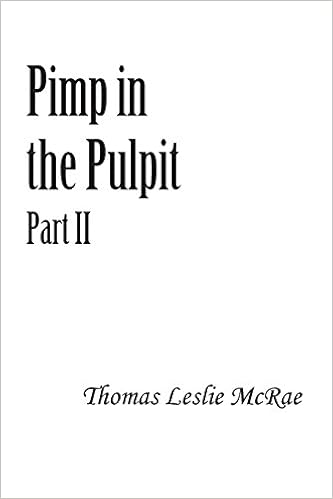
Today I have an interview for you with author Thomas McRae. He's here to talk to you about his writing and his new book, Pimp in the Pulpit Part 2. Enjoy.


Interview With Thomas McRae


Why don't you begin by sharing a little about yourself? 

My name is Thomas McRae and I'm a self-publishing author who has written numerous poetry books and short fiction novels as well. I am also a hard-working young man who is trying to save and buy a nice home for myself and my parents. I don't have any kids or wife but I do look forward to the day I have both just like my buddy Islam Martin who by the way is a phenomenal father, loving husband and a genuine true friend. I only hope when I do find that special lady in my life and we become husband and wife and have kids of our own I sincerely pray I'm half the man Martin is.


Could you tell us a little bit about your latest book?

My latest book is titled Pimp in the Pulpit Part 2 which is the sequel to the first. Both are fictional short novels inspired by my life and the lives of several friends of mine who was generous enough to share some stories about their own families as well. Both Pimp in the Pulpit 1 and 2 are samples of several stories from different sources blended together along with a splash of imagination and creativity.


Who is your intended readership?

My intended readers are anyone and everyone who can appreciate a good and entertaining book filled with drama comedy and suspense. I sincerely believe this book and the original one has all the trimmings in being turned into a Motion Picture film. I only need the right person to read it and see the vision that I see every time I read the books.


Why did you write this book? What was your inspiration?

The reason why I wrote this book is because I like telling stories that are entertaining and hilariously funny. What inspired me was when I was talking to a friend of mine and we both was sharing stories about each other's family. After that I started talking to other friends who had similar or more funnier stories than I. Which led to a vivid imagination and a uncomprehensible story that needed to be told.


What advice would you give a new writer?

The first piece of advice I would give a new writer  is to be patient and focus because your blessing is coming your way. My second piece of advice would be don't allow anyone to discourage you because everyone has a talent and no one has the right to kill a dream or break a soul. And last but not least always give it your all because life is too short to have doubts or regrets.


What did you enjoy most about writing your book?

I enjoyed a great deal first I really like writing things down and rereading it out loud. So I could get a feel of what was going on with the characters and the lives they portrayed and wanted to be. I also enjoyed just being in my own personal headspace living in my own little fantasy bubble and building a story that was not only sincerely entertaining and funny but extremely well said.


What did you hope to accomplish by publishing your book?

My main objective was to expand my horizons and branch out. Most people see me as Thomas the poet which is fine, there is nothing wrong with that but truth be told there is so much more about me I want people to see. And that is why I'm working hard to promote my short fiction novels and any and every book I write from this point on.


What's your next project? Any upcoming book secrets you care to review?

I have so many book projects in the back burner but I'm sincerely leaning towards putting out my newest poetry book I've been working on and its title is fatal impact. Which is going to be a combination of love poems, spiritual poems, personal poems and even a couple of Street Anthem poems. The point of this project is to push myself into a much more deeper and more profound level in regards of my poetry writing. I'm quite certain most people will enjoy this book especially if they keep an open mind.


What is your greatest challenge as a writer?

My greatest challenge as a writer is mostly promoting and marketing myself and trying to get as much exposure as possible. That is one of the tough parts about being a self-published author. But on the plus side you reap the benefits of being independent and self-sufficient at the very least you control what happens with your book and your marketing and you don't have to answer to anyone.


Thomas McRae is an accomplished  poet and author who has written numerous poetry books and short fiction novels. He has been writing since the early 2000s.


Sunday, 2 August 2015

So Bad It’s Good: A Guest Post by A.G. Wyatt


So Bad It’s Good: How To Write Terribly Incredible (Or Incredibly Terrible) Campy Fiction


Like all good aesthetics, camp is a lot more sophisticated than it looks and writing it well can be challenging. It’s not enough to dress your hero in spandex and have your villain cackling madly while the heroine runs around screaming for rescue in a fruit-topped hat. That’s just cliché, while good camp is a celebration of the exaggerated and excessive.

Be Focused


It’s not enough to say “I want this to be camp.” If you throw in every campy trope you can find then you’ll have a mess, with one excess undermining another. A campy science fiction story interrupted by an excessive moment of dark literary fiction will lose atmosphere faster than a colander-based spaceship.
Think about what you’re exploring, what you want to make camp, and push that thing to excess. Do you want to write a high fantasy of sweaty muscles, kidnapped slave girls and kingdoms defined by single concepts? Or are you after a delightful horror of shadowy streets, blood-spattered sheets, and dead jocks?
Whatever you’re camping up, identify its individual excesses and focus on those.

Be Full-on


There are no half-measures in camp. If you approach the brink of absurdity only to hesitate and step back, then all you have is corniness and cliché. The pleasure of camp comes from its excess, so really push the boat out.
Reasonableness is the enemy of camp. It isn’t reasonable for your action hero to drive a monster truck, carry a bazooka on her back, and chug beer like she has the liver capacity of the whole U.S. Congress. But if she just drives a 4x4, carries a handgun, and finishes the day with a few too many whiskies then what you have isn’t camp, it’s the hero of 90% of the adventure stories out there. So go with Bazooka Betty, not Hetty Handgun.

Be Sincere


All of this might sound like a rallying cry to mock the genre you’re working in. But again, that really misses the point. Camp isn’t about standing outside the tent pissing in, it’s about running around the inside of the tent celebrating just how much fun canvas is.
The edge of mockery, the knowing wink that implies “we’re better than this,” that’s the realm of satire. It has its place and it has its audience, but that audience isn’t the same one camp appeals to. Satire is about being negative, camp is about being positive. Satire is judgemental, camp is celebratory. Satire is about pointing out the foolishness of others, while camp is about knowing that what you’re doing is foolish but enjoying it anyway. You don’t point at the excess, you join in with it.
So if you want to do campy writing, make sure the subject and style are something that you love. Make sure that you can write that wild excess like you mean it. If you can make that happen then fans will love you for it. But if you step into satire, if you slip in a little mockery for fear of being mocked, then the joy will fade.
If you’re going to write campy then relish it. Focus on something that you sincerely love, and write it right to the extreme. Because anything less is just cliché, and the world has quite enough of that.


A.G. Wyatt is the author of the post-apocalyptic adventure series, MoonFall and is presently working on his second series. When he's not writing, he's reading, or looking for inspiration near his hometown in Northeastern PA.

Where you can find the author:


Sunday, 31 May 2015

Book Spotlight - Zephaniah: A Horror Novella

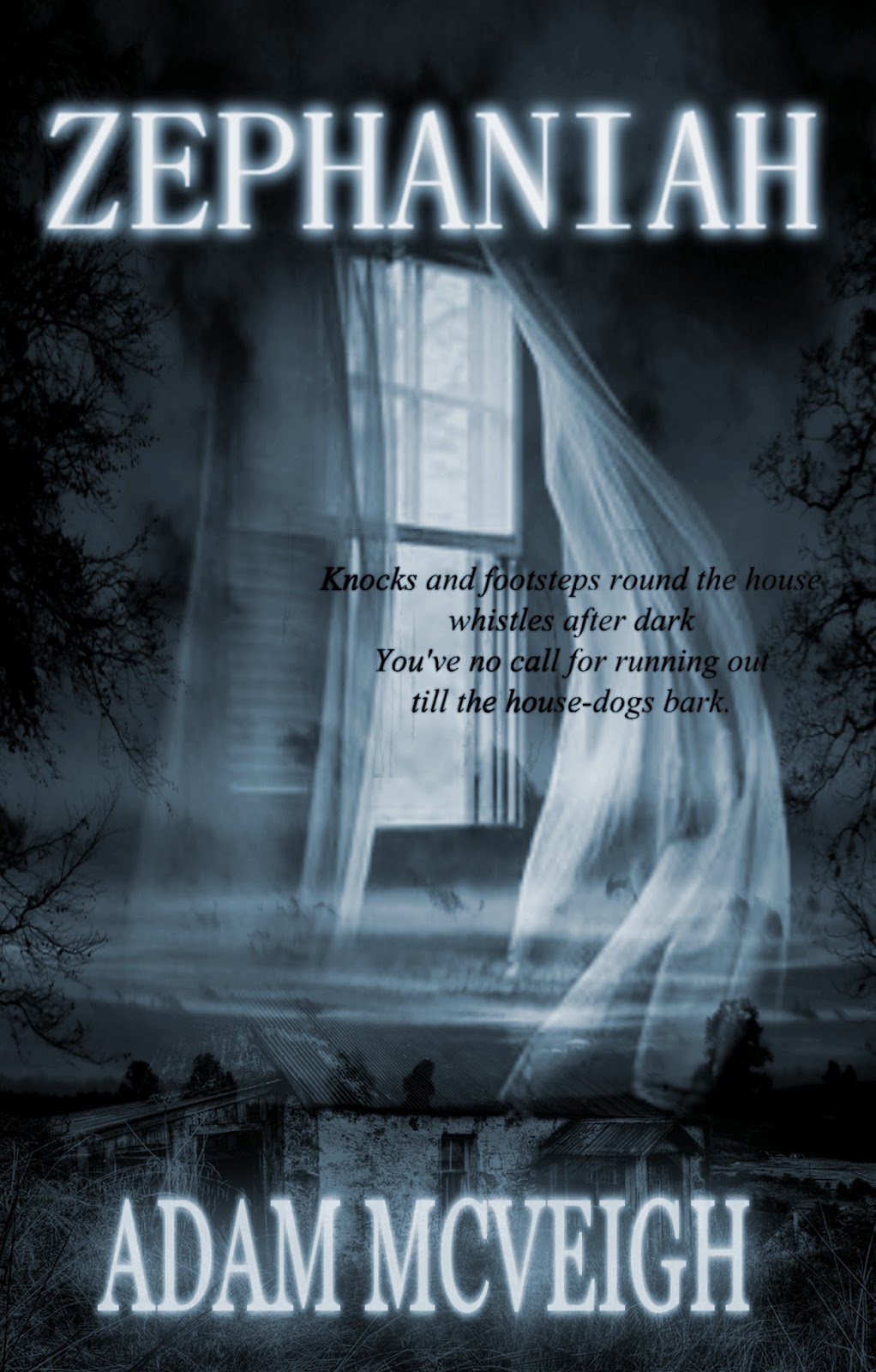
Today I'm spotlighting a tale of paranormal horror with the novella Zephaniah by Adam McVeigh. There's also a short excerpt so read on and enjoy...


Zephaniah: A Horror Novella by Adam McVeigh

Christmas nineteen ninety-five: a physics teacher takes his family on holiday to the snow-covered village of Gwennal, in Cornwall. When his five-year-old daughter tells him that she has seen Santa Claus, unwelcome and chilling events begin to plague the family’s stay at their seventeenth-century cottage. His choice of accommodation is further brought into question when his wife suffers a series of mind-bending paranormal horrors. Firmly believing scientific explanation, he suspects that she has relapsed to her abuse of prescription painkillers. Until, that is, the comfort blanket of science becomes an instrument of torture when staff at a local museum reveal more than he can bare to discover.


You can find Zephaniah at:


Book Excerpt: 

   From behind Sarah, the worn-leather boots of Zephaniah had crushed the frost and ice beneath them as he marched past, just inches from her paralysed body.
He stopped beside the slaughtered flesh.
   With only moonlight to guide her eyes through the shadows that swamped the world around her, Sarah recognised his long, thick woollen cloak and his unkempt beard that fell to his chest as though he vomited worms; she recognised his movements, his steps and the dread that seeped from his very presence.
   He snatched at the feet of the corpse. A gloved fist locked around each ankle as though trying to choke the last desperate screams of life from them. He then raised the legs and dragged with the ease of a man wheeling a barrow.
The blooded torso thudded and slapped on the sculptured stone of Chapel Cottage’s front step, before being swallowed inside the darkness of the doorway.
Sarah looked on. She could do nothing else. The illuminated cottage in front of her began to fade under a pitch-black darkness. It was washing over the street, indiscriminately covering everything under the crashing black wave as the moon’s light died.
   She stood in complete darkness. There was no breeze to pull her hair. Her feet were no longer stuck to cobbles laced with ice, they were resting on the hard wooden surface of floorboards, cushioned by a layer of dust and grime.


Author Bio: 


Adam McVeigh lives in South Lincolnshire, England. His first book, Keep Off The Grass, a narrative non fiction account of his time as a community and political campaigner, was released as an independently published paperback in January 2015. His fictional works are primarily psychological and paranormal horrors that are inspired by real life events and scenarios, including recent titles: Polly, and The Hanging Bridge. Both are short, quick read stories that form a ten volume collection due for publication in 2016.

Author Website:  http://adammcveigh.com


Saturday, 31 January 2015

Interview With Author Susan Berliner

A great interview today on the blog, with the talented author, Susan Berliner, who stops by to chat about her books and writing. Plus, she shares an excerpt from her latest book, Corsonia. Enjoy.


Interview with Susan Berliner


Why don’t you begin by sharing a little about yourself.

I was born in London, England, came to America as a little girl, grew up in the Bronx, New York, and got my BA at Queens College. I've been a teacher, newspaper reporter, editor, promotion manager, and non-fiction writer. I have two children and three grandchildren. I live in Yorktown Heights, NY, a northern suburb of New York City, with my husband, Larry, a retired English teacher who is writing a humorous memoir.  I enjoy reading, Scrabble, swimming, and sports. Unfortunately, however, I root for the Mets and Jets, teams that rarely win.


You've published several books to date. Can you share a bit about them?

DUST is a supernatural thriller about an evil swirl of colorful dust that sneakily attacks random victims in a quiet suburban condo community. The heroine, Karen McKay, a librarian, battles the evil dust with the help of her ex-husband, Jerry, and an intuitive dog.
Peachwood Lake is a thriller about a mysterious jumping fish that terrorizes a small Connecticut town while Kady Gonzalez, a 13-year-old girl, struggles with her own terrifying problems of growing up.
The Disappearance is a time travel thriller about a young woman, Jillian Keating, whose boyfriend, Ryan Cornell, disappears and frames her for his murder. The book culminates in an elaborate sting operation as Jillian and her friends travel through time to lure Ryan into their clever trap.
My new novel, Corsonia, is a mind-control themed thriller about two teenage girls from Long Island, New York—Loren Cofton and Tracie Martinez—who drive cross-country in celebration of their high school graduation. But when they enter Corsonia, a little town in the remote hills of northeastern Nevada, they uncover a horrifying trail of evil, turning their fun vacation into a life-threatening adventure.


What do you enjoy most about writing supernatural thrillers?

I love sitting at the computer, not knowing what's going to happen next in my story, and letting my characters direct the action. When I write, it's as if my characters are actors who are performing my novel on a stage or movie screen. They speak their lines and I simply transcribe their words. Very often, I don't know what they're going to say or do. I thought this occurrence was unique, but many novelists describe similar experiences. It's the excitement of not knowing that makes fiction writing so entertaining for me. 


You started your writing career as a journalist and writer of non-fiction. Why did you decide to try your hand at fiction?

I never intended to write fiction. However, when I was working as a promotion manager, I read a small online article about a strange weather phenomenon called a "dust devil," a miniature tornado strong enough to toss dust and dirt into the air. In this news clip, a dust devil lifted the roof off an auto body shop, collapsing most of the building, and killing the owner. Since the story was so weird—and it happened in Maine—I was sure Stephen King would write a book about some kind of supernatural dust. I forgot about the article until I found it a few years later and realized Stephen King had never written a novel about weird dust. Then I got an idea, which became the basis for my first novel, DUST.


What do you find most challenging about writing fiction, as opposed to non-fiction?

With non-fiction, you collect facts, outline your information, and put it all together. It's a very organized and straightforward job. For me, writing a novel is nothing like that. I don't outline chapters and, as I mentioned, although I know my characters and the basic plotline, I don't know what's going to happen in the story. I sit at the computer and let my characters tell me: It's a fascinating and entertaining experience. But that's only for writing the first draft. The challenge comes afterwards when I have to edit the book (my characters don't know everything) and do the necessary research. That's work!


Has anything surprised you in the course of writing your novels? Do you have any anecdotal tidbits or funny stories you’d like to share?

As an author of supernatural thrillers, I've had a couple of weird, nearly supernatural, experiences. After my first novel, DUST, was published, I had a book 
signing at a small nearby café, and, just before I arrived, the power went out. About two hours later, the electricity was still off when the café owner escorted me to the restroom in the back. Out of habit, I flicked the light switch, and, at that exact moment, the electricity returned—and the light went on. The owner told me he got goose bumps and he even asked me if I had paranormal abilities. (I thought maybe I could be a new super heroine—Electric Woman?—until I found out that heavy winds had knocked down a nearby power line.)
Then, a couple of years ago, I had another strange, although not quite supernatural, experience. At a book signing in Ossining, we had a tornado warning and all vendors had to go inside the building, a facility for seniors. That's when I sold a copy of DUST—a novel about a mini-tornado—to a 100-year-old lady named Dorothy, the heroine's name in The Wizard of Oz, another tornado story. 


What advice would you give beginning writers?

My advice is to treat writing as a job—something you have to do. Get into a writing routine and force yourself to work for a certain amount of time every day. That's what I do. Even if I don't feel like working, I close the door to my den, concentrate, and write. And it doesn't have to be for a long period of time. Set aside an hour, half an hour, or even fifteen minutes. There's always time to write. You just have to make up your mind to do it!


Who (or what) has inspired you as an author?

The ideas for my first two novels, DUST and Peachwood Lake came from newspaper articles. I wrote The Disappearance, a time travel thriller, because I've always loved reading time travel stories. My new novel, Corsonia, deals with another of my favorite themes: mind control. Ideas for books pop into my head all the time. I have to push them into the recesses of my brain until I'm ready to begin working on a new story or novel.


What’s next for you?

I'm currently writing a collection of short stories. Like my novels, the stories all contain a bit of the supernatural, although some are horror, others are fairytales, and the one I'm writing now is a ghost story. I've completed six so far and I hope to write at least fifteen.
I'm also working on a two-part doomsday novel, The Touchers. I wrote the first draft of Part One and I've written most of Part Two. But it got tedious—maybe because the story is told in the first-person by a teenage girl. Nevertheless, I hope to get back to this project soon.

You can check out more on Susan and her books on these sites:

Website: 

Facebook:

Pinterest: 


And now for a sneak peek at her latest book:


Corsonia


Can two teenage girls save a town?
When Loren Cofton and Tracie Martinez visit the remote hills of northeastern Nevada on a cross-country drive celebrating their high school graduation, the fun vacation quickly morphs into a perilous adventure.
After photographing an abandoned gold mine, Loren swipes a bottle of water from an eerily robotic man stocking bottles in the only occupied store of an otherwise deserted shopping center. The water's effect on Loren leads the pair to investigate the strange little town of Corsonia—despite threats from the local sheriff. And when Loren and Tracie befriend a child named Boy 11, who tells them about his curious life and upcoming fate, the girls become even more determined to figure out what is going on.
As the relentless teens uncover a horrifying trail of evil, they put their own lives in dire jeopardy. Will the girls be able to rescue the people of Corsonia—or will Loren and Tracie become the town's next victims?

Excerpt


Loren and Tracie reached the yard with the flopping clothes and stood quietly, watching the shirts and pants swaying in rhythm with the warm breeze.
"I don't know," Tracie said. "It still seems kinda quiet here. If there was a bunch of people around, we'd hear something, wouldn't we?"
Loren lowered herself to the ground, leaned against a bush, and gazed at the back of the two-story yellow shingled house. "Do you see any lights on inside?"
"No," Tracie said as she sat beside her friend. "But it's daytime and the sun is shining so that doesn't mean anything. This whole trip was your idea so what do you want to do next—peek in the window again?"
"Maybe." Loren slapped the pebbly grass with her left hand. "Damn! I thought for sure we'd just find some people who live here and talk to them outside. I don't want to tiptoe around and have that sheriff come back."
"Yeah. Well, I told you this wouldn't be as easy as you said. Maybe no one's living in this place either. Maybe they don't use any of these houses anymore."
"Then how do you explain the laundry?" Loren asked.
"Maybe they just use this house to wash their clothes."
"For a whole bunch of people? That's not enough clo..."
"Hello."
Loren stopped talking in mid-sentence at the unexpected greeting, which came from behind the bush.
The two girls turned and faced a boy, who looked like he was eleven- or twelve-years-old. His blond hair was cropped in a short crew cut and he wore a black oversized tee shirt that said "Star Trek: The Next Generation" and a pair of men's brown shorts so baggy that they would have fallen down if he hadn't been wearing a belt.
The boy stared at Loren and Tracie, but didn't speak.
"Hi," Tracie finally said, smiling. "I'm Tracie and this is my friend, Loren. What's your name?"
The boy looked puzzled and kept staring at the girls.
"It's okay," Tracie continued, speaking slowly and quietly. "You can talk to us. We won't bite you." She smiled again.
"Why would you bite me?" the boy asked, pausing between each of the five words. "People do not bite," he added in his strange staccato-like speech pattern.
"I was just trying to make a joke," Tracie explained.
"What is a 'joke'?" the boy asked.
Tracie looked at Loren, who shrugged. "Well, a joke is something that's funny—something that makes you laugh."
"Oh, a laugh, like from a smile. I can do that." The boy made a wide grin.
"That's right," Tracie said. "Very good. So we told you our names. What's your name?"
"I am called Boy 11."
"Yes," Loren said. "But what's your real name?"
The boy looked at her unhappily. "I do not understand. I am Boy 11."
Tracie grasped Loren's hand, holding it tightly. "That's fine, Boy 11. Do you live here?" She pointed to the house behind the laundry line.
"That is the school," he said.
"Oh," Tracie said. "You go to school with teachers and other children?"
Boy 11 nodded. "Teacher."
"It sounds like fun," Tracie said, smiling again.
"We do not laugh in school," the boy said, frowning at her.
Tracie waited a moment before continuing. "I'm sorry. I didn't mean to upset you, but we'd like to meet some of your family."
Boy 11 continued to frown.
"Do you have a family?" Tracie asked quietly.
Boy 11 sat across from the two girls and lowered his head. "I found books in a big box on floor one," he said in his choppy speech. "I took three books to read and I learned about 'family.' There was mother, father, sister, brother."
"Oh," Tracie said. "You don't live like the people in the book?"
The boy shook his head. "I live with Boy 4, 5, 6, 7, 8, 10 and 12."
"What about Boy 1, 2 and 3?" Tracie asked.
The boy shrugged.
"Maybe they're little," Loren suggested.
"Yeah," Tracie agreed. "But Boy 9 must be bigger. What about him?"
"I do not know," Boy 11 said in his slow clipped speech, looking sadly at Tracie. "Boy 9 is gone."
"You don't know where he went?" Loren asked.
"No." The boy looked as if he was going to cry.
Tracie quickly changed the subject. "So where do you and the other boys sleep?" she asked.
"In a house."
"Yes. But where is the house?"
"I do not know. A man takes us there after school."
"Why aren't you in school today, Boy 11?"
The boy tilted his head downward again. "I like to walk outside so I leave."
"And the teacher just lets you go?" Loren asked.
Boy 11 shrugged.
They remained quiet until Tracie continued the questioning. "Doesn't the teacher notice you aren't there?"
"I do not know," the boy said, his head still lowered.
"Wish I could've done that in school," Loren muttered.
Tracie elbowed her friend softly in the ribs. "When do you go back inside?" she asked.
"When the sun moves down," he said, raising his head and glancing at the sky.
"Does the teacher say anything when you walk back into the room?"
Boy 11 shook his head.
"Okay, then," Tracie said. "Who else is in the school with you?"
"Boy 4, Boy 5, Boy 6, Boy..."
"All the boys you live with that you mentioned before," Loren said, interrupting him.
"Yes."
"What about girls?" Tracie asked. "Are they in your school too?"
"No."
"Where do the girls go to school?"
"I do not know," he said, shrugging.
"Wow," Loren murmured and Tracie poked her in the ribs again.
"Is there anyone else in your school?" Tracie asked.
"Woman 28."
"And what does she do?" Tracie continued.
"She makes the food, cleans the rooms, and washes the clothes." Boy 11 nodded toward the swaying laundry.
"Sounds like Cinderella," Loren muttered.
Boy 11 stood up abruptly. "I must go into the school now," he said, looking at the girls. "Do you have a story book?"
Tracie shook her head. "I'm sorry, Boy 11. We don't have any books with us. But we can come back tomorrow afternoon and bring you a book. What would you like to read about?"
"A family—a family with a mother and father and children."
"Sure." Tracie smiled. "We'll find a good book for you, Oh, and please don't tell the teacher you talked to us."
Looking confused, Boy 11 stared at Tracie. "I do not talk to Teacher."
"That's fine then," she said, smiling again. "We'll see you tomorrow, Boy 11."
"Goodbye," he said. Then he turned and ran to the house.


Tuesday, 13 January 2015

Interview with Jayra Almanzor

Today we have an interview with a talented new author, Jayra Almanzor, who is here to chat about herself, and her new YA science fiction book, Stygian Rift.


Interview with Jayra Almanzor


Why don’t you begin by sharing a little about yourself.

Hello everyone! My name is Jayra Almanzor and I am a writer and student from Canada. Let’s see… where to start? Well, I really like bitter gourd, for one, and window-shopping!


You've written a science fiction novel, Stygian Rift. Can you tell us a bit about the book?

Stygian Rift is a YA novel about a young boy named Robert who one day wakes up in an eerie chamber. He then realizes that this is no ordinary chamber — it’s a monster-filled chamber designed exclusively to get rid of the world’s population.


Why did you decide to write a novel in the science fiction genre? Is there a particular appeal for you?

Nothing but my love for science and current events, I guess. The thought of the world overpopulating (considering how we already have about seven billion people) just gets to me.


You also write in other genres. Do you have a preferred favourite or do you find each genre has its own enjoyable aspects?

Yeah! I write in other genres. I personally just stick to the Young Adult category paired with either fantasy or science fiction. However, as a guilty pleasure sometimes, I also like to write cheesy contemporary romances!


What do you find most challenging about being a writer?

Time management and procrastination. Sometimes, when I’m really inspired, I tend to write thousands of words in an hour. However, when I don’t feel like it but I think I should, I just write like one word in an hour.


What (or who) inspires your writing?

My parents inspire me the most about my writing. They encourage me to keep writing in order to reach my dreams.


You also create digital art. Do you find working in this visual medium enhances your writing? And if so, how?

When I don’t feel like writing, I like drawing and painting my stories’ characters and/or scenes because I think that I’m still “stepping in” to my stories, just in a different medium.


What are some of things you like to do when not writing?

I just watch Youtube videos! Sometimes when my ping isn't that high, I play League of Legends, but as time progresses and I start to lose some time on my hands, I think I’m going to refrain a bit from playing video games.


What’s your next project?

I have finished a fantasy novel a few months back and it’s still on its editing phase.  I guess going through publication and marketing for that book will be my next project!


Friday, 28 November 2014

Book Spotlight: The Gertrude Threshold

A sci-fi spotlight today, with the intriguing book, The Gertrude Threshold, front and center.


The Gertrude Threshold by Christopher Brooks


Brandon knows today will be his last. He has been dreading this moment his entire life. Scientists had long ago predicted the year and the day when all living things, everything Brandon has come to know, would go up in flames – the day Earth hit the Gertrude Threshold.

For seventy years, Brandon had aged with the sun. He’d watched it grow bigger and the Warming fry the planet. Science was powerless to stop it. Plants withered. Oceans dried up. Humanity went mad. People sought safety underground. Radiation poisoned the world they left behind above.

Now, Brandon languishes on his deathbed. He looks after his grandson, Ky, and again wonders what survival left him with. Ky’s parents, John and Ellen, wander throughout the underground tunnels. Ellen mourns the loss of everything she and her child will never experience. Desperate to spend his final hours with the man he has grown to love, John abandons his wife and child.

Brandon, his family, and the underground survivors have no future, only the past, and less than 24 hours to reclaim the years the Warming stole while Earth begins to fall apart around them.


The Gertrude Threshold is available at Amazon


Author Bio


Christopher Brooks is the author of The Gertrude Threshold. He was born and raised in the suburbs of Chicago.

Christopher graduated from Illinois Wesleyan University. Originally, he set out to study biology and become a doctor. Organic chemistry and a love of writing convinced him to study English-writing instead.

Christopher now works at Edelman, a public relations firm, at its headquarters in Chicago.


You can follow him on Facebook and Twitter 


Wednesday, 26 November 2014

Drabble Wednesday: Flying Monkeys

Here’s another short fiction series (my favourite) created from a series of prompts from a writing group. I call it my Flying Monkey Genetic Laboratories Saga.

(Just a note: The first drabble, We Don’t Serve Brains!, is a prequel that sets up the series.)


The Flying Monkey Genetic Laboratories Saga


We Don’t Serve Brains!

I never thought meeting Kate would be so traumatic, but then I never expected her to be a zombie with a taste for brains. Frankly, I was gobsmacked.
The evening began with a real-world party to celebrate the fifty-week milestone for our online writing group. Then the lights went out, and the screams started. We restored power, and found poor Tracy and Mick dead, and Kate scooping parts of Tracy’s brain from her bashed head with a spoon. More screams resonated and everybody scattered, Kate in pursuit.
Me, I’m always prepared and retrieved my zombie killing kit from my car.


Mad Science and Tracy

In my younger and more vulnerable years my father gave me some advice that I've been turning over in my mind ever since.

Never clone.

Maybe he was right, but after the zombie incident there wasn’t much choice; the group needed Tracy. Therefore, I secretly obtained the DNA of the woman, utilized my day job at the Flying Monkey Genetic Laboratories, and engineered her clone.
Everything seemed fine at first. She tossed out wonderful writing prompts for the group, but then odd behaviours started: the burrowing, the rolling into a ball, the insect eating. Perhaps using those armadillo genes was a bad idea.
Now she’s packed up and gone missing. I shudder to think what will happen when the T-Rex DNA kicks in.


Mad Science and Tracy- Part 2

The drought had lasted now for ten million years, and the reign of the terrible lizards had long since ended.

It’s funny what goes through your head when watching a hybrid armadillo/dinosaur/woman clone suck up her fifth pink lemonade through a yellow straw. Especially after she has just rampaged across the downtown shopping district in a wild shoplifting spree using the mayor’s stolen red corvette as her getaway vehicle.
The S.W.A.T team has the cafe surrounded and the negotiator is trying to get Tracy to surrender, but so far, the only communicating she’s done is to throw an ugly shoe at him. I was hoping she would submit peacefully, but now I’m going to have to go with Plan B...


Mad Science and Tracy- Part 3

“Of all the things that drive men to sea, the most common disaster, I've come to learn, is women.”

I look at Igor as if he’s lost his mind. “Can the commentary and check the gas valves. The anaesthetic has to knock out the cops, Tracy, everybody.”
We make final adjustments, put on our gas masks, and open the canister valves. Within in minutes bodies drop like flies, fast asleep. All but Tracy; she staggers around, making odd noises.
“Here.” I pick up the trank gun and hand Igor a plate of chocolate covered insects. “Lure her out.”
Igor runs screaming, insects flying, but I take Tracy down. We load her into the cryo-chamber and head for the lab.


Mad Science and Tracy- Part 4

I write this sitting in the kitchen sink.
It was either write in the sink or hanging from the ceiling fan, the rest of kitchen now being in the basement. With several of the Tracy clones.
It’s all Igor’s fault. That stupid idiot had to go and hit the infinite button on the cloning machine when we were fixing Tracy’s DNA. Now the lab’s overrun with Tracy clones causing mayhem and eating the yogurt. Thank heavens for the explosive floors and lockdown procedures.
I’m initiating the kill switch on the clones. We’ll have to start the Tracy project from scratch.


Life Begins

With a click, the video begins...

The smiling face of a scientist in a laboratory appears. He begins walking across the room and talks to the camera.

“Here at Flying Monkey Genetic Cloning we take the creation of cross species DNA splicing seriously. We know there has been much squawking in the media lately about our irresponsible approach to gene manipulation and accusations that we have been experimenting in reckless creation of hybrids.”
“I just have to say that all our hybrid creations are produced in the most responsible manner possible, and that we take all safety precautions to ensure the protection of the public. Rest assured, the recent incident at one of our labs was a result of sabotage and an isolated event.”
“In fact, one of our projects has just reached a successful conclusion and we are in time to unveil the latest addition to the Flying Monkey family, the living Teddy Bear. Release the chamber door please.”

A lab assistant unlatches a door on a large steel cylinder and slides it open.

“And now we will see our- what! Tracy! That’s not—”

The video breaks to static...


In Court

“How do you plead to the charges, Lotta Moxie?”
“I’m proud to plead guilty. Those hybrids at Flying Monkey Genetic Cloning needed to be freed. I bet that scientist was surprised to see a duct taped Tracy clone instead of his living Teddy Bear. I know it was a hit on YouTube.”
“Miss Moxie! Your escapade let hybrids loose downtown!” Lotta laughed.
“The policeman and the cantaloupe caused that! Did the Mayor scream when the Gator-Pigeons took a bite out of his posterior?”
“Incorrigible! You are hereby sentenced to six months, plus a ten dollar fine for overdue library books.”


Is the ArmaTeddy® Right for You?

Are you alone and without companionship?
Do you cuddle with that well-worn stuffed animal?
Do you want something more than just a toy?

Do you hide behind closed doors, afraid of the criminal element?
Do you jump at every sudden sound?
Are you allergic to guard dogs?

Are you a rich and eccentric collector?
Just can’t live without that newest gadget?
Does a living, breathing hybrid teddy bear/armadillo appeal to you?

Would you like a sentient, armoured, action teddy bear to solve your companion needs and security concerns?
Are you salivating at the thought?

Are you ready for the ArmaTeddy®?


Corporate Retreat

Yesterday we arrived at Nimrod, this dysfunctional Flying Monkey Genetic Cloning family, for our annual camping trip. We found a flooded campground, but with the Sonic Vacuum, plus the help of Scuba Eagle and Cyber-Man the site was dehydrated.
That first night Doctors Spaulding, Philip and Theodore made their famous wiener chilli and we had a sing-a-long; Mothman and Armateddy did a wonderful duet of Kumbaya.
We needed this vacation after all our troubles with zombies, Tracy clones, and that gator/Tracy/teddy mix-up. I just hope no one gets the collywobbles from the food; last year’s bucket spew fest was enough.


Primeval Instinct?

We here at the Flying Monkey Genetic Laboratories are worried about the Tracy clone. Two and a half weeks ago, she won a free company trip to our subsidiary, Prehistoric Park. We thought it was a splendid idea for her to explore her roots, seeing how she’s part T-Rex.
She and Dr Stein ventured off to the observation habitat in good spirits, sending back video reports on the fauna and flora. Four days ago, we lost contact and sent out a team. There was no sign of Tracy or Dr. Stein. Even more disturbing, the battery-powered food processor was missing...


Time Sheep

In the world of science news, tragedy struck the Flying Monkey Time Institute—a subsidiary of the Flying Monkey Genetics Laboratory—this week, as their ongoing time travel experiments went awry. Initial tests went well, as the so-called “Time Sheep,” Debbie, was successfully transported five minutes into the future. Unfortunately this excursion had unforeseen side effects and Debbie is now a time-hopping, flesh-eating monster. As of today, sightings of Debbie the “Time Sheep” have retroactively been recorded in 1985, 2001, and 1957, with twelve known incidents of a “strange, ferocious biting sheep that disappeared.”


Plus two Flying Monkey Bonus stories:


Art?


“And then, down there at the very bottom? Those two buzzard wings?”
I looked up from my armadillo potato carving and glanced over at the next table. Two ugly and hairy goblins were studying a series of drawings, of what looked like an abstract sculpture of an inverted Harpy.
“I think they’re perfect. Once we add the human head to the claws, it should be ready to display.”
I shrugged. Personally, I’d have gone with eagle wings, not that I’d tell them that; minding your own business was always the best policy at the Flying Monkey Paranormal Artiste Café. I learned that lesson the hard way with the vampire performance artist incident.


Come One, Come All

The ring mistress, a short, well coiffed woman, stepped into the center square. “Attention one and all! Welcome to the Flying Monkey Circus! First up in the show is our leading attraction, The Stupendous Atina! Watch in awe as she deftly demonstrates a dangerous display of dexterity!”
A willowy blonde walks out into the square, her gold lame pantsuit shining in the glaring track lights. Behind her trails a young man holding a tray covered in burlap cloth. She flips off the fabric, throwing the tray’s contents into the air. The audience gasps as she expertly juggles four live armadillos.


Monday, 15 July 2013

Sunflower by Cass McMain

Book Spotlight and Excerpt:


Sunflower by Cass McMain

Michael is a metalworker with a name for building good fences. He’s even known by some neighborhood kids as Mr. Fence Man. But he wants to be something more: an artist like his former business partner, Alex. An artist, like his girlfriend, Jess, wants him to be. The commissions are starting to come in, and along with steady work making fences, things are looking good. The only problem he has is with his closest neighbor, who won’t allow visitors to pass through a gate between their properties. This dispute becomes a fight and Michael, enraged, makes a wrong choice.
Haunted by the result of his choice, Michael starts to fall apart: a death weighs down on him, exposing the weaknesses in the persona he was creating for himself, the weaknesses at the heart of him.
Sunflower is a story about a man having a bad day and making one bad choice. But underneath that, it also about his coming to terms with himself: who he is - and who he is not.  Ultimately, Sunflower is about how we define ourselves as people, and how we seek to be what we are not.

An extraordinary and beautiful novel.

"Yet in the end this about strength and hope, about life-giving light as well as life-denying darkness. It is indeed a story of small things and profound truths."
Robert Peett, Editor's Review


About the Author 
                                 
Cass McMain was born in Albuquerque and raised in the far North Valley, among the cottonwoods. Her first love was always houseplants, and she now maintains a house full of them.
Her background as a greenhouse manager led to a long career in garden center management, but when the bottom fell out of the local industry, she took a new path. Or rather, an old path; Cass started writing at the age of six, knocking out stories on her typewriter.
While her love of nature came in part from her father, a man with the heart of a farmer and the soul of a philosopher, much of the writing Cass did as a child was done to please her mother, a woman with the heart of a philosopher, the soul of a demon and the unquenchable thirst of the mind reserved for the brilliant.
Recently, Cass’s writing muse has again been speaking to her: a voice she stopped paying attention to a long time ago. Her plants, some of which she has had since she was nine years old, remain the heart of her life, but now she has a desire to express herself in other ways.
Bowed, but not broken, Cass keeps her eye on the horizon, looking for a greenhouse to manage. Her favorite saying these days is “that was then; this is now.”


An Excerpt from ‘Sunflower’:

Michael got home late in the afternoon, and he was worn out. He didn't feel like working on the Tragedie piece. But if he didn't do anything on it, he knew Jess would nag at him. Maybe he could sort of review it, without a lot of work. Those guys had taken a lot of energy out of him. He mixed himself a gin and tonic and walked out to the shed.

The piece stared at him. He wondered again why the owner of this restaurant was so determined to have such a somber image as their icon. That reminded him about the curls he was going to try on the cheeks. He set his drink down and took up the coil he had experimented with before. The heat from the torch had definitely brought out some different coloring. Michael decided to give it a shot on a grander scale.

Working with a much larger strip of metal, Michael fashioned a coil about a foot across and two inches thick. To change the color of it he fired up his torch and played the flame across the metal. This gave the coil some irregular markings that brought out depth and made it more interesting. Michael ran his hand along the edge and realized it was dangerously sharp, so he ground down the edges and ran the torch over it again. He doubted anyone would be actually petting the artwork, but it wouldn't be smart to take the risk.

Once the metal was curled, he welded it to the cheek of the mask, under the left eye. The mouth was unevenly curved by design and as Michael worked he came to the conclusion that the second curl should be placed lower, to follow the direction of the mouth. He stepped back to look at the piece from a distance, and bumped into the table which held his drink. Michael caught the drink before it spilled, and absent-mindedly swallowed it at a gulp. The ice had melted; he had not realized how much time had passed, and it was now after 5:00.

Michael set down the glass again. It can’t be that late, he was thinking, when he heard Jess pull into the driveway. It was indeed that late. He went out to meet her.

She stepped out of the car. Her cotton skirt blew out behind her as she moved toward him, making her look almost like she was floating.

“Hi sweetie,” he called to her. “How was your day?”

“Was OK, how about yours? Get anywhere on your mask?” She caught up to him and gave him a peck on the cheek.

“Yeah, come look at this idea I got,” Michael said enthusiastically. “I really think this helps the piece look less formidable.” He led Jess to the shed.

She looked in at the mask. “The curlicue?” she asked. When Michael nodded, she said “I like it. Doing another on the other side?”

“Yeah,” Michael said. “Down lower though, to keep with the mouth.” He pointed at the spot. “Think it helps?”

Jess agreed that it did make the mask less frightening. “But it still looks mean,” she said. “It isn't supposed to look mean, it’s supposed to look sad.”

“Well, I don’t know what else I can do,” Michael said. He was irritated, but he tried not to let it show. Easy for her to say, he thought. “What do you think I was trying to do with the curls?”

“Honey, don’t get upset,” Jess replied. “I just mean—well here, why don’t you add some turned down eyebrows?” She took up a notepad nearby and sketched. “Like this.” She held the pad up for Michael to view.

It was perfect. It would only take a couple of hours to do, and it would completely change the piece. Michael was stunned and, he hated to admit, resentful. She did in three seconds what I couldn't do in three weeks, Michael thought. Just like Alex.


Sunflower purchase links:

Amazon: http://bookShow.me/1909374458

Barnes & Noble : http://www.barnesandnoble.com/w/sunflower-cass-j-mcmain/1115472420?ean=9781909374447

Waterstones : http://www.waterstones.com/waterstonesweb/products/cass+j-+mcmain/sunflower/9610594/

Foyles : http://www.foyles.co.uk/witem/fiction-poetry/sunflower,cass-j-mcmain-9781909374454

Subscribe Now:

Search This Blog

Powered By Blogger

Monthly Pageviews