Showing posts with label historical fiction. Show all posts

Saturday, 4 January 2020

Spotlight and Blog Tour: Jack the Ripper Victims Series


Alan M. Clark’s Jack the Ripper Victims Series is comprised of five novels, one for each of the canonical victims of the murderer. These stories are not only meant to appeal to those interested in the horror that was the Autumn of Terror, but also those interested in the struggles of women in the 19th century. They are well-researched, fictional dramatic stories meant to help readers walk in the shoes of the victims and give a sense of the world as each of the women may have experienced it. The timelines for the stories run mostly concurrently, so it doesn’t matter in what order the books in the series are read. They are simultaneously drama, mystery, thriller, historical fiction, and horror. They are novels concerning horror that happened.
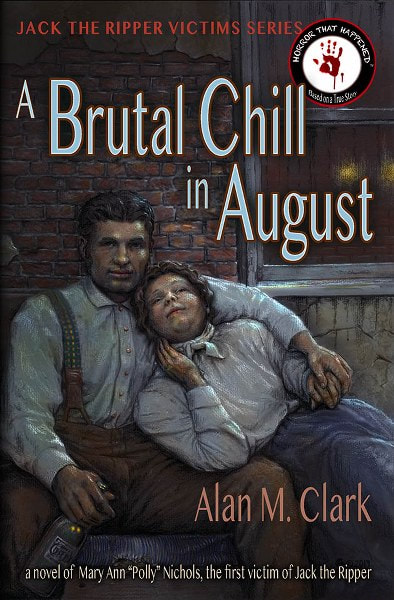
A Brutal Chill in August 
The First Victim of Jack the Ripper 
by Alan M. Clark 
Genre: Crime Horror

Publisher: IFD Publishing
Publication Date: December 7, 2019


We all know about Jack the Ripper, the serial murderer who terrorized Whitechapel and confounded police in 1888, but how much do we really know about his victims?

Pursued by one demon into the clutches of another, the ordinary life of Mary Ann "Polly" Nichols is made extraordinary by horrible, inhuman circumstance. Jack the Ripper's first victim comes to life in this sensitive and intimate fictionalized portrait, from humble beginnings, to building a family with an abusive husband, her escape into poverty and the workhouse, alcoholism, and finally abandoned on the streets of London where the Whitechapel Murderer found her.

With A Brutal Chill in August, Alan M. Clark gives readers an uncompromising and terrifying look at the nearly forgotten human story behind one of the most sensational crimes in history. This is horror that happened. 


Music Video
The song sung by the ghost that haunts Mary Ann “Polly” Nichols
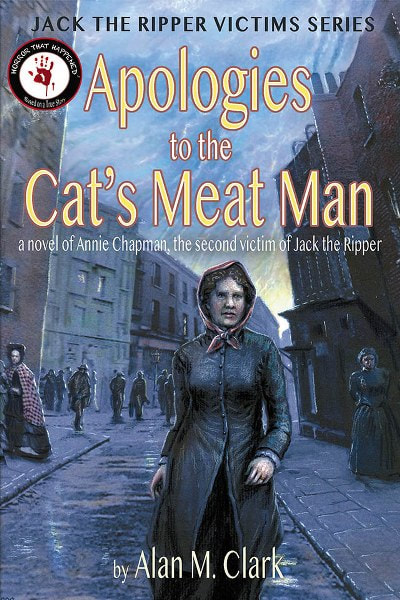


Apologies to the Cat's Meat Man 
The Second Victim of Jack the Ripper  
Publication Date: June 9, 2017


This novel is part of the Jack the Ripper Victims Series. Each novel in the series is a stand-alone story.

Annie Chapman led a hard, lower class life in filthy 19th century London. Late in life, circumstances and and her choices led her to earn her crust by solicitation. After a bruising brawl with another woman over money and a man, she lost her lodgings and found herself sleeping rough. That dangerous turn of events delivered her into the hands of London's most notorious serial killer, Jack the Ripper.

Contrasting her last week alive with the experiences of her earlier life, the author helps readers understand how she might have made the decisions that put her in the wrong place at the wrong time 


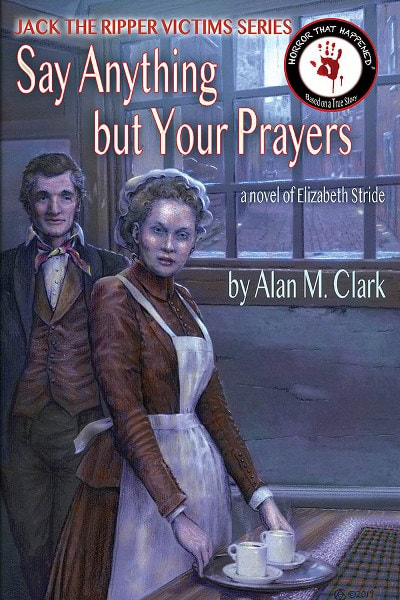
Say Anything But Your Prayers 
The Third Victim of Jack the Ripper 
Publication Date: June 11, 2017


This novel is part of the Jack the Ripper Victims Series. Each novel in the series is a stand-alone story.

An imaginative reconstruction of the life of Elizabeth Stride, the third victim of Jack the Ripper. The beast of poverty and disease had stalked Elizabeth all her life, waiting for the right moment to take her down. To survive, she listened to the two extremes within herself--Bess, the innocent child of hope, and Liza, the cynical, hardbitten opportunist. While Bess paints rosy pictures of what lies ahead and Liza warns of dangers everywhere, the beast, in the guise of a man offering something better, circles ever closer. 
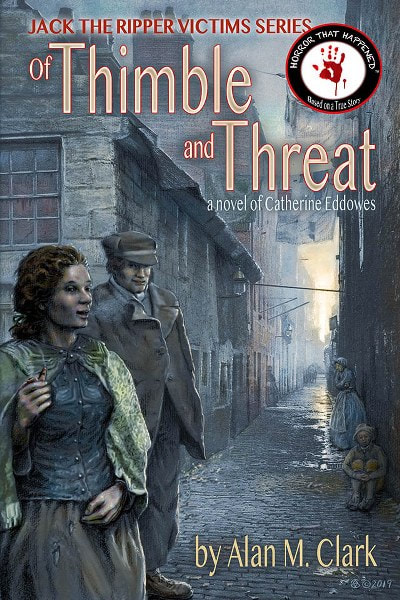


Of Thimble and Threat 
The Fourth Victim of Jack the Ripper 
Publication Date: September 28, 2017


In Victorian London, the greatest city of the richest country in the world, the industrial revolution has created a world of decadence and prosperity, but also one of unimaginable squalor and suffering. Filth, decay, danger, sorrow, and death are ever-present in the streets. Catherine Eddowes is found murdered gruesomely in the city's East End. When the police make their report, the only indicators of her life are the possessions carried on her person, likely everything she owned in the world. In Of Thimble and Threat, Alan M. Clark tells the heartbreaking story of Catherine Eddowes, the fourth victim of Jack the Ripper, explaining the origin and acquisition of the items found with her at the time of her death, chronicling her life from childhood to adulthood, motherhood, her descent into alcoholism, and finally her death. Of Thimble and Threat is a story of the intense love between a mother and a child, a story of poverty and loss, fierce independence, and unconquerable will. It is the devastating portrayal of a self-perpetuated descent into Hell, a lucid view into the darkest parts of the human heart. 
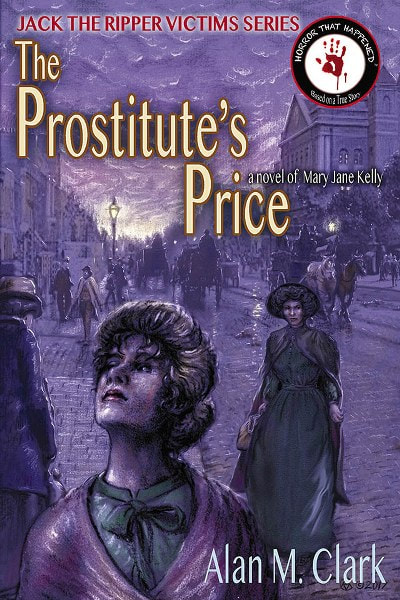


The Prostitute's Price 
The Fifth Victim of Jack the Ripper 
Publication Date: August 30, 2018


A novel that beats back our assumptions about the time of Jack the Ripper. Not the grim story of an unfortunate drunken prostitute killed before her time, but one of a young woman alive with all the emotional complexity of women today. Running from a man wanting her to pay for her crimes against his brother, Mary Jane Kelly must recover a valuable hidden necklace and sell it to gain the funds to leave London and start over elsewhere. Driven by powerful, if at times conflicting emotion, she runs the dystopian labyrinth of the East End, and tries to sneak past the deadly menace that bars her exit.

Although THE PROSTITUTE'S PRICE is a standalone tale, and part of the Jack the Ripper Victims Series, it is also a companion story to the novel, THE ASSASSIN'S COIN, by John Linwood Grant. The gain a broader experience of each novel, read both. 


On November 5, Mary Jane and Joseph sat together, having a meal at the Cock’s Crow Tavern in Mile End Road.
“Our efforts will clear the way for a theft at the Deptford Victualing Yard,” Joseph said, pushing his plate away and finishing off his glass of ale, “the ordinary-looking cove I told you about is the client. I don’t have his name to give you. On the night of the theft, there will be two night rounders, Sims Overton and Roy Nagel, who stand in our client’s way.”
Mary Jane repeated their names to better fix them in her memory. She took another a bite of her rump steak pudding.
“Though they are Government employed,” he said, “as are the stevedores, much like lumpers, they are organized at a local pub. Their master works out of the Evelyn Arms just across Grove Street from the entrance to the Deptford Victualing Yard. They are required to eat and drink at the pub before their shifts. Often they spend breaks there as well. Their shifts are twelve hours long, eight o’clock at night ’til eight o’clock in the morning. They take breaks around midnight, one at a time for fifteen minutes. On Saturday nights, during his midnight break at about a quarter to twelve, Overton goes to the Evelyn Arms, hires a Judy and takes her back to the south gatehouse. The small building is part of the gated entrance to the yard, and has a back door, so she can slip out should anyone come. The hire is prearranged, so you’ll have to attract his attention in the week before, then be available that Saturday night, November 20. Overton and Nagel each take a turn with the woman, one having his way with her while the other stays outside to act as crow, ready to signal should someone approach the gatehouse.”
“They’re helping us without knowing,” Mary Jane said with a smile. Though she had little enthusiasm for the job, she wanted Joseph to see her willingness. She had agreed to help because of the money offered, ten pounds, and because both Joseph and Thomas were important to her.


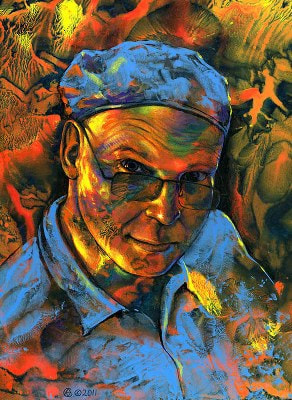
Author and illustrator, Alan M. Clark grew up in Tennessee in a house full of bones and old medical books. His awards include the World Fantasy Award and four Chesley Awards. He is the author of seventeen books, including twelve novels, a couple of novellas, four collections of fiction, some of them lavishly illustrated, and a nonfiction full-color book of his artwork. Mr. Clark's company, IFD Publishing, has released 42 titles of various editions, including traditional books, both paperback and hardcover, audio books, and ebooks by such authors as F. Paul Wilson, Elizabeth Engstrom, and Jeremy Robert Johnson. Alan M. Clark and his wife, Melody, live in Oregon. www.alanmclark.com Visit his blog: https://ifdpublishing.com/blog



Follow the tour HERE for exclusive excerpts, guest posts and a giveaway!


Saturday, 2 March 2019

Book Spotlight: Arthur Dux Bellorum

Today I have a book spotlight for you, a historical fiction about one of my favourite legends, King Arthur. So I present to you, Arthur Dux Bellorum (A Light in the Dark Ages Book 4) by Tim Walker. Plus, there's an excerpt. Enjoy.


Arthur Dux Bellorum (A Light in the Dark Ages Book 4) by Tim Walker


From the ruins of post-Roman Britain, a warrior arises to unite a troubled land

Britain in the late Fifth Century is a troubled place – riven with tribal infighting and beset by invaders in search of plunder and settlement. King Uther is dead, and his daughter, Morgana, seizes the crown for her infant son, Mordred. Merlyn’s attempt to present Arthur as the true son and heir of Uther is scorned, and the bewildered teenager finds himself in prison. Here our story begins…
Arthur finds friends in unexpected quarters and together they flee. Travelling through a fractured landscape of tribal conflict and suspicion, they attempt to stay one step ahead of their pursuers, whilst keeping a wary eye on Saxon invaders menacing the shoreline. Arthur’s reputation as a fearsome warrior grows as he learns the harsh lessons needed to survive and acquire the skills of a dux bellorum, a lord of war.

Tim Walker’s Arthur Dux Bellorum is a fresh look at the Arthurian legend, combining myth, history and gripping battle scenes. Although in a series, it can be read as a standalone novel.

Fans of Bernard Cornwell, Conn Iggulden and Mathew Harffy will enjoy Walker’s A Light in the Dark Ages series and its newest addition – Arthur Dux Bellorum.


Arthur Dux Bellorum is available at Amazon


A Light in the Dark Ages series


An Except from Arthur Dux Bellorum:


Artorius (the young Arthur), Merlyn and Gawain are being pursued by Mordred’s men. They arrive at the former Roman colonia of Lindum (modern day Lincoln)

WITH CARE AND vigilance, the troop of riders moved without incident for two days, following the Fosse Way northwards into the well-cultivated region of Linnius and to the town of Lindum. Merlyn dismounted and gathered the party behind a blackthorn thicket when pale stone walls came into view. Looking at the drooping shoulders of his tired companions, he reassured them.
“This town was built by the Romans as a colonia – a commune for retired legionaries, much like Bedwyr’s home. Many of the occupants will be the descendants of ex-legionaries and we can expect a favourable welcome.”
“How do you know that?” Artorius asked. “They may be friends to Morgana and Mordred.”
“I know because last year I spoke to their council. Lindum is governed by a council of elders from the Coritani tribe, and they elect a leader, in the Roman way. They revere Ambrosius and his mother, Justina, as if they were gods.”
“Are they not Christians?” asked Artorius, who had read scripture to his tutor on Hector’s farm.
“The Christian faith is also strong.”
Merlyn scanned their attentive faces and continued, “However, Artorius has a point. Since the time of my visit much has changed. They may have pledged allegiance to King Mordred and regard Artorius as a fugitive and so, to be cautious, I shall go ahead with Varden and Bedwyr to announce our arrival. The rest of you stay out of sight in the trees. If armed soldiers come pouring out of that gate instead of us, then flee to the forest.”
“Would they not also regard you as a fugitive, Merlyn?” Artorius asked.
Merlyn laughed, “Perhaps, but I have faith in their friendship and hope they would allow me my liberty. I feel this is a more likely outcome – let us go.”
A pensive hour passed before Varden returned and bade them follow him into the town.
To Artorius’s keen eyes, the bridge approach over a dry ditch and stone gatehouse were almost identical to Venta’s, but in well-maintained condition. Inside, the town was a bustle of activity with a multitude of people going about their business. Varden led them along the straight central thoroughfare, past two-storey townhouses interspersed with livestock pens, to an open square lined with market stalls. This was dominated by an imposing imperial building, ringed by a columned portico reached from a dozen steps.
Merlyn and Bedwyr stood at the top of the stairs, flanked by ten or so men dressed in white tunics belted at the waist in the Roman fashion. Once dismounted, attendants took the reins of their horses and led them away.
“Come and join us!” Merlyn shouted down to them, as a curious crowd started to gather. Looking about, and noticing the guards, Artorius could see why Merlyn was content for Flavius to dress them like Roman cavalry.
“Welcome, my brothers!” a white-haired elder called, beckoning them to climb the steps. “I am Maddox, elected chief of the council governing Linnius, the region that surrounds our town. Please enter our senate building that we may hear of your journey.”
The elders led the way into a huge hall with a high ceiling held up by white stone columns carved in the Greek manner. The walls were draped with tapestries depicting an odd combination of hunting scenes and Christian saints. Their hobnail boots echoed as they were ushered across a marble floor to sit at benches flanking long banqueting tables. The elders took their seats on a raised platform. Spring water treated with herbs was served, whilst Merlyn gave an account of their escape from Venta and journey to the farming colonia near Calleva. He introduced Gawain and Bedwyr to the elders, each standing to bow in a knightly fashion, and then walked to Artorius and clasped his shoulders in both hands.
“This is Artorius, the true son and heir of King Uther Pendragon, of the bloodline of Ambrosius.”


About the Author


Tim Walker is an independent author based in Windsor, UK. His background is in marketing, journalism, editing and publications management. He began writing an historical series, A Light in the Dark Ages (set in Fifth Century Britain), in 2015, starting with Abandoned, set at the time the Romans left Britain. This was extensively revised and re-launched as a second edition in 2018.

Book two, Ambrosius: Last of the Romans, was published in 2017 and the third installment, Uther’s Destiny, was published in March 2018 (winner of One Stop Fiction book of the month award, April 2018). The adventure continues from March 2019 in the fourth book, Arthur, Dux Bellorum.

His creative writing journey began in July 2015 with the publication of a book of short stories, Thames Valley Tales. In September 2017 he published a second collection of short stories – Postcards from London. These stories combine his love of history with his experiences of living in London and various Thames Valley towns.

In 2016 he published his first novel, a dystopian political thriller, Devil Gate Dawn, following exposure through the Amazon Scout programme. In 2017 he published his first children’s book, The Adventures of Charly Holmes, co-written with his 12-year-old daughter, Cathy, followed In 2018 by a second adventure, Charly & The Superheroes.


Saturday, 4 March 2017

Interview With Author Caleb Peiffer

Today I have an great interview with multi-genre author Caleb Peiffer, who talks about his writing and his new release, Tortured Worlds. And as a special bonus this book with be available free on Amazon March 5th and 6th. Enjoy!


Interview With Caleb Peiffer


Why don’t you begin by sharing a little about yourself.

The first chapter book I read as a kid was Beverly Cleary's The Mouse and the Motorcycle. That was it for me. I knew I wanted to be a writer. And I never stopped wanting it. So I wrote fan fiction for a long time. Then when I was seventeen I wrote my first novel, and published independently the next year. That was only four years ago. Since then I've written four more novels and a slew of short stories. At times, I'm more productive than at others. But the only trick I know is to keep going, and never stop.


Could you tell us a bit about your latest book?

Tortured Worlds is a collection of five short stories, landing across the spectrum of speculative fiction. One's post-apocalyptic, one's alien contact, one's dystopian, one's fantasy, and one's sort of hard to define, pan-genre if you will. So they're all very different. I even wrote some of them years apart. But the thread that links these stories together is the pain the characters experience, and overcome. They're all tortured in some way, and that's the root of their conflicts. It's a loose connection, but I like it that way.


Why did you decide to write in the speculative fiction genre?

When I started out writing fan fiction, they'd usually be adventures, mostly fantasy. Then I gradually moved in a science fiction direction. My first three novels were mysteries, and that was a new genre for me but it was one I'd read the most of. And now that I was writing seriously, science fiction started calling me back, and I came running. I think what appeals to me about it its big-picture view: if this is what the world looks like now, what could it lead to next, or what must have come before to bring it here? You have free range to speculate. That's why sci-fi is often called speculative fiction.


You write in several genres. Do you have a favourite? And if so, why?

No, I don't think I do. If I had a favorite genre, it would be pan-genre, stories with a little bit of everything. Because I can't choose just one. I love mysteries, and I love high fantasy and fairy tales, and I love science fiction. If I ever tried to settle down in one and just write that forever, I'd drive myself crazy. I like keeping my horizons broad.


What did you hope to accomplish by publishing your book?

I think every writer writes for two main reasons: self-expression, and entertainment. Most writers I know turn to stories because they don't have many other outlets to express themselves creatively. And every writer wants to entertain their readers, and themselves. So those are the reasons. But then there's the hopes. I hope to touch people and affect their lives through my writing, even in some small way. I guess with Tortured Worlds, what I hope for most is that it will find its way to someone in a dark place, and that they'll find an uplifting message in one of my stories. I want people like them to know that darkness doesn't last forever, and dragons can be slain.


Can you tell us about your writing process? Where do your ideas originate? Do you have a certain writing routine?

I try to write every day. I used to be very good at that, and even now that I have less free time on my hands, I still do the best I can. If I didn't, then all these ideas floating around in my head would be trapped there forever, and eventually I'd go out of my mind. As for where the ideas come from, who knows? They come from connections, I can tell you that much. Putting little pieces of your experiences together in new ways. They come from the everyday what-ifs. Sometimes they come to me while I'm watching TV or reading a book, and I'll think, "What if the story had happened this way?" or "What if this character was like this instead?" And then, an idea is born.


Do you have a favourite author, or writing inspiration?

Oh, definitely. Many different ones. When it comes to mystery, Agatha Christie inspired me the most, hands-down. For fantasy it was Baum and Tolkien, and the likes of them. C.S. Lewis's Space Trilogy has been the strongest influence on my science fiction. And when it comes to my writing in general, I already mentioned that Beverly Cleary was the first one to inspire me. But the number one writer, or artist I should say, who has influenced me the most, isn't even a novelist. Bill Watterson, author of the Calvin and Hobbes comic series, is the most masterful artist I know, and has always been my greatest creative inspiration.


What advice would you give beginning writers?

Write more. Write everything you can. And write patiently. Don't get discouraged, and don't stop. You'll never regret writing something, I can guarantee you that. You'll never look back and say, "Man, if only I hadn't written that." But you will look back and regret not having written more. So keep writing.


What’s your next project? Any upcoming book secrets you care to reveal?

Well, I have a fairy tale that I think will appeal to both children and adults in the works. The first draft is written, now it just needs to go through the rigorous process of editing and rewriting. I also have a lot more speculative short stories I'm working on. I'm definitely planning to put a few more collections out there this year.


About the Author:

Caleb Peiffer writes mystery, fantasy, science fiction, or just about anything. Growing up, he always wanted to write, so now that's what he does. When he's not writing, he's reading, or planning what to write next. He lives in paradise on the east coast of Florida. Get to know him at CalebPeiffer.com


Tortured Worlds
by Caleb Peiffer

A post-apocalyptic winter, superpowered aliens, a machine that controls the planets' movement, immortal love, and voices echoing from nowhere. These are just some of the things that torture the worlds you'll find in these stories.

The Tortured Worlds collection features five stories of science fiction and fantasy

You can find his new speculative fiction story collection Tortured Worlds on Amazon, and don't forget it's on free promotion March 5th and 6th.


Friday, 2 December 2016

Interview With Author Theresa Pocock

Today I have a great treat, an interview with historical fantasy author Theresa Pocock, who stops by to chat about her newly released book (paperback available from bookbaby), Elizabeth Tudor. Enjoy!


Interview with Theresa Pocock


Why don’t you begin by sharing a little about yourself.


I’m just a girl who is trying to make her way in this world. No… well I am a mom, a wife, a Christian, and an author. I feel like everything I do fits into those four fields.

Could you tell us a bit about your latest book?
Well, as a history major, when you learn about the sixteenth century you can’t help but learn of Henry VIII and all his wives and his shenanigans. I of course was fascinated with the subject but something my teacher said in passing one day sparked the idea for this book; what if Henry’s claims that Anne Boleyn entranced him really were true? The idea stuck and when I began writing it was just a natural topic for me to explore.
In ELIZABETH TUDOR: Ancestry of Sorcery, Anne and Elizabeth come from a long line of sorceresses, but Anne makes certain that her daughter, the potential queen of England, will be the most powerful one yet.
I am very excited about this story. I feel that it is a strong retelling made more interesting with the sparkle of magic and the tragedy of star crossed love.


How long have you been writing, and how many books have you published to date?

Ten years. I’ve completed 6 books. ELIZABETH is my first publication.


Of all the books you've written, do you have a favorite?

To be honest which ever book I am reading, writing, editing, is the best book ever. Because naturally all the things I wish authors would do in the books I read for pleasure I do in my book, which automatically makes it the best in my mind, right?


Why did you decide to write in the Fantasy genre?

Well I always felt it was the only genre worth reading, that is until I turned 30. Now I find merit in many other genres. My WIP is actually my first non-fantasy story about a celebrity dating service and I am loving it. You can read my whole description at www.theresapocock.com.


Who is your intended readership?

Probably women and teens, all of my stories have a strong romantic element to them. That’s just me. I feel like I write the angst of teen love quite well and the tenderness of mature love also. So I would say anyone who likes romance. (not sex)


Why did you write this book? What was your inspiration?

As I said above ELIZABETH TUDOR was inspired by the idea that Anne Boleyn really was a sorceress. That she bewitched Henry and that is why he did all he did. My inspiration was a contrast between two things actually. First, I read an amazing book called Eragon when I was 25. I was so inspired by how young the author was. I read that the author couldn’t get a publishing deal and that he had to do some pretty amazing things to get his stuff out there. Then I read a truly ridiculous story which got published no problem and I kind of took that as a challenge, I guess. I also thought if a teenager can write so can I! That was when it became real. That’s when I began plotting.

What did you enjoy most about writing your book?

I love that I get to tell these cool stories. I love researching. Like with ELIZABETH TUDOR, I wanted it to be as historically accurate as possible. I read everything from novels, to encyclopedias, to her journals, to her speeches, to her bank statements, just to assure that I would have things correct. I can get lost in the researching.


What did you find most challenging about writing your book?

It took me and entire year of consistent writing during naps times and early mornings and evenings to get ELIZABETH done. I don’t have a great memory and that is exacerbated by the fact that I’m dyslexic so when I am dealing with people and places and loads of facts I’m connecting, I must review every day. If I leave it for a week or something its literally like starting from scratch.   


What advice would you give beginning writers?

I would tell them to write 500,000 words before you commit yourself. I would also say don’t force it. If you have a story to tell it will come out. That doesn’t mean it’s easy that just means you won’t be able to leave it alone. If you can’t leave it alone you’re an author and you need to do your prerequisites. Which are: Read a ton. I feel like this is imprinting. You imprint good writing in your mind, all the while you practice. Research the elements of writing. How to show not tell, how to change tense, how to write tension, how to plot things out. Figure out if you’re a pants-er or a plot-er. Have people read your stuff and get some opinions.  If you do these things and you have a story to tell the ability to get it down on paper will come. So never ever lose hope. Then I say write an amazing query letter and send it to me at www.bigworldnetwork.com as of January 1, 2017 I am the new submissions manager there.


Are you working on another book?

I have something I am so excited about. It is a fantasy set in the Garden of Eden.  I call it GUARDIANS OF THE GARDEN. Briefly, it’s about a family that protects the garden of Eden from those wanting to gain immortality by eating of the tree of life. As time marches on they gain fantastic powers to protect the garden from advancing technology. My story starts in the chaos of a PREapocalypse world and a betrayal from inside the garden. I have a really amazing agent looking at it right now and I have high hopes.
I’m also putting some of my work on Wattpad you can check it out for just go to: www.theresapocock.com and see what strikes your fancy.


Author Bio:


Theresa Pocock is not a history buff but she is a history lover which lead her to study the subject at BYU-Idaho. However it was here obsession with the literature that sparked the idea to write. Since, that desire has become an annoyingly relentless compulsion gnawing at her attention and focus, As her list of story ideas grows longer and her free time gets shorter it has taken tireless dedication to continue writing. Utilizing earily mornings, nap-times, sport practices and many many late nights has born fruit though in the form of six wonderfully crafted novels which she hopes to share with the world. After sixteen moves, three kids, four dogs, and a few fish, Theresa and her family currently reside in Washington state. For now.


Thursday, 6 February 2014

Interview With Author D. W. Wilkin

Today, we go back in time with author D. W. Wilkin, to discuss the Regency Era, Jane Austen, his books and writing. Read on, and enjoy...


Interview with D. W. Wilkin


Why don't you begin by sharing a little about yourself.

I have hit my middle years, which I think gives me some perspective as an inhabitant of earth, as well as a writer. I see through these eyes the person I was twenty and thirty years ago and know now that that person then needed to go further in their journey to be complete. I see a lot of young people who need better guidance and advice then society has provided. And I read my writing from my earlier days and, groan…

I live in Southern California and have travelled all over the world. One of my grandfathers was English so have been to England more than once. I feel that I am well read, with a personal library of over 6000 books. (But then I haven't read every book in my library yet.)


You write historic novels predominantly, quite often set in the Regency Era. What is it about that particular time period that inspires you?

Writers of Regencies make the period much more charming than it was. We hardly ever write about the dingy side of London. We spend our time in drawing rooms and at Balls, talking of the Ton, which was the 10,000 most important people of the Empire.

When watching Lord Laurence Olivier portray Fitzwilliam Darcy in Pride and Prejudice, at first, I did not like the period, but it grew on me until I began to be a historical reenactor of the time. Even teaching the dances of the time, and attending balls now where we all dress as members of the Ton and dance the night away.


Can you tell us a bit about your latest book, Beggars Can't Be Choosier?

Beggars Can't Be Choosier is the story of an English Earl, Brian Forbes Pangentier, who is Cleaned Out, has no money. His father not planning very well, and all the estates are rented to pay his debts. Katherine Chandler inherits a fortune when her father dies, a man who made it in the India Trade. She is not of society, and is snubbed by it. She decides that marrying a lord is her way to respectability. And she can afford to do so.

Katherine and Brian begin to make a home and life for themselves, but once children arrive and the title is secured, part of their agreement is that they will separate and even divorce. Allowing both to look for love in their lives. That money could often buy a title throughout the ages is a concept often used. Divorce and separations also did take place in the Regency. (Though divorce had to be handled with extra care.) I don’t want to give the ending away, but seeing as this is a Regency Romance, you would be correct in expecting love to make its way into the tale at some point.


You've also written a sequel to Jane Austen’s Pride and Prejudice using some of the secondary characters. Was it intimidating or tricky to continue that particular story?

It was a little tricky. It had always struck me as a wonder why not more was said about the war that raged across Europe at this time. Austen had brothers who went off to serve in the Navy and became admirals as well. It took me some time to see that Jane had developed the book over the course of many years so leaving exact dates and the occurrences that were happening in the world out of her tales was easier for her.

With a man titled as Colonel and his father an Earl, it became clear in my mind that Colonel Fitzwilliam as we met him through Jane Austen’s writing must have been a man who led a regiment. His commission bought and paid for by his father. Adding to his tale, for it intrigued me (I also historically reenacted as a member of a Victorian Era regiment) was something I wanted to do. I also wanted to tell the tale of Kitty too.

The War however lasts a great deal longer than one season, and a young lady did not stay available for many seasons before being On The Shelf (too old to marry.) Using the device of letters from those home in London and England, to Colonel Fitzwilliam, away on the Peninsula fighting for England and Wellington, I thought would be a good device.


How do you research your books? What are the challenges in deciding which historic tidbits to include and what to leave out?

I have a degree in history from UCLA, so I used to start with my books on the Era. And then the internet became ever more powerful. I have a chronology of events of the Regency years at: http://www.regencyassemblypress.com/Regency_Timeline.html

But I also go to Wikipedia and then index articles there quite often for what I need. My historicals use the reality of history as a background to the tale. I have one story in first draft that is about the Peninsula War where the events make the characters secondary, so they are completely accurate and the fictitious additions are to make the tale into a story that is compelling to read.


Can you tell us about your writing process?  Where do your ideas originate?  Do you have a certain writing routine?

I start with an idea, that I then flesh out in a note, now on my iPad. I then take the note, which has become a plot outline with beginning, middle and end and start actually putting two to four sentences of scenes for each chapter of the tale. I use a program that emulates an index card. That imports into my writing program and I can see, as I start writing each chapter, my plan for it in the upper right of the screen. I try to write up to 20 pages a day as I go at my first draft.

I think most ideas come from dreaming and sleep. I used to keep a journal by my bed and have hundreds of ideas I transposed to the computer. The best ones can be fleshed out into full novels. And as I mentioned age giving perspective both as a member of the race, and a writer, I can craft better conflict, action, dialogue now. My routine is to get on the computer in the am and check for correspondence, add to the blog, clean up things, and then start the days writing. Break for lunch, and then back to it until it is late afternoon and my mind has fogged over.


What is the greatest problem you've faced as a writer?

Getting the word out, and selling. My writing has reached a level that it has a style, and I find (like the toothpaste commercial) 4 out of 5 readers like my style when they read it. But they have to discover me and then stick with me to the last page. (In Regencies we have authors who wait till the last page for the first kiss. That is where I have generally fallen, though Beggars Can't Be Choosier is not quite one of those.)


Who has inspired you as an author?

As a writer you must read Stephen King’s On Writing. That is totally inspirational. For what I write, Charles Dickens, Jane Austen, Georgette Heyer, Sharon Kay Penman and even Robert Jordan. And then really a great many others. Not all the writers I read are great, nor all are inspirational, but some who are either one or the other have given me examples of how to tell a better tale.


What’s next for you?

I have been developing a trilogy concept for Xchyler Publishing based on my characters, Wilkins Micawber III and Daniel Copperfield, and the adventures they would have in the Royal Dirigible Corps, fighting for the Empire in Southern Africa. I hope to have a green light and that we will see these Steampunky characters again soon.


Beggars Can't Be Choosier:

When a fortune purchases a title, love shall never flourish, for a heart that is bought, can never be won.

The Earl of Aftlake has struggled since coming into his inheritance. Terrible decisions by his father has left him with an income of only 100 pounds a year. For a Peer, living on such a sum is near impossible. Into his life comes the charming and beautiful Katherine Chandler. She has a fortune her father made in the India trade. 
Together, a title and a fortune can be a thing that can achieve great things for all of England. Together the two can start a family and restore the Aftlake fortunes. Together they form an alliance. 
But a partnership of this nature is not one of love. And terms of the partnership will allow both to one day seek a love that they both deserve for all that they do. But will Brian Forbes Pangentier find the loves he desires or the love he deserves?
And Katherine, now Countess Aftlake, will she learn to appreciate the difference between happiness and wealth? Can love and the admiration of the TON combine or are the two mutually exclusive?


Author Bio:

Mr. Wilkin, the author, is a student of the English Regency. He has written several books and we can expect more to come this year and in the future. A student of history, Mr. Wilkin graduates with a bachelors from UCLA. In later years he continued his studied after college and applied himself as a re-enactor of history. A member of several societies that pursue the study of history through reenacting, Mr. Wilkin is a well known figure in his circles covering history from the middle ages to the present.
Along the way, Mr. Wilkin became a teacher of dance from former times. Several of those dances from the periods of history that are covered and mentioned in his novels are spelled out at the Regency Assembly Press website. 
After his first novel, The End of the World, a short interview was published with Mr. Wilkin. Mr. Wilkin writes in several disciplines, but maintains that writing Regencies is his favorite. Not only does he find drafting his own quite rewarding, but the sequels to the work of Jane Austen  equally gratifying.


You can find out more about the author and his books at these websites:

Also, you can find Beggars Can't Be Choosier on Amazon:

And on Smashwords:


Subscribe Now:

Search This Blog

Powered By Blogger

Monthly Pageviews