Showing posts with label romance novel. Show all posts

Friday, 25 September 2015

Book Spotlight: Tears by Jean Lowe Carlson

Today I have a book spotlight for dark fantasy romance Tears by Jean Lowe Carlson. It is the second book in the Three Days of Oblenite series. If you'd like to check out the first book, see my spotlight here: Book Spotlight: Breath. Now on to today's post for Tears (be warned, there is some racy, suggestible content)...


Tears by Jean Lowe Carlson

Pious half-Gypsun Phillip d’Auvery is tortured. His soul is pledged to his god, but Phillip’s life has a darker aspect that drives him to the scourging lash of the Padrenne of Saint Sommes Cathedral year after year. For Phillip’s curse is a bliss that can only be found when pain smites him until tears are shed. His blissful curse alienates him until Phillip discovers a man who understands pain and power, the stern Oruthane d’Iver. As Phillip’s love for his dominant lover grows, the two are exposed, and danger begins to follow them. But there is no greater danger than the dark secret smoldering in Phillip’s heart, which will threaten everything dear to him.

Content Warning: This book contains intense BDSM with whips.


ABOUT THE SERIES - Three Days of Oblenite (3 novels)

This darkly romantic, gothic paranormal fantasy series is rife with superstition, piety, and the devious nature of the mystic. The three novels take place in a dark version of Victorian-era Paris, and feature three characters cursed with the gifts of a dead saint. Swept up in the torturous undercurrents of their desperate curses, their lives collide in desire, lust, power, obsession, addiction, fervor, desperation, and death. “Breath” features a young woman cursed to celibacy and unable to find love because her kiss kills, all except one night a year. “Tears” tells the story of a young man cursed to feel bliss when he is whipped, and the religious conflict he feels as he finds himself in a relationship with the man who brings him release. While in “Blood”, a brilliant surgeon cursed with blood that heals descends into a desperate underworld, addicted to working miracles. And in the seedy Gypsun Quarter at the edge of the Saints Commons, there is no blessing that can save those cursed to depravity, darkness, and permission. They can only save themselves.


Excerpt:


Phillip d’Auvery moved carefully back down the steps at the altar, nodding to a few faces he recognized who were yet waiting for the Padrenne, and then turned towards a door upon the left side of the cathedral. He made his way through and up the cramped stone staircase to the narrow wainscoted hall of the cathedral’s Holy Servants offices, and entered the first door upon the left without knocking. 

The gaslamps were low in the hall and flickered soft ghosts across the forest scene on the Padrenne’s carven door as Phillip entered. The Padrenne’s offices were tidy and plain, befitting a man of his station and devoutness, and Phillip selected his usual overstuffed chair across the desk from the Padrenne’s and sat, settling in to await Henri Coulis in quiet meditation.

Minutes stretched as Phillip prepared himself for the hours ahead, eyes closed, listening to the deep midnight hush of the cathedral. Whispering footsteps came and went upon the stone in the hall. The old scents of incense wafted upon his breath, not a new stick yet lit tonight, but the deep comforting smell of a tradition of char to push back evil. It calmed Phillip’s soul, laved him in a kind of alert ease as he waited.

At last, the iron latch of the door clicked, and the ancient wood groaned inwards, and Phillip heard the rustle of Padrenne Henri’s fine garments, the black robes and white stole used only for this particular day. He heard a sigh, and then the crack as Henri Coulis popped his own back. A rustle of the fabrics came as they were hung up properly in a cupboard to the right of the door. Phillip heard the creak of leather as the Padrenne took a seat in his usual high-backed chair behind the desk, and Phillip opened his eyes at last.

“Phillip.” Henri Coulis’ red-rimmed eyes were exhausted, but his thin lips held a benevolent and satisfied smile. “How may I help you tonight?”

“I would like to conclude my Pentriant in the old way, Padrenne.”

Henri nodded, his burnished grey-opal eyes unsurprised and shining with the pleasure of devotion despite the red that rimmed them. Phillip knew why those tired eyes shone now in that time-stretched face. The next few hours would be cleansing for them both. It was merely a formality between them, Phillip’s asking with such careful propriety, after so many years. Padrenne Henri knew that Phillip d’Auvery held to the old ways, like his mother had before him, one of very few who still did.

And he also knew why.

“Very well,” Henri smiled, just a slight twist of the lips. “Give me a moment to prepare. You may strip to the waist, remove your boots and socks, and anoint yourself at the basin in the prayer niche. Then please kneel upon the bare stones before the Immaculate, my son, and settle into silent meditation. I will attend you shortly.”

“Thank you, Padrenne.” Phillip inclined his head.

“As the Immaculate wills it, my son.”

Padrenne Henri made an offering gesture towards the prayer niche with his long parchment-thin hands, and Phillip rose, turning away from the desk and walking to the niche. He settled upon the plain wooden bench by the wall and removed his boots and socks, then hung up his grey wool coat upon the peg. His trim black waistcoat followed, then his loosened cravatte was folded up neatly and tucked into a pocket of the waistcoat. Once the cravatte was gone, Phillip stripped his black shirt off over his head rather than bothering to undo all the buttons. His lean muscles ached from the day, and Phillip’s abdomen seemed thin and hollowed from fasting. He adjusted his neck and shoulders again, rolling them out a little as he took his place upon his knees before the small statue of the Immaculate in the prayer niche.

The Immaculate’s pale marble arms were open and welcoming as Phillip knelt upon the familiar cold stone floor, the effigy’s face kind and slightly wistful. Phillip knew the contours of that face, knew why the effigy seemed both pleased and saddened to see him. Phillip’s knees protested what had already been today and what was yet coming with twin surges of pain, but he consummately ignored them, settling before the effigy. He leaned forward, dipping his hands into the silver bowl of water to the side, and rubbed the water over his face, hands, neck, chest, and through his short ruff of unruly black hair. Then he rested his forearms upon the stout wooden railing that housed the statue. Phillip clasped his hands and closed his eyes. He allowed his head to fall forward and his neck to relax, his forehead coming to rest upon the wood railing with his elbows.

Immaculate trust settled within Phillip d’Auvery, and a small thrill of fear mixed with anticipation as Phillip listened to the sounds of the Padrenne moving around the room, preparing. Phillip’s rose-beads were left around his neck, their miniscule weight comforting. With long, slow breaths, Phillip d’Auvery prepared for his final Cleansing of Pentriant, and urged every muscle in his body to loosen. He heard the Padrenne approach at last, and fought the urge to tense. Henri Coulis took up his usual place directly behind Phillip, the quiet step of his bare foot a whisper in the chamber as he took his ready stance.

A thrill passed through Phillip again.

“Are you prepared to come to the Immaculate, my son, and to be Cleansed of your sufferings at last, upon this Most Holy Day of Pentriant?”

Phillip swallowed, fighting the tension of anticipation, urging his body to be calm and loose. “I am, Padrenne. Cleanse me of my sufferings, and bring me to the Everlasting Joy, the Infinite Bliss of His Holy Soul. So Be It.”

“So Be It,” Padrenne Henri murmured.

The crack of the lash startled Phillip as it always did, as it curled over his bared back and snaked around his ribs. There was always a moment, the first moment, when his body responded to the sound, tightening with surprise, before the pain came.

But then it came.
A searing of pain, a bright line of misery, a flash of horror and anguish and then the surge, the blossoming of every dark touch and miserable need of Phillip d’Auvery’s flesh and his soul. Phillip gasped at the pain, all pretense of manhood abandoned. It devoured him, blistered him, dived within him and scourged him, knifing like hot fire through every part of his poor corpse and his everlasting soul.

He had a moment to breathe. The Immaculate gave him that small concession, at least.

And then the lash fell again.

Phillip screamed, the sound torn from his throat like the beasts howling in the night, like all the desperate sinners who cried and died in torment, whose pitiful pain mimicked his own. It sent him reeling. Their suffering abounded within him. Phillip breathed it in and keened it out. Every night of passion abandoned into misery, every mother aching for a child long gone, every curl of madness and anguish and every twisted, obliterated heart that cried out into their own endless Inferno.

And then the lash fell again.

Phillip d’Auvery broke with a sob, and began to weep.

Tears beaded upon his dark eyelashes and dripped down his hanging head to his nose, dropping upon the cold stone of the floor and striking upon the wood of the stout railing. And as they fell from his lashes, Phillip felt the Ecstasy of the Immaculate begin to flow through him like honeyed wine.

Tears streamed freely now, and the lash fell a fourth time. Phillip screamed, a short cry of surprise and pain and release, rocking forward upon his elbows at the railing, absorbing the agony, taking it all in, holding it close within his heart, transmuting it. Bliss filled him, eternity filled him, life itself filled him and he gasped from the pure pleasure of the Immaculate building within, scouring away his sufferings at last. Abandoning himself to its deep succor, Phillip shuddered with livid pain and infinite pleasure. He lifted his head, the breath of his Immaculate surging through every pore. Drinking it in, he opened his throat and cried out for the Great Mercy.

The lash fell a fifth and final time.

Phillip d’Auvery fell back upon his knees and bare ankles, his elbows falling from the wooden railing. His chest opened and his head fell back, baring his throat in surrender, his hands resting palm-open at his sides, fingertips trailing upon the cold stone of the floor.

Open to the Eternal Bliss, Phillip wept in silence.

Open to the Light and the Life and the Joy, Phillip wept in silence.

Broken open, his back streamed blood from the lash and his naked throat gasped. The pure ecstasy of the Immaculate dived down Phillip’s throat and in through his closed eyes. It penetrated his chest and thrust deep into his aching flesh. And as the tears streamed down his jaw to his neck, the world opened up suddenly in the flickering lamplight behind Phillip’s closed eyes. The ecstasy rolled out from his flesh in a burgeoning wave, saturating everything it touched. No longer contained within the poor corpse that was Phillip’s body, the Immaculate’s Own Touch expanded in every direction, blessing, commanding, unstoppable, undirected, blissful.

Phillip heard Padrenne Henri fall to his knees with a short cry. And then he felt the Padrenne’s benevolent hands upon his bare shoulders as Henri Coulis was taken by the Immaculate’s ecstasy also, this night like every other. The Padrenne sighed, wrapping his stringy arms around Phillip’s chest, cradling Phillip close and resting his gaunt cheek to Phillip’s forehead. Uncaring of the blood from Phillip’s scourged back, the Padrenne cradled his Holy Son, and Phillip felt the wet of Henri’s own tears upon his forehead like a blessing from the Immaculate himself.

So it was, with Phillip d’Auvery.

That his suffering, his pain and tears, brought himself and those around him so much bliss.


Tears is available at:


Author Bio:

Jean Lowe Carlson is a writer of dark supernatural romance and epic fantasy fiction, but her novels vary widely into dystopian fantasy and even into supernatural westerns with some erotic content. Jean writes genre-bending and genderqueer fantasy, mixing a keen and gritty blend of epic, romantic, erotic, dark, supernatural, and dystopian fantasy. Her sensual, raw worlds remind one of Jacqueline Carey, Clive Barker’s Imajica, Anne Rice, and Robin Hobb. Jean holds a doctorate in Naturopathic Medicine from Bastyr University in Seattle, and as a doctor, she has a keen awareness of psychology, energy, nature, and human behavior. She currently practices Esoteric Buddhism (tantra), yoga, Reiki, and Emotional Freedom Technique (EFT). Jean pulls from this knowledge to paint vivid and emotionally complex characters, set amidst the broader scope of nations in turmoil or societies with riveting secrets or supernatural elements. Not afraid of exploring all kinds of relationships, including LGBTQ and BDSM, her novels are exciting, passionate, challenging, and lush.

For more on the author and her books:


Tuesday, 19 May 2015

Book Spotlight: Breath

I have a book spotlight today, for the dark fantasy romance Breath by Jean Lowe Carlson, the first book in the Three Days of Oblenite series. Plus there's an excerpt, so enjoy...


Breath by Jean Lowe Carlson
Three Days of Oblenite - Book 1

Gryffine Toulunnet is cursed. She lives for one day a year, the heady festival of Rollows, where the dead dance their bones back to life. Born to a pious mother and miserable because of her curse, Gryffine sneaks out upon Rollows-eve to dance and drink with the Beast and his demons, and set herself free. Until she encounters dashing Gypsun barman Jessup Rohalle in his masque of the Immaculate Lust, and Gryffine’s strange curse marks them both in a single night of passion. Six years later, Jessup and Gryffine meet again, tempting fate with Gyrffine's curse, a kiss that steals the very breath of life from any lover. But Gryffine is linked to another besides Jessup, a tortured soul with a dark gift of his own, bitterly cursed just like she. And as the lamplit streets of Julis darken into winter, the curse comes to claim its own.

You can find Breath on:


ABOUT THE SERIES - Three Days of Oblenite (3 novels) 

The City of Julis in the Onvittaine is rife with superstition, piety, and the devious nature of the mystic. Three lives collide, swept up in the torturous undercurrents of three desperate curses, from which there is no escape. Desire, lust, power, obsession, addiction, fervor, desperation, and death flow in the darkness of Julis and in the seedy Gypsun Quarter at the edge of the Saints Commons. And not even the blessings of Saint Sommes herself can save those who become lost in the mystery, depravity, darkness, and permission of the Quarter. They can only save themselves.

The three books take place in a fictional, dark version of Paris in the late-Victorian era, and feature three characters cursed with the gifts of a miracle-working saint who died five hundred years prior. The first novel, Breath, is about a young woman cursed to celibacy because her breath when she kisses draws the vitality of any living thing, all except one night a year. The second novel, Tears, is about a young man cursed to feel bliss when he suffers physical pain from the lash, and the religious conflict he feels about his curse as he finds himself in a new M-M relationship with the man who brings him release. The third novel, Blood, is about a brilliant surgeon cursed with blood that heals. His life falls apart as he descends into the desperate underworld of Julis, gradually becoming addicted to using his blood to work miracles among the whores and the diseased.


Excerpt From Breath:

Jessup chewed his lip a moment. “Some of the old stories are true, Gryffine. And I think yours is one of them. Though I admit… it’s a very strange version of what I traditionally hear.”
Gryffine frowned. “What have you heard?”
“The tale of the Boy and the Bones. It’s the traditional story of Rollows. A young boy touches some bones and is cursed with the Kiss of Death, with which he kills his own mother. It’s where the Rollows toast comes from.”
“I’ve heard the story.”
Jessup looked at her oddly. “You have?”
Gryffine nodded. “The evening we first met. I was with my mother at the Gypsun market that afternoon, and I heard an old raglady telling it to a group of youths at one of the bonfires.”
“So you know how it goes.”
She nodded again. “But I’m a woman. And my curse didn’t start from touching some old bones.”
He shrugged. “Other than that… don’t you think the story describes your situation perfectly?”
Gryffine lifted an eyebrow.
“Come on.” Jessup pinched out the incense and stood. “Let’s have dinner in the Gypsun Quarter. I’ll take you to Aeshe and then we can find Rennet and talk to him about your manse.”
Gryffine took his proffered hand and stood, then made for the outer door of the sepulcher. “This way. I’ll show you the backyard before we go.”
They pushed through the heavy stone door and into the sunlight, flooding down on what was turning out to be a perfect spring afternoon. The air was moist and refreshing after the dry musk of the sepulcher, and Gryffine’s mood lifted to the radiant sun and the bright-tempered man at her side. They shoved the stone door shut and traipsed the gravel walk through the verge to the back porch. She was already tripping up the steps with a much lighter heart when a small pull came at her hand from Jessup.
“Hold on a tic. What’s that?”
“What?” Gryffine glanced over, then followed his gaze to a small fenced-off area with a wrought-iron railing that contained a fixture of the manse she had come to accept as one of its many oddities. Inside the railing, upon an extra side-swath of the stone back porch, sat an ancient wrought-iron coffin, its vellum gone and the bones inside long turned to dust under the protection of the gables and eaves. But as Gryffine glanced at it, she, too, noticed something about the coffin that made the hair of her neck stand on end.
Within the confines of the wrought-iron, right where a corpse’s chest would once have been, grew a single, perfect yellow day-flower, nodding its sunburst head to the light spring breeze.
Gryffine blinked.
Jessup grinned at her. “Should I sneak through the bars of the railing and go touch it?”
But a rush of alarm went through Gryffine just then, and she hastily gripped Jessup’s arm, drawing him back. “No! Leave it alone.”
“It’s just a day-flower. They probably grow there every spring.”
Gryffine shook her head. “There have never been any flowers there. Mother tried every spring to grow some. She hated the coffin but was too superstitious to move it. She sprinkled lenou-seeds in the bone-dust, flush-horn seeds, pennybright. Everything she could think of. Nothing ever grew.”
“Huh. Must have sprinkled day-flower seeds at some point and one finally took.” But even Gryffine could tell that Jessup’s teasing tone had gone to one of wary caution. “I’ll speak to Rennet about getting that whole thing off the porch and putting it in the sepulcher where it belongs.”
Gryffine swallowed and nodded. “That would be best, I think.” She tore her eyes away from the nodding yellow flower and tugged him up the porch, trying to put it from her mind.

~*~


Author Bio:

Jean Lowe Carlson is a Naturopathic Doctor and writer of both fiction and non-fiction, and holds a B.A. in Biology and B.Mus. in Opera from Oberlin College and a medical doctorate from Bastyr University. A keen observer of nature and human behavior, Jean writes genre-bending epic, romantic erotic, and dystopian fantasy fiction, and maintains a blog on Esoteric Buddhism (Tantric Practice). As a medical doctor and practitioner of Tantra, yoga, pranayama, Reiki, Craniosacral Therapy, and Emotional Freedom Technique, Jean pulls from her deep knowledge of psychology and energy interactions to paint vivid scenes and emotionally complex interactions between her characters.

Mixing a keen and often gritty blend of erotic and romantic content into her epic, dystopian, and dark fantasy, Jean creates sensual, raw worlds that remind one of Jacqueline Carey, Clive Barker's Imajica, Anne Rice, and Robin Hobb. Jean's characters are human and complex, their interactions set amidst the broader scope of nations in turmoil or societies with riveting secrets. Not afraid of exploring all kinds of relationships, including LGBTQ and BDSM, excitement and passion combine in Jean’s novels to create rich, lush worlds where death and life are always precariously balanced. Jean Lowe Carlson lives with her delicious husband Matt in Redmond, Washington, and desperately wants a cat.

For more on the author and her books check out these sites:


Thursday, 6 February 2014

Interview With Author D. W. Wilkin

Today, we go back in time with author D. W. Wilkin, to discuss the Regency Era, Jane Austen, his books and writing. Read on, and enjoy...


Interview with D. W. Wilkin


Why don't you begin by sharing a little about yourself.

I have hit my middle years, which I think gives me some perspective as an inhabitant of earth, as well as a writer. I see through these eyes the person I was twenty and thirty years ago and know now that that person then needed to go further in their journey to be complete. I see a lot of young people who need better guidance and advice then society has provided. And I read my writing from my earlier days and, groan…

I live in Southern California and have travelled all over the world. One of my grandfathers was English so have been to England more than once. I feel that I am well read, with a personal library of over 6000 books. (But then I haven't read every book in my library yet.)


You write historic novels predominantly, quite often set in the Regency Era. What is it about that particular time period that inspires you?

Writers of Regencies make the period much more charming than it was. We hardly ever write about the dingy side of London. We spend our time in drawing rooms and at Balls, talking of the Ton, which was the 10,000 most important people of the Empire.

When watching Lord Laurence Olivier portray Fitzwilliam Darcy in Pride and Prejudice, at first, I did not like the period, but it grew on me until I began to be a historical reenactor of the time. Even teaching the dances of the time, and attending balls now where we all dress as members of the Ton and dance the night away.


Can you tell us a bit about your latest book, Beggars Can't Be Choosier?

Beggars Can't Be Choosier is the story of an English Earl, Brian Forbes Pangentier, who is Cleaned Out, has no money. His father not planning very well, and all the estates are rented to pay his debts. Katherine Chandler inherits a fortune when her father dies, a man who made it in the India Trade. She is not of society, and is snubbed by it. She decides that marrying a lord is her way to respectability. And she can afford to do so.

Katherine and Brian begin to make a home and life for themselves, but once children arrive and the title is secured, part of their agreement is that they will separate and even divorce. Allowing both to look for love in their lives. That money could often buy a title throughout the ages is a concept often used. Divorce and separations also did take place in the Regency. (Though divorce had to be handled with extra care.) I don’t want to give the ending away, but seeing as this is a Regency Romance, you would be correct in expecting love to make its way into the tale at some point.


You've also written a sequel to Jane Austen’s Pride and Prejudice using some of the secondary characters. Was it intimidating or tricky to continue that particular story?

It was a little tricky. It had always struck me as a wonder why not more was said about the war that raged across Europe at this time. Austen had brothers who went off to serve in the Navy and became admirals as well. It took me some time to see that Jane had developed the book over the course of many years so leaving exact dates and the occurrences that were happening in the world out of her tales was easier for her.

With a man titled as Colonel and his father an Earl, it became clear in my mind that Colonel Fitzwilliam as we met him through Jane Austen’s writing must have been a man who led a regiment. His commission bought and paid for by his father. Adding to his tale, for it intrigued me (I also historically reenacted as a member of a Victorian Era regiment) was something I wanted to do. I also wanted to tell the tale of Kitty too.

The War however lasts a great deal longer than one season, and a young lady did not stay available for many seasons before being On The Shelf (too old to marry.) Using the device of letters from those home in London and England, to Colonel Fitzwilliam, away on the Peninsula fighting for England and Wellington, I thought would be a good device.


How do you research your books? What are the challenges in deciding which historic tidbits to include and what to leave out?

I have a degree in history from UCLA, so I used to start with my books on the Era. And then the internet became ever more powerful. I have a chronology of events of the Regency years at: http://www.regencyassemblypress.com/Regency_Timeline.html

But I also go to Wikipedia and then index articles there quite often for what I need. My historicals use the reality of history as a background to the tale. I have one story in first draft that is about the Peninsula War where the events make the characters secondary, so they are completely accurate and the fictitious additions are to make the tale into a story that is compelling to read.


Can you tell us about your writing process?  Where do your ideas originate?  Do you have a certain writing routine?

I start with an idea, that I then flesh out in a note, now on my iPad. I then take the note, which has become a plot outline with beginning, middle and end and start actually putting two to four sentences of scenes for each chapter of the tale. I use a program that emulates an index card. That imports into my writing program and I can see, as I start writing each chapter, my plan for it in the upper right of the screen. I try to write up to 20 pages a day as I go at my first draft.

I think most ideas come from dreaming and sleep. I used to keep a journal by my bed and have hundreds of ideas I transposed to the computer. The best ones can be fleshed out into full novels. And as I mentioned age giving perspective both as a member of the race, and a writer, I can craft better conflict, action, dialogue now. My routine is to get on the computer in the am and check for correspondence, add to the blog, clean up things, and then start the days writing. Break for lunch, and then back to it until it is late afternoon and my mind has fogged over.


What is the greatest problem you've faced as a writer?

Getting the word out, and selling. My writing has reached a level that it has a style, and I find (like the toothpaste commercial) 4 out of 5 readers like my style when they read it. But they have to discover me and then stick with me to the last page. (In Regencies we have authors who wait till the last page for the first kiss. That is where I have generally fallen, though Beggars Can't Be Choosier is not quite one of those.)


Who has inspired you as an author?

As a writer you must read Stephen King’s On Writing. That is totally inspirational. For what I write, Charles Dickens, Jane Austen, Georgette Heyer, Sharon Kay Penman and even Robert Jordan. And then really a great many others. Not all the writers I read are great, nor all are inspirational, but some who are either one or the other have given me examples of how to tell a better tale.


What’s next for you?

I have been developing a trilogy concept for Xchyler Publishing based on my characters, Wilkins Micawber III and Daniel Copperfield, and the adventures they would have in the Royal Dirigible Corps, fighting for the Empire in Southern Africa. I hope to have a green light and that we will see these Steampunky characters again soon.


Beggars Can't Be Choosier:

When a fortune purchases a title, love shall never flourish, for a heart that is bought, can never be won.

The Earl of Aftlake has struggled since coming into his inheritance. Terrible decisions by his father has left him with an income of only 100 pounds a year. For a Peer, living on such a sum is near impossible. Into his life comes the charming and beautiful Katherine Chandler. She has a fortune her father made in the India trade. 
Together, a title and a fortune can be a thing that can achieve great things for all of England. Together the two can start a family and restore the Aftlake fortunes. Together they form an alliance. 
But a partnership of this nature is not one of love. And terms of the partnership will allow both to one day seek a love that they both deserve for all that they do. But will Brian Forbes Pangentier find the loves he desires or the love he deserves?
And Katherine, now Countess Aftlake, will she learn to appreciate the difference between happiness and wealth? Can love and the admiration of the TON combine or are the two mutually exclusive?


Author Bio:

Mr. Wilkin, the author, is a student of the English Regency. He has written several books and we can expect more to come this year and in the future. A student of history, Mr. Wilkin graduates with a bachelors from UCLA. In later years he continued his studied after college and applied himself as a re-enactor of history. A member of several societies that pursue the study of history through reenacting, Mr. Wilkin is a well known figure in his circles covering history from the middle ages to the present.
Along the way, Mr. Wilkin became a teacher of dance from former times. Several of those dances from the periods of history that are covered and mentioned in his novels are spelled out at the Regency Assembly Press website. 
After his first novel, The End of the World, a short interview was published with Mr. Wilkin. Mr. Wilkin writes in several disciplines, but maintains that writing Regencies is his favorite. Not only does he find drafting his own quite rewarding, but the sequels to the work of Jane Austen  equally gratifying.


You can find out more about the author and his books at these websites:

Also, you can find Beggars Can't Be Choosier on Amazon:

And on Smashwords:


Monday, 27 January 2014

Interview With Author Shaun Holt

Today, author Shaun Holt stops by the blog for an interview, to discuss his writing and his debut book Waiting for the Rain.  Enjoy.

Interview with Shaun Holt

Why don't you begin by sharing a little about yourself?
I'm 28 years old, born and raised in Washington State. I got married in September 2012, to a woman who loves to read, so we have a symbiotic writer/reader relationship.

You've just published your debut novel. Can you tell us a bit about the book?
Waiting for the Rain” is about Mackenzie Roads, a high school senior, who wants to have a first kiss in the rain. A.J., an aspiring bull-rider, vows to fulfill her fantasy. It’s set in Washington State, where we have a reputation for wet weather, but naturally everything happens to keep them apart whenever it rains. The main reason I wrote this book is because I dislike all the bad examples kids have today, how teenage sex, and teenage pregnancies, are glorified. So I wanted to do the polar opposite – a teenage couple who won't even kiss until the time is right.

Why did you decide to write in the young adult and romance genres?
Simple answer is for my wife. She likes romance books more than the other genres I write, so my books usually aren't quite her flavor. “Waiting for the Rain” was something I figured she could read and enjoy. In the end, I had a lot of fun writing it, it was a fun challenge writing something out of my comfort zone. I play a little guitar, and a tip I read suggested that guitarists play something outside their genre. If you play metal music, try playing a country song. You learn things about the guitar in those other genres, which you can incorporate into your own style, which helps you create a unique sound. Same principle with writing outside a chosen genre. You learn things and develop a style you wouldn't have if you just stuck to your roots.

You write in other genres as well. What is your favorite genre?
Personally, I like action/adventure the most. I like describing other countries, their capital, their cuisine, and especially their history. I also love politics, so action/adventure allows me to delve into global political issues, play around with them a bit, and create what-if scenarios. Probably about fifty percent of these books are based around real people or real events, and the other half is just me messing around. A lot of my writing tends to be a bit satirical. As a writer, I think my challenge is to make fiction, however ridiculous the concept, seem realistic and believable. Action/adventure is especially fun, because I can toy around with things like Portugal and Spain going to war, the United States invading Canada, my take on the lost civilization of Atlantis, a nuclear Iran, et cetera.

Your book is written in the first person point of view. Did writing in that POV present challenges for you?
Waiting for the Rain” is the first 1st person point of view (me, my, I) book I've ever written, before that I've always written in 3rd person POV (he, him, his). To make it worse, the protagonist is a 17 year old girl. It was very strange at first to write as a teenage girl. My wife said the first draft read like it was written by a 25 year old guy. She was very helpful in pointing out subtle ways girls would talk, how they would act around their friends, and so on.

Can you tell us about your writing process?  Where do your ideas originate?  Do you have a certain writing routine?
There are two types of books I think – character driven and plot driven. For character driven books, I usually create a list of three or four characters, and they take the story wherever it would naturally go. For plot driven books, I do chapter-by-chapter outlines, usually coming up with about fifteen important characters. This will look something like “Russian ship is hijacked. British Royal Navy captain in Aden. Russian diplomat meets with Iranian President.” When I actually get to writing, I’ll be a little more spontaneous. Maybe I'll add a few more characters, insert chapters, and so on, but the framework of the story will be there. As far as character names, a lot of times I just combine names. For example, I knew two guys who hated each other, J.T. Marsh and Tom something, so the character is Tom Marsh. For foreign names, I tend to use Wikipedia, type in something like “List of Egyptian people”, and combine names that way. When I write, I try to write 2,000 words a night. If I stick to that, I can finish a book in a month. When the first draft is finished, I print the whole book out, and edit it with a red pen. I call this the “red pen draft”. The average book will have two or three red pen drafts.

What are some of your other interests, besides writing?
I love studying history, especially military, politics, and religion. Most of this is just to better shape my views on subjects. I think it’s very important to know the past, and understand where we came from, and what the issues mean. I started painting in Christmas of 2012. At first I was mostly doing Bob Ross-type landscapes, but now I am doing more abstract things. I go bowling a lot, I’m not so good, I average about 140, my best game was 216 I think. I used to like going to Seattle Mariners games, but now I tend to only go to games if it’s a team I've never seen. Last year I went to four games, the home opener against the Astros (first time seeing a home opener), the Chicago Cubs, the Minnesota Twins and Ken Griffey Jr. Hall of Fame night, which was awesome, against the Brewers, all teams I've never seen. Last year, I went to my first soccer game, which was an incredible experience. I think Americans will start to like soccer, especially since I believe they are becoming so cautious with football. I’m a big Seahawks fan too, very glad we made it to the Superbowl.

Who has inspired you as a writer and an author?
My mom and dad are both good writers. My dad used to write short stories and read a few of them to me when I was little, and my mom’s handwriting looks very elegant (mine is messy). Around age five, I was raised on the same property Edward R. Murrow lived on (his house had burnt down), so maybe this subconsciously turned me toward writing. In 4th grade, I stayed after school every day and typed out of a baseball book (loving baseball), to learn how to type. Computers were still relatively new in schools and typing wasn't yet a required skill, certainly unlike today, where one year olds are able to use iPads. I became enamored with the act of typing, and fell in love with words being used to tell stories. I think my desire to be a published author began then, in 4th grade. My main influence has been Clive Cussler. The first book I ever read cover-to-cover was “Atlantis Found” by Cussler, in 9th grade. Within a year I read all his books. Tom Clancy was also influential, along with John Steinbeck, Pearl S. Buck, Leo Tolstoy, and a few others.

What’s next for you?
Right now I'm doing the red pen draft of “Keeping Creed”, which I think will be the third book I publish, maybe this winter. After I finish that, hopefully in a week, I'll do a red pen draft of “German Derelict”, the first book in the Trevor Knight Series, which will hopefully be ready for publication this summer. The Trevor Knight Series is in many ways a parody of Clive Cussler’s books. I am not meaning to copy Cussler as much as I am satirizing his style and putting my twist on it. They're a lot of fun to write. “German Derelict” is the hardest book I've had to write at this point, it'd been a major struggle to get it where I’m happy with it. In essence, it is about Iran trying to acquire a nuclear weapon.

To find out more about Shaun and his writing visit his website: http://shaunwrites.weebly.com/

Waiting for the Rain is available on Amazon and Smashwords


Friday, 29 July 2011

An Interview with Rory Ridley-Duff, author of "Friends or Lovers"

We have a guest joining us today, author Rory Ridley-Duff, who's here to talk about writing and his book, Friends or Lovers.


An Interview with Rory Ridley-Duff: 


1- Why don’t you begin by sharing a little about yourself.

How would I describe myself to your readers? I’m a 49 year old university lecturer from England, married with two daughters, who enjoys writing fiction to explore social issues in an accessible and creative way.
In terms of upbringing, my mother is Austrian and my father was Irish. I was born in 1962, and raised in West Wittering - a small seaside resort on the southern coast of England near Chichester (an old Roman town). Despite a childhood disrupted by my father’s death and my mother’s illness, I have many happy memories. Growing up with my sisters meant that I enjoyed freedom and independence that most children do not enjoy.
I met my wife, Caroline, in 1987 through a mutual friend while studying music at London University. We married in 1989 and initially lived in Ashford (near London Heathrow). Our two children, Natasha (17) and Bethany (13), are central to a happy family life. We eventually decided to move to the north of England and settle in Yorkshire, about 15 miles from Sheffield (where The Fully Monty was filmed). We’re now a few miles from a national park – The Peak District.


2 - You have a PhD, worked as an educator and written non-fiction books on various subjects. What motivated you to become a novelist and write fiction?

I’ve always enjoyed writing. My wife and I were pen friends before we started to live together – we would write to each other several times a week. I began writing fiction over 20 years ago, but could not pursue it after starting a family. I found the time to take it up again while studying for my PhD. After completing my studies, I had a few months before taking up a job as a university lecturer. I used the time to complete Friends or Lovers.


3 - Tell us about your book, Friends or Lovers.

Friends or Lovers is an exploration of ambiguities in our relationships inside and outside work. The story is told from the point of view of Penny, a Director of Human Resources intent on climbing the corporate ladder. Penny likes to be in control. When she meets a consultant (John) on a business trip, and has to conduct an investigation into sexual misconduct at work (Mike), her control starts to ebb away. As the investigation progresses she gradually realises that the only way to regain control is to change the way she thinks about men.


4- Why did you write this particular book?

In the 1970s and 80s, many men changed their outlook in response to the women’s movement for equality. Something similar is happening today amongst women as men become more conscious of the way they are affected by negative stereotyping. The equality issue for men is being stereotyped as a sexual predator, not a sex object. There are many academic studies that cast doubt on the popular perception of men as sex obsessed, and which reveal how much power women now have over sexual matters. As a result, there is a growing interest into the link between stereotyping men as sexual predators and women’s power – a form of matriarchy if you like. So, the ‘hook’ for this story is Penny’s journey of self discovery as she comes to understand this world while investigating a claim of sexual misconduct.
I wanted to write an emancipatory novel that supports those who want more intimacy and sexual freedom in their relationships. There are many good films/novels about bad or stupid men who become more human as a result of facing up to an extraordinary situation. It seemed to me that there are only a few portrayals of women who transform themselves in a similar way.
I enjoyed films like Born on the Fourth of July (Tom Cruise), about a young man who gradually realises how societal pressures had predisposed him to fight in wars, and who later becomes a campaigner for peace. I also remember Rain Man (Tom Cruise / Dustin Hoffman) where a cocky young businessman becomes aware of his selfishness, learns to love the brother he never knew he had, and becomes a fully rounded human being.
I wanted to write something more like ‘In Her Shoes’ (Cameron Diaz), which explores how a selfish young woman becomes a caring adult by facing up to her own prejudices. Friends or Lovers has a similar theme: it peels back the superficial bullshit we call the ‘real world’ and takes a look at life in the raw to uncover how intimate relationships are crucial to our well being.
In some ways, it was a therapeutic activity, exploring issues that are generally regarded as taboo in academic writing on organisations. The novel was a good outlet.


5- Who do you consider your intended audience?

Based on feedback, I think this novel will resonate most strongly with men who are conscious of the way they are affected by sexual stereotyping at work. However, I suspect that the main audience – given that this is a quirky romance novel - will be progressive women who are willing to think about the legacy of feminism, and the way it has affected their relationships with men. Those who get to the end of the novel, I hope, will come to see Penny as a kind of modern-day antihero – able to confront her own past and the barriers that popular culture create for those seeking passionate loving intimate relationships.
There is one professional group who might enjoy this novel – HRM officers and managers who have had to deal with human relationship issues at work. Those who have had experience investigating sexual misconduct claims will find a great deal to discuss after reading this novel.


6- What is your greatest challenge as a writer?

a) Time.

b) Advancing a new gender equality argument without being labeled a misogynist...


7- Do you have any advice for those thinking about taking the writing plunge?

Keep going. Keep writing. Craft your works as best you can. Make sure your friends read it and that you respond to any constructive criticisms they have. Don’t be too quick to publish. Let the manuscript mature by making many revisions (and leave a few weeks between each round of revisions to reflect on each draft). When ready, waste no time in finding someone to publish it and be prepared to do so yourself if nobody else will. Success – however modest and in whatever form it comes – is always satisfying.


8- What do you like to do when you're not writing?

I love going to the cinema with my daughters, and having trips to the countryside and seaside with my family (particularly the Scottish Highlands).


9- What’s next for you?

Enjoying the summer holiday with my family. On the writing front, I recently re discovered Fallen Angel (my first novel, still unpublished and which we thought had been lost in a house move 13 years ago). On re-reading, it seems more relevant today than when it was written so my next project is to update it for our times and get it published.

You can find out more about Rory and his books at his website:  http://www.roryridleyduff.com/


Wednesday, 27 July 2011

Storytime Wednesday: Violet's in Bloom by Glory Lennon

Welcome to Storytime Wednesday, where we will enchant your imagination or tease your sense, with featured stories and book excerpts.


Today's guest writer is Glory Lennon with an excerpt from her serialized paranormal romance novel, Violet's in Bloom.


An Excerpt from Violet’s in Bloom:


Prologue: Death of a Firefighter


“Emily! I gotta get Emily!” the distraught mother screamed as two firefighters held her back.
“Where is she?” Richard shouted. He could barely make himself heard over the screeching sirens, over the bellows from Captain Frankfort and the roar of the flames eating the building in front of them.
“She’s upstairs, last room at the end of the hall. Her dog is with her. Please, let me get her. She won’t come with you. Please!” the woman screamed.
“She’ll come. I have a way with little girls,” Richard assured, smiling at her. He released her then ran into the smoke filled building after pulling on his mask and helmet.
“Ramrod, don’t!” Jake yelled, doubling his efforts to restrain the woman. “You can’t go in alone!”
But too late. Richard was through the doorway and enveloped instantly in billowing black smoke. Flames everywhere, he darted as a beam slammed into the floor from above. He sprinted up the stairs, also aflame, down the hall and...Damn it! The door was locked. Once, twice, thrice he rammed the door with all his strength and it smashed open. Flashlight in hand he scanned the room. Luckily it wasn’t entirely filled with smoke yet but there was no one anywhere to be seen.
“Emily! Your Mama’s looking for you. Come on out, Sweetie. You can’t stay here,” he shouted as he searched under the bed and behind the desk in the corner. A faint whine caught his ear.
He swung open the closet door and there she sat huddled behind some stuffed animals, a playhouse, several shoes and her golden retriever who growled menacingly up at him. Richard could understand that. With his mask on he knew he would definitely look frightening to a little kid and threatening to her protective dog.
“There’s a good puppy watching out for Emily,” he said soothingly as he removed the mask. The Captain would kill him dead for it, after he lectured Richard non-stop for an hour, that is. But Emily needed to see he wasn’t Darth Vader or something worse. “Your Mama’s worried sick, Sweetie. Let’s get you to your mama, okay?”
“Mommy! Mommy!” she cried still holding the dog.
“Rich, you idiot! Mark will have your head for coming in alone!” Bill shouted coming up behind him.
“Emily, this is Bill, my friend. He’s gonna take you to your mama. Come on, baby,” Richard said kindly as he pulled her out. The dog snarled and went to bite him. He released the girl and Bill grabbed her. Richard then lunged for the dog wrestling his muzzle shut. “Go, Bill, get out. I got the dog. I’m right behind you.”
Bill cradled the girl in his arms and threw open the window. “We’re going for a little ride, Honey.”
“Hunny Pot! I wanna hold Hunny Pot!” Emily cried.
“What’s that?” Bill asked the child as he swung one leg out the window.
“My dog.”
“I got him, Emily,” Richard said but at that moment a terrible crunching sound came from directly above him and the ceiling caved in pinning him to the floor. The dog yelped pathetically and struggled to release himself from the burning pieces of timber.
“Rich!” Bill screamed in terror. “Kid, you’re gonna have to take a ride by yourself,” he said then dropped her out just above the tarp surrounded and held by his fellow firefighters. He took a second to see if she landed all right then turned back to Richard.
“Ramrod, let go of the dog so I can get you out!” Bill growled, panic tearing through him. He grabbed the dog and unceremoniously threw him out the window, too, this time not checking to see where he landed. Rich had a nasty gash slicing open his skull, an iron rod impaled his chest and his crystalline blue eyes bulged as he sought Bill.
“Oh, Rich, no....no...” Bill whispered, horrified.
“Tell Violet....tell her... I love her....”
“No! No, Rich!”

* * * * *

Violet awoke abruptly. She automatically reached over for Richard. He still wasn’t home? She glanced at the clock. 2:42 A.M.
“You should be home by now, Richard,” she mumbled to herself.
“I’m here, Violet.”
She turned quickly and gaped at him. His uniform was covered with soot and soaking wet. He stood dripping sooty water onto the carpet. She sat up in bed frowning. “Richard, you’ve never come home like that. Why didn’t you clean up at the station before coming back? It must have been an awful fire. Anyone hurt?” she asked anxiously.
He hesitated a second. “Saved a little girl, Emily McNamara and her dog, Hunny Pot. Bill tossed them out the window just in time,” he said a sad smile on his dirt streaked face.
“Is Bill all right?”
“Oh, sure, he’s fine.”
“Oh, Richard, I’m so glad,” she replied relief flooding through her. “Can I help you get cleaned up?” She swung her legs off the bed and made to get up but Richard stopped her with a dirty hand on her shoulder.
“No, Baby, stay here. I need to tell you something,” he said earnestly.
“But, Richard, you’re dripping all over the place and you must be so uncomfortable in that stuff.”
“I’m not. I feel fine... now,” he insisted. He knelt down in front of her, removed his helmet and took her hands. “You know I love you, don’t you?”
She smiled. “Of course. I love you too. My first love, my only love,” she said.
“You remember how we met?” he asked.
“You know I do, silly. At the high school dance. You swept me right off my feet.”
“No, I mean the very first time I saw you.”
She giggled. “Kindergarten? When you stormed the play kitchen with Tommy Harris and shot my dolly with your Uzi? I somehow don’t think that’s romantic enough for the retelling,” she replied playfully.
He grinned. “But that’s when I knew you were the girl for me, the one I wanted to marry,” he replied lifting her hand and kissing it tenderly.
“No, you didn’t. You went out with tons of girls and you never even noticed me until that day at the dance after you won that big game against Meridale high,” she retorted.
“You think that was my doing? Freddy told me your dad wouldn’t let you out of the house without an army protecting you. He told me I had no shot until you were old enough. So I waited. Freddy knew I was in love with you and he arranged for us to meet at that dance. He thought it was about time you got to live a little and he thought.... well, I convinced him I might be good enough for you.”
“Is that why Freddy insisted I go to that game? To meet you?” she asked astonished. He nodded. She smiled and took a tissue out of the night stand drawer and wiped some of the soot from his face. “Well, he was definitely instrumental in us getting together, wasn’t he? More than I thought. I wish I had known. I ought to thank him. But, Richard, why are you telling me this now? We should get you into a nice warm shower.”
“I don’t have much time. Violet, I want you to know I loved you like nothing else in the world. And the kids too. Tell Sophie...tell her she’ll always be my little girl. Tell her to keep singing, to stay with music. That’s her calling. I love to hear her sing. And Kenny, tell him I’m so proud of him. His woodworking will get him far. I just know it. Tell them I love them and always will no matter where I am.”
“Richard,” she said frowning. “What is all this? Why are you saying this? We know you love us. We love you too. What’s wrong?”
He cupped her face in his hands and kissed her tenderly his lips trembling. “I don’t want to go, Violet, but I have to,” he said, desperate tears welling in his clear blue eyes.
Apprehension stole through her as she watched him. “Go where?”
“I’m not sure where but I hear my parents calling me. I hear my brother Tim, too. We’re going to be together now. They say it’s time to leave. But I want to make sure you do something for me before I go. Promise me you will love again. Promise me you will let go of me and find another good man to love you.”
Her jaw dropped. “Richard, you want to divorce me? Why?” she squeaked.
“No, Baby, it’s til death do us part,” he said gently.
“But neither one of us is dead,” she said, a stern note to her voice and now looking both scared and angry. “You’re being very weird, Richard, and I want you to stop it. Stop it right now!”
He took her in his arms and held her tightly, his tears leaving sooty streaks down his face. “I don’t want to go but I have to. I’m dead. I didn’t make it out of that house fire. It collapsed around me. I’m still there under the rubble. They’re digging me out now. Promise me, so I can go in peace. Promise me and I’ll know you’ll be all right. Can you do that, Violet?”
She pushed him away. “No, I can’t! You’re going nowhere. Get in the shower. You’re messing up the floor,” she shouted, annoyed and fighting the urge to cry.
“This is just a dream, Violet. It’s the only way for me to talk to you. Promise me already. Promise you’ll let another man love you and take care of you. I don’t want to leave you all alone,” he insisted his voice now gruff and agitated.
“Richard, you’re the only one I ever want. You can’t leave me. You promised to always love me,” she said, her whole body shaking with emotion.
“I will. I’ll always love you even when I’m gone.”
“But you can’t go. We have the kids. They need you. I need you. You have to stay,” she cried, throwing her arms around his neck desperately clinging to him.
He shook his head, removed her arms from around him and resolutely stood up. “If you don’t let me go I’ll be a ghost forever haunting you. You don’t want that. That’s no life for you. Promise me.”
“No! Stop this foolishness, Richard. Get in the shower and come to bed. I need you here,” she said bursting into angry tears. She took another tissue and wiped at her face. When she looked up Richard had vanished.
“Richard? Richard!” she shouted. She got up and went to the bathroom. He wasn’t there. She ran through the house opening doors, calling his name. Terror ripped through her. Where did he go? He had simply vanished.
The shrill ringing of the phone awoke Violet. She sat up breathing quickly as if she had run a mile in the last few seconds. She willed her heart to steady itself. “It was just a dream.... just a very bad dream,” she mumbled as she reached out a shaky hand to catch the receiver.
“Richard?” she whispered.
“Violet, this is Mark Frankfort down at the firehouse. I have some bad news, Violet, about Rich.”
She let the phone drop to the floor into a puddle of sooty water next to her bedroom slippers.

You can find more Violet's in Bloom at:   Violet's in Bloom, a serialized novel
 
Author Bio:

Glory Lennon started writing stories shortly after being introduced to the Harry Potter series by her son's best friend. She wanted to try her hand at making people laugh, cry and feel every other emotion out there, just like JK Rowling did for countless fans, Glory topping that list.
Glory started writing for the web at Helium, Green Thumb Articles and Self Reliance Works where she puts her excessive knowledge of plants and frugality to work for her. She has in the meantime started several novels, but only finish one which she promptly tossed aside to be seriously revised at a later date. Yes, it was that bad!
Now she spends much of her time with her five blogs only one of which isn’t for her stories. Her garden blog is predictably titled Glory’s Garden. The others are: Glory’s Short Stories, novel-in-progress Violet’s in Bloom (from which this excerpt comes), An Ever Fixed Mark and a novella titled Where Your Treasure Lies.

Monday, 21 June 2010

Romancing a Mystery: Old-Fashioned Romantic Fun

A Review of Romancing a Mystery:


Romancing a Mystery by Evelyn Cullet is a slightly wacky, screwball romance wrapped in the flavour of a mystery novel. It’s charming, light and a breezy read.

The novel tells the misadventures of Charlotte, Jane and Erin as the three embark on a vacation in the English countryside. A few wrong turns land them at an Earl’s manor house, where they become unexpected houseguests when Erin becomes ill. Sparks fly between Charlotte and the somewhat older Earl of Bredon, while Jane pursues the Earl's son, Peter. Add in a backdrop of an unsolved murder mystery with some minor mayhem, and romantic amusement ensues.

Romancing a Mystery is a solid, entertaining book, giving you just what you would want from a romantic novel. You get handsome men, plucky (if somewhat nutty) heroines and an appealing setting. The plot is fluffy, but straightforward, delivering the right notes where needed, pulling you into the story.

The characters are nicely rendered, generally coming across as real people, although there are one or two places where common sense -and manners- are stretched a tad. You do feel as if you might know these people and I have to say I loved the characters. However, considering some of the antics they indulge in the novel, I don’t think I would invite them to be my houseguests.

Now, the ending might not suit some, but I thought it matched the novel. The book doesn’t wrap things with a happily ever after, tied in a pink bow, but instead leaves the romance open with a promise of more to come.

I can cheerfully recommend Romancing a Mystery; it is a nice, fun book, suitable for that day at the beach or a rainy afternoon.

The book is available at Amazon.com, Amazon.ca and Barnes and Noble

Tuesday, 4 May 2010

Did Napoleon’s Hemorrhoids Make History?

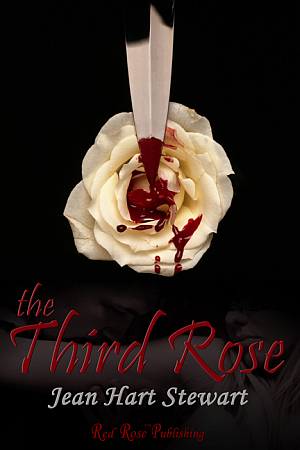
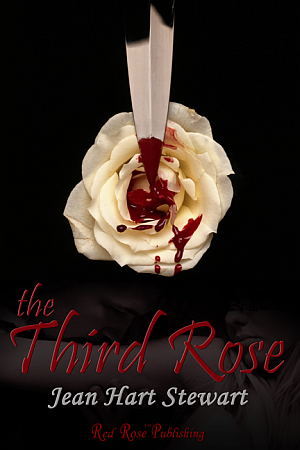
Another guest blogger today, Jean Hart Stewart, who makes a stop on her virtual book tour with an interesting musing on the quirks of history and a look at her historical romance, The Third Rose:  

 
Napoleon’s Hemorrhoids

I’ve been fascinated by a book of that name, written by Paul Mason. It’s packed with unusual and interesting bits of information. Its basic premise is that much of history was accidental, the result of a chance happening and luck. I can’t begin to tell you about all of them, but here are two. Although it’s a page turner of a book as he exposes a lot of myths. 
Now to the Napoleon story. Napoleon has long suffered from hemorrhoids and the day of last battle of Waterloo he was unable to mount his horse. His doctors accidentally overdosed him with laudanum, and it’s possible this is what caused the fatal delay of starting the battle. I write about this in The Third Rose so of course I loved this bit of historical gossip. It’s pretty well established that if Napoleon had begun the battle earlier Wellington would not have been able to join forces with Blucher and the battle would probably have been lost.
Another story that is a gripper. Marie Antoinette might have avoided execution if she hadn’t changed escape plans at the last minute. Louis IV had planned to leave alone in a small carriage and she would follow. Marie, however, insisted they travel together. They left at night, after she got lost in the Tuileries gardens and delayed the start by a half hour. A broken wheel on the larger carriage and the slower pace also delayed them, and so they were three hours late for the planned rendezvous with their armed guards. They were finally caught, only 25 miles from Belgium and safety.
What if? It seems from reading even snatches of this book you can’t help but wonder about the fate that rules us all.
As I say, I was enthralled. There’s a tidbit in the book about almost any famous man. If you have a favorite event of historical personage I’ll look it up for you.

Author Website:  http://www.jeanhartstewart.com/index2.htm

For the full schedule of Jean's tour stops:  http://goddessfishpromotions.blogspot.com/2010/04/virtual-book-tour-third-rose.html?zx=eb73ec2b8a6b4cf4


The Third Rose:

When Sara Coverly hides in Lord Wolverton’s bedroom to avenge him for the rape of her friend, she is determined to shoot him so he can never ruin another female. Instead she finds herself wondering if she’s picked the wrong man! Wolf decides he needs a token fiancée to cover his tracks as he searches for a spy, and soon Sara finds herself helping him. And falling deeply in love.


Wolf’s espionage duties bring danger to them both. When he
decodes a message threatening the assassination of Wellington at Waterloo, they both set out for Brussels to catch the villain.


Can their growing love endure through war, a desperate villain who is out to stop them, and Wolf’s determination to save Wellington at any cost?


Excerpt:

At last. The bastard had come home. He must have lit more candles, as the room became brighter. She could see a large man, elegantly dressed, stride across the room. Double drat! He moved out of her vision, and she did not dare part the draperies any further. She waited, breath suspended, as he re-appeared and sat on the bed. He arched one long muscled leg, bending over to tug at his boot. His face was in shadow, but his build was powerful, that of a more than adequate sportsman. His size didn’t worry her. A gun was a great equalizer.
He meant to take his boots off himself? She was surprised he didn’t require his valet to wait up for him. An unusual bit of consideration for a servant, one she’d not expected. She’d thought she’d have to stay hidden until the valet had come and gone. Perhaps this was better, since at least he was decently clothed. Not that she’d let any missish tendencies deter her. Actually seeing a large nude male might be educational.
Now was the time.
She cocked the gun and stepped out in front of him, the barrel pointed directly at him.
“You will please rise, my lord. I do not intend to shoot a seated villain.” She felt pride in the composure of her voice. She’d worried a little about that.
Wolverton did not appear unduly upset, although his eyebrows arched upward. He bent the long leg stretched on the bed and clasped both hands around his knee.
“A woman. How interesting. I admit you make a very fetching young man dressed in those breeches, but your voice is definitely female. Might I inquire why you have your gun pointed at me?”
She had to give him his due. His tone seemed as cool as hers, and she certainly must have been a nasty surprise. Although come to think of it, he probably often found women accosting him in his bedchamber. But surely for more pleasurable purposes, cad that he was.
“Stand up, my lord.”
Neither her voice nor the hand holding the gun on him wavered, as Joshua Sinclair, Earl of Wolverton, slowly placed both his boots on the luxurious Aubusson carpet and rose to his feet.
“Is there anything I can do for you, madam?” he inquired, as politely as if he were asking her if she took milk with her tea.
She shook her head slowly, carefully lowering the gun a trifle. What a shame he was such a handsome devil, but then she should have expected no less from a despoiler of virgins.
She was pleased to see him blanch a little as he realized where she aimed.
“Can I persuade you to raise your gun a little? I don’t mind being shot in the chest nearly as much as if you hit the most valued part of my anatomy.”

You can find The Third Rose at Red Rose Publishing.

Subscribe Now:

Search This Blog

Powered By Blogger

Monthly Pageviews