Showing posts with label Victorian. Show all posts

Sunday, 24 May 2020

Book Spotlight: Dark Divinations

Today I have for you a real treat with a spotlight for the new supernatural anthology, Dark Divinations recently released by HorrorAddicts.net Press. Enjoy.


Dark Divinations (edited by Naching T. Kassa)


It’s the height of Queen Victoria’s rule. Fog swirls in the gas-lit streets, while in the parlor, hands are linked. Pale and expectant faces gaze upon a woman, her eyes closed and shoulders slumped. The medium speaks, her tone hollow and inhuman. The séance has begun.

Can the reading of tea leaves influence the future? Can dreams keep a soldier from death in the Crimea? Can a pocket watch foretell a deadly family curse? From entrail reading and fortune-telling machines to prophetic spiders and voodoo spells, sometimes the future is better left unknown.

Choose your fate.
Choose your Dark Divination.


**********

An excerpt from Dark Divinations

The Moat House Cob

Alan Fisher
Tower of London, 1887


I had earned the position of Her Majesty’s Keeper of Wise Animals after a priest witnessed my unfortunate encounter with a foul-mouthed and heretical black goose along the Thames. He reported me to the Lawless Assizes which gave me a simple choice: burn at the stake for witchcraft or turn my talents to the service of the Queen. I, not unwisely, chose the latter. My crimes against the proper way of things would be held in abeyance until I died a natural death or the Assizes decided to end me in flames. The goose—not given such a chance—was burned, squawking out dire curses on all and sundry.
The wise animals were kept in a smallish room at the top of a corner battlement at the Tower of London, except for the Prophetory Raven, who had the run of the entire Tower, like the rest of his wing-clipped fellows. It was escorted to the room each morning by the Yeoman Warder Ravenmaster, where it would spend the day uselessly pecking grubs off a map of the Empire so I could note which grub it went after first. For the past five years, it had favored the flavor of the grubs inhabiting the vastness of the open Pacific, where little of note had happened, or would happen.
Useless, the Prophetory Raven. Useless, the Revelation Mice of Cambridge. Useless, the mad parrot that had once been owned by John Dee and only squawked Enochian riddles, a language I had sadly not been taught at Balliol. Useless, Her Majesty’s Keeper of Wise Animals, but still I walked up the dank stairs every day. Every day I recorded anything the wise animals might reveal and every day I fed them and slopped their shite out into the courtyard and every evening I fled back to my room at the base of the tower.
All in all, still better than being burned alive.
The wise animals were so considered because they had foretold the future, at least once. In most cases, only once. But they were collected, some of them having lived long beyond their years. Dee’s Parrot was in its third century, if indeed it was the same bird that had warned Queen Elizabeth of the coming Armada. The Prophetory Raven was at least two decades beyond the ordinary life of its fellows and was famed in a very small circle for screaming ceaselessly on two seperate days that madmen tried to shoot our Queen Victoria. It was otherwise silent. The six Revelation Mice, who got into ink whilst scurrying about the University Library of Cambridge and left in their tiny footprints an obituary for Prince Albert two weeks before his death, had never written anything again. I should know. I had to apply ink to the feet of the little bastards every evening before setting them loose on a large sheet of white paper. Every morning, I threw out the ink-smeared paper that had no more wisdom on it than the droppings they left.
But then there was the spider. The Moat House Cob was big as my splayed out hand and dark as pitch, except for orange lines crossing its back. Or abdomen, as a spider-fancier once told me it was called. Seemed as if every day the lines were different. It had been found with a witch around 1750. According to the tale, it crawled from her clothes as the flames took her and nearly escaped. An alert executioner trapped it in a goblet. Left in a box for examination, it wove the name of its captor’s son into its web overnight. That day, the boy died of a spider’s bite. The story got to the Lawless Assizes quickly enough and the Moat House Cob was one of the first wise animals brought to the Tower, preceded only by Dee’s Parrot and a stoat that could predict storms at sea but passed away in 1709.
The Moat House Cob was not useless. It was placed in a wide flat glass box, with a map of the world pasted against the back of it. It was my charge—as much as humoring the parrot and inking the feet of the mice—to record where it wove a web. It always wove one, every night, somewhere on the map. I took note of the location in the Ledger of Wise Animals, a series of tomes which went back to Dee’s Parrot first asking for a biscuit in Enochian. The majority of the time, the web’s location meant nothing. After making my notes, I would open the top of the cage—after I made sure the Cob was near the bottom and far from me, which it always was—and wipe away the web.


To read more of this story, and the other great tales, go to Amazon.com or order the special edition, signed copy with hand-painted tarot cards at HorrorAddicts.net


Wednesday, 29 November 2017

Interview With Historical/Steampunk Author Kyle Newton

Today I have an interview with author Kyle Newton who writes two of my favourite genres, steampunk and historical. Enjoy.


Interview With Kyle Newton


Why don’t you begin by sharing a little about yourself?

Greetings, my name is Kyle Newton. I grew up in a very small blue-collar town nestled in the heart of New Hampshire’s White Mountains. My mother bred my creativity by watching Star Trek and reading Tolkien, so it didn’t take long for my interest in writing sci-fi/fantasy to bud and blossom. I indie-published my own series, “The Penny Punkers Series,” as well as having been published in several magazines such as Bete Noire. My first book to hit #3 in steampunk was “Revolution’s Reign,” a novella that came as a short story challenge from my magnificent girlfriend. Now, I write novellas about historical fiction for teens and young adults.


How long have you been writing, and how many books have you published to date?

I have been writing most of my life if you include all the time I preferred writing poetry in school rather than doing math or science (Although still important, I just found myself lost in poetry). I’ve indie-published 3 soft-covered books and 6 ebooks. “The Penny Punker Series” take up the majority of my publishings, which is a fictitious steampunk universe I created. Then there’s “Revolution’s Reign”, which is a standalone historical fiction.


Of all the books you've written, do you have a favourite?


I’d have to say my current favorite is, “Revolution’s Reign.” Having to find that sweet balance of historical accuracy, peppered with fiction so the plot still makes sense, really helped push my limits and helped me grow as a writer.


Do you have a favourite character? If so, why?

For “Revolution’s Reign,” I’d say my favorite character is Annie Oakley. She might not show up until later in the story, but I find her time in it to be very unexpected and full of energy. I think I reflected on more of her determination and dedication than anything else for her character. And the fact I was able to find a place for her at all made me very happy.


Why did you decide to write in the steampunk genre?

I’ve always loved the Victorian era and found myself studying different aspects of it throughout my life. And I mean it, I even did a school report about the popular clothing and what they saw as “mainstream.” I guess my love for Tolkien’s fantasy world and my fascination for the Victorian lifestyle kind of fused together one day and thus, “Revolution’s Reign,” came to be.


What is the hardest part of writing historical fiction?

First, I want to say I absolutely LOVE writing historical fiction, but the same reason I obsess about it is the same reason it frustrates me. The amusement comes from having a “bare bones” story already laid out for you. It’s then up to you to decide how much escapism you want in your story. “Revolution’s Reign” definitely holds a lot of creative licensing, but then you can find the “Dear America” books and discover there’s very little fiction in them. I find these two are good comparisons for showing how wide the spectrum of historical fiction is. It’s that amount of freedom that really makes it fun for me, testing my balance of captivating creativity and historical accuracy.


What do you enjoy most about writing in the steampunk genre?

Similar to historical fiction, steampunk has a thin line of “must haves,” and the rest is really up to you. What makes steampunk so beautiful is that it doesn’t take much to establish its presence, it all depends on how you add it to your book that makes it a worthwhile genre. Like in “Revolution’s Reign,” I may reference larger economical changes to establish a different Victorian/colonial age, but their rifles and boats are the only distinct changes the reader really interacts with. I also love hearing from readers and getting opinions through reviews, that way, I can keep elevating my steampunk game for them. No matter what, I always add a flavor of steampunk to my writings, so reader input is crucial to me.


You write in several genres. Do you have a favourite? And if so, why?

Steampunk is easily my favorite. It’s always fun for me to add a wild west heroine, or an eloquent Victorian villain into the mix. I read a lot of historical fiction when I entered Junior High School and didn’t really stop since then. That’s what drew me to studying history, by learning how much of the book was made up and how much of it was real. My first two publications were for historical magazines, focusing on warfare. From there, I got published in Bete Noire’s magazine with my short story, “Wulver of the Highlands,” which was my first crack at historical fantasy. From there, I found adding steampunk elements to be a bit more interesting and more my style. Not long after that, “Revolution’s Reign,” was published. A month later, it hit #3 in its steampunk genre and #1 in Dieselpunk.


Who is your intended readership?

Since “Revolution’s Reign,”  I’m noticing more teenagers and young adults picking up my books. Which, I really enjoy. My interest in being a writer started around the sixth grade, but the small blue collar town I grew up in made flourishing artistically almost impossible. I hope my books can reach other teenagers to show them that if you have a passion and stick to it, you can get out and make a name for yourself.


What’s your next project? Any upcoming book secrets you care to reveal?


I recently got in touch with the Mount Washington Cog Railway in New Hampshire and got to write a mystery book for them involving the train station. It was a fascinating challenge because I’ve never written in this genre before. It proved to have its own story arc-issues I never anticipated due to the unfamiliar structure of building a mystery. It’ll be the first one out before Christmas. Around that time, I am going to have another colonial fiction novella out for my teen and YA readers. The last two years I’ve been trying to get my books published in between school semesters, that way students can have something to relax with around those initial days of new classes and the stress that comes with getting used to the schedule.


Thursday, 23 June 2016

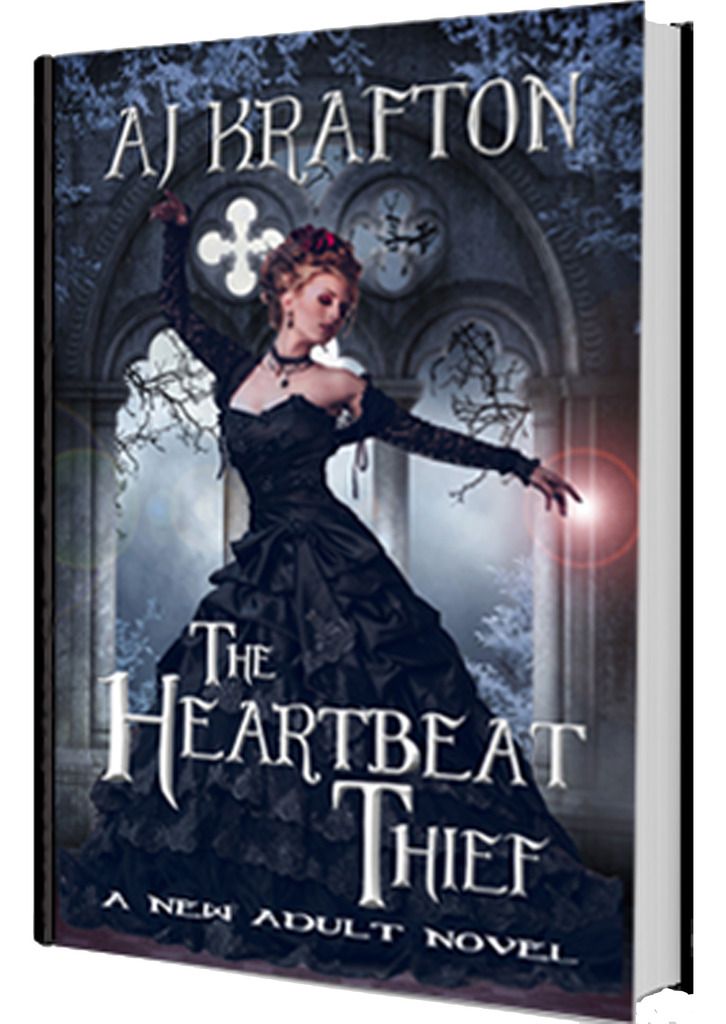
The Heartbeat Thief, A Victorian Birthday, And Mementos Mori

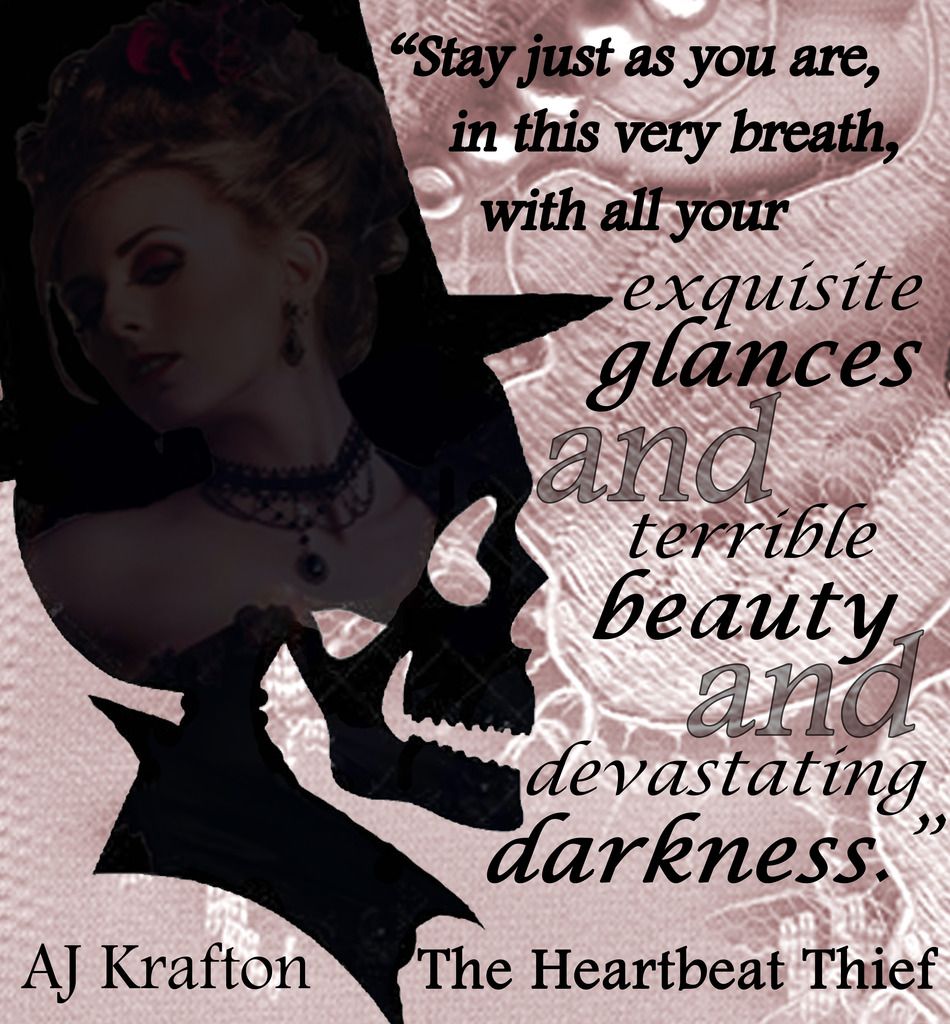
Today I bring you some morbid morsels from Victorian history with a guest post by Ash Krafton, and another look at her delightfully dark novel, The Heartbeat Thief (penned under A. J. Krafton). Enjoy my minions...


A Victorian Birthday and Mementos Mori


The Victorian Era is steeped in traditions. Anything that flew in the face of tradition was shunned, cursed, and outcast. Tradition provided vital foundation, the legs upon which society stood. 
Traditions embellished every moment in life. One such tradition was the celebration of birthdays. Considering this month marks the book birthday for THE HEARTBEAT THIEF, you might expect a post on birthdays. Right? Anecdotes about parties and pastries and pretty ribbons and…
…no. Just—no.
On one hand, THE HEARTBEAT THIEF *is* pretty on the outside, like a birthday party. Beautiful and beribboned and sweet as strawberries and cream. But what is a birthday if not all about victory over death? And, deep within, that is what Senza Fyne’s tale is all about.
She is, after all, the Forever Girl. Death’s Estranged. Endless. She stopped celebrating birthdays when she learned how to steal immortality. Eventually, there was only one day she marked each year: her Unbirthing Day.
So just think about all the lovely traditions she missed out on when it came to her death. The Victorians were morbidly fascinated with death and went to great lengths to mark the occasion.


Senza could not die. She denied her loved ones so many opportunities…
No one would stop the clocks or draw all the curtains, to dwell in sad, shadowy silence.
No one would post elegantly written funeral notes of invitation.
No one would stand watch over her body, every moment from death to interment (which could take three to four days to allow family to arrive).
No one would arrange flowers around her body to mask the signs of decay.
No final death portraits, with falsely life-like poses, cosmetically-created rosy cheeks, or painted pupils in propped-open eyes.


No hair trinkets. No one would trim her winter-fire red locks and weave the tresses into rings or bracelets or brooches to wear as mourning jewelry.
No one would wear mourning for her, deep black crinoline with heavy veils and dark jet jewels. Instead, those would be her own disguise, hiding the eternal freshness of her beautiful cheeks from her aging loved ones and she sneaked like a thief through the pages of time.
No drapes upon the mirrors to prevent them from enticing her soul to enter, only to become trapped for all of wretched eternity.
No black crape hung around the doorknobs to announce the tragedy of her passing, reminding callers to avoid ringing.
No elaborate funeral procession, aristocratic and stately, with plumes and pallbearers, a hearse trimmed in white to lament the passing of one so young.
No strings tied to her finger, connecting her to coffin bells above her grave. No dead-ringers, graveyard shifts, or being saved by the bell.


See what I meant when I said the Victorians were just a little on the morbid side? Bereavement, you see, was generally the order of the day, even when there was no one to bury, because life was fragile and brief and all too often lost in the blink of an eye.
Senza Fyne would not die. Mr. Knell had worked his dark spell on her and removed her from the march of time, placing her far beyond the decayed grasp of Death. Although the Ferryman would not come for her, she was forced to watch each and everyone around her succumb to the ravages of life’s bittersweet ending.
Shadows cluttered her heart, each and every day that she went forth, beautiful and young and free of what frightened her most. She could not die.
But in that, she very nearly forgot how to live.
You can read Senza Fyne’s dark tale and take that long walk with her. See what she sees, experience what she felt as she stood still, a statue in a fast-growing, fast-wilting, ever-changing garden.


This week until June 26th, THE HEARTBEAT THIEF ebook will be $0.99!

Find it at any of these retailers:


About the author: Ash Krafton
Ash Krafton writes New Adult speculative fiction under the pen name AJ Krafton. In addition to THE HEARTBEAT THIEF, Ash is also the author of a growing list of poetry, short stories, and urban fantasy novels.
Currently, she’s working on a new series, THE DEMON WHISPERER. First book, CHARM CITY, can be found on Wattpad.com where you can read it free. Find it here: CHARM CITY on Wattpad.com
Find more to love at www.ashkrafton.com


Follow Ash at:

Friday, 25 September 2015

Book Spotlight: Tears by Jean Lowe Carlson

Today I have a book spotlight for dark fantasy romance Tears by Jean Lowe Carlson. It is the second book in the Three Days of Oblenite series. If you'd like to check out the first book, see my spotlight here: Book Spotlight: Breath. Now on to today's post for Tears (be warned, there is some racy, suggestible content)...


Tears by Jean Lowe Carlson

Pious half-Gypsun Phillip d’Auvery is tortured. His soul is pledged to his god, but Phillip’s life has a darker aspect that drives him to the scourging lash of the Padrenne of Saint Sommes Cathedral year after year. For Phillip’s curse is a bliss that can only be found when pain smites him until tears are shed. His blissful curse alienates him until Phillip discovers a man who understands pain and power, the stern Oruthane d’Iver. As Phillip’s love for his dominant lover grows, the two are exposed, and danger begins to follow them. But there is no greater danger than the dark secret smoldering in Phillip’s heart, which will threaten everything dear to him.

Content Warning: This book contains intense BDSM with whips.


ABOUT THE SERIES - Three Days of Oblenite (3 novels)

This darkly romantic, gothic paranormal fantasy series is rife with superstition, piety, and the devious nature of the mystic. The three novels take place in a dark version of Victorian-era Paris, and feature three characters cursed with the gifts of a dead saint. Swept up in the torturous undercurrents of their desperate curses, their lives collide in desire, lust, power, obsession, addiction, fervor, desperation, and death. “Breath” features a young woman cursed to celibacy and unable to find love because her kiss kills, all except one night a year. “Tears” tells the story of a young man cursed to feel bliss when he is whipped, and the religious conflict he feels as he finds himself in a relationship with the man who brings him release. While in “Blood”, a brilliant surgeon cursed with blood that heals descends into a desperate underworld, addicted to working miracles. And in the seedy Gypsun Quarter at the edge of the Saints Commons, there is no blessing that can save those cursed to depravity, darkness, and permission. They can only save themselves.


Excerpt:


Phillip d’Auvery moved carefully back down the steps at the altar, nodding to a few faces he recognized who were yet waiting for the Padrenne, and then turned towards a door upon the left side of the cathedral. He made his way through and up the cramped stone staircase to the narrow wainscoted hall of the cathedral’s Holy Servants offices, and entered the first door upon the left without knocking. 

The gaslamps were low in the hall and flickered soft ghosts across the forest scene on the Padrenne’s carven door as Phillip entered. The Padrenne’s offices were tidy and plain, befitting a man of his station and devoutness, and Phillip selected his usual overstuffed chair across the desk from the Padrenne’s and sat, settling in to await Henri Coulis in quiet meditation.

Minutes stretched as Phillip prepared himself for the hours ahead, eyes closed, listening to the deep midnight hush of the cathedral. Whispering footsteps came and went upon the stone in the hall. The old scents of incense wafted upon his breath, not a new stick yet lit tonight, but the deep comforting smell of a tradition of char to push back evil. It calmed Phillip’s soul, laved him in a kind of alert ease as he waited.

At last, the iron latch of the door clicked, and the ancient wood groaned inwards, and Phillip heard the rustle of Padrenne Henri’s fine garments, the black robes and white stole used only for this particular day. He heard a sigh, and then the crack as Henri Coulis popped his own back. A rustle of the fabrics came as they were hung up properly in a cupboard to the right of the door. Phillip heard the creak of leather as the Padrenne took a seat in his usual high-backed chair behind the desk, and Phillip opened his eyes at last.

“Phillip.” Henri Coulis’ red-rimmed eyes were exhausted, but his thin lips held a benevolent and satisfied smile. “How may I help you tonight?”

“I would like to conclude my Pentriant in the old way, Padrenne.”

Henri nodded, his burnished grey-opal eyes unsurprised and shining with the pleasure of devotion despite the red that rimmed them. Phillip knew why those tired eyes shone now in that time-stretched face. The next few hours would be cleansing for them both. It was merely a formality between them, Phillip’s asking with such careful propriety, after so many years. Padrenne Henri knew that Phillip d’Auvery held to the old ways, like his mother had before him, one of very few who still did.

And he also knew why.

“Very well,” Henri smiled, just a slight twist of the lips. “Give me a moment to prepare. You may strip to the waist, remove your boots and socks, and anoint yourself at the basin in the prayer niche. Then please kneel upon the bare stones before the Immaculate, my son, and settle into silent meditation. I will attend you shortly.”

“Thank you, Padrenne.” Phillip inclined his head.

“As the Immaculate wills it, my son.”

Padrenne Henri made an offering gesture towards the prayer niche with his long parchment-thin hands, and Phillip rose, turning away from the desk and walking to the niche. He settled upon the plain wooden bench by the wall and removed his boots and socks, then hung up his grey wool coat upon the peg. His trim black waistcoat followed, then his loosened cravatte was folded up neatly and tucked into a pocket of the waistcoat. Once the cravatte was gone, Phillip stripped his black shirt off over his head rather than bothering to undo all the buttons. His lean muscles ached from the day, and Phillip’s abdomen seemed thin and hollowed from fasting. He adjusted his neck and shoulders again, rolling them out a little as he took his place upon his knees before the small statue of the Immaculate in the prayer niche.

The Immaculate’s pale marble arms were open and welcoming as Phillip knelt upon the familiar cold stone floor, the effigy’s face kind and slightly wistful. Phillip knew the contours of that face, knew why the effigy seemed both pleased and saddened to see him. Phillip’s knees protested what had already been today and what was yet coming with twin surges of pain, but he consummately ignored them, settling before the effigy. He leaned forward, dipping his hands into the silver bowl of water to the side, and rubbed the water over his face, hands, neck, chest, and through his short ruff of unruly black hair. Then he rested his forearms upon the stout wooden railing that housed the statue. Phillip clasped his hands and closed his eyes. He allowed his head to fall forward and his neck to relax, his forehead coming to rest upon the wood railing with his elbows.

Immaculate trust settled within Phillip d’Auvery, and a small thrill of fear mixed with anticipation as Phillip listened to the sounds of the Padrenne moving around the room, preparing. Phillip’s rose-beads were left around his neck, their miniscule weight comforting. With long, slow breaths, Phillip d’Auvery prepared for his final Cleansing of Pentriant, and urged every muscle in his body to loosen. He heard the Padrenne approach at last, and fought the urge to tense. Henri Coulis took up his usual place directly behind Phillip, the quiet step of his bare foot a whisper in the chamber as he took his ready stance.

A thrill passed through Phillip again.

“Are you prepared to come to the Immaculate, my son, and to be Cleansed of your sufferings at last, upon this Most Holy Day of Pentriant?”

Phillip swallowed, fighting the tension of anticipation, urging his body to be calm and loose. “I am, Padrenne. Cleanse me of my sufferings, and bring me to the Everlasting Joy, the Infinite Bliss of His Holy Soul. So Be It.”

“So Be It,” Padrenne Henri murmured.

The crack of the lash startled Phillip as it always did, as it curled over his bared back and snaked around his ribs. There was always a moment, the first moment, when his body responded to the sound, tightening with surprise, before the pain came.

But then it came.
A searing of pain, a bright line of misery, a flash of horror and anguish and then the surge, the blossoming of every dark touch and miserable need of Phillip d’Auvery’s flesh and his soul. Phillip gasped at the pain, all pretense of manhood abandoned. It devoured him, blistered him, dived within him and scourged him, knifing like hot fire through every part of his poor corpse and his everlasting soul.

He had a moment to breathe. The Immaculate gave him that small concession, at least.

And then the lash fell again.

Phillip screamed, the sound torn from his throat like the beasts howling in the night, like all the desperate sinners who cried and died in torment, whose pitiful pain mimicked his own. It sent him reeling. Their suffering abounded within him. Phillip breathed it in and keened it out. Every night of passion abandoned into misery, every mother aching for a child long gone, every curl of madness and anguish and every twisted, obliterated heart that cried out into their own endless Inferno.

And then the lash fell again.

Phillip d’Auvery broke with a sob, and began to weep.

Tears beaded upon his dark eyelashes and dripped down his hanging head to his nose, dropping upon the cold stone of the floor and striking upon the wood of the stout railing. And as they fell from his lashes, Phillip felt the Ecstasy of the Immaculate begin to flow through him like honeyed wine.

Tears streamed freely now, and the lash fell a fourth time. Phillip screamed, a short cry of surprise and pain and release, rocking forward upon his elbows at the railing, absorbing the agony, taking it all in, holding it close within his heart, transmuting it. Bliss filled him, eternity filled him, life itself filled him and he gasped from the pure pleasure of the Immaculate building within, scouring away his sufferings at last. Abandoning himself to its deep succor, Phillip shuddered with livid pain and infinite pleasure. He lifted his head, the breath of his Immaculate surging through every pore. Drinking it in, he opened his throat and cried out for the Great Mercy.

The lash fell a fifth and final time.

Phillip d’Auvery fell back upon his knees and bare ankles, his elbows falling from the wooden railing. His chest opened and his head fell back, baring his throat in surrender, his hands resting palm-open at his sides, fingertips trailing upon the cold stone of the floor.

Open to the Eternal Bliss, Phillip wept in silence.

Open to the Light and the Life and the Joy, Phillip wept in silence.

Broken open, his back streamed blood from the lash and his naked throat gasped. The pure ecstasy of the Immaculate dived down Phillip’s throat and in through his closed eyes. It penetrated his chest and thrust deep into his aching flesh. And as the tears streamed down his jaw to his neck, the world opened up suddenly in the flickering lamplight behind Phillip’s closed eyes. The ecstasy rolled out from his flesh in a burgeoning wave, saturating everything it touched. No longer contained within the poor corpse that was Phillip’s body, the Immaculate’s Own Touch expanded in every direction, blessing, commanding, unstoppable, undirected, blissful.

Phillip heard Padrenne Henri fall to his knees with a short cry. And then he felt the Padrenne’s benevolent hands upon his bare shoulders as Henri Coulis was taken by the Immaculate’s ecstasy also, this night like every other. The Padrenne sighed, wrapping his stringy arms around Phillip’s chest, cradling Phillip close and resting his gaunt cheek to Phillip’s forehead. Uncaring of the blood from Phillip’s scourged back, the Padrenne cradled his Holy Son, and Phillip felt the wet of Henri’s own tears upon his forehead like a blessing from the Immaculate himself.

So it was, with Phillip d’Auvery.

That his suffering, his pain and tears, brought himself and those around him so much bliss.


Tears is available at:


Author Bio:

Jean Lowe Carlson is a writer of dark supernatural romance and epic fantasy fiction, but her novels vary widely into dystopian fantasy and even into supernatural westerns with some erotic content. Jean writes genre-bending and genderqueer fantasy, mixing a keen and gritty blend of epic, romantic, erotic, dark, supernatural, and dystopian fantasy. Her sensual, raw worlds remind one of Jacqueline Carey, Clive Barker’s Imajica, Anne Rice, and Robin Hobb. Jean holds a doctorate in Naturopathic Medicine from Bastyr University in Seattle, and as a doctor, she has a keen awareness of psychology, energy, nature, and human behavior. She currently practices Esoteric Buddhism (tantra), yoga, Reiki, and Emotional Freedom Technique (EFT). Jean pulls from this knowledge to paint vivid and emotionally complex characters, set amidst the broader scope of nations in turmoil or societies with riveting secrets or supernatural elements. Not afraid of exploring all kinds of relationships, including LGBTQ and BDSM, her novels are exciting, passionate, challenging, and lush.

For more on the author and her books:


Friday, 13 June 2014

Full Moon On Friday 13th

Here's a short snippet of a horror story to honour the full moon rise tonight, on Friday the Thirteenth:


Full Moon On Friday 13th

An odd hush settled over a particular backstreet of London, the rolling fog dancing wisps around the windowsills of closed taverns and rooming houses, and diffusing the soft glow from the gas lamps. No local denizens wandered the darkness, no flesh peddlers or their customers, no drunken wretches, no thieves, nor pickpockets. Only the moonlight ventured a presence, as it shimmered on the empty streets damp with a coating of night dew.

The silence hung, like a body from the gallows, until just past midnight when muted footsteps broke the quiet. The echoing sound grew ever louder, and mingled with panting puffs of breath, flapping leather, and the faint click of metal, as if a watch had been pulled from a pocket. A shadow flitted along the cobblestones, and a curious scratching grated across battened shutters, leaving unfathomable gouges in its wake.

Behind these shutters, inside the locked taverns and homes, the citizenry huddled, teeth on edge, swallowing bile and fear. They waited out the night, prayed to see the sunrise, as this presence, this stalker, explored, tested, hunted. Which one would be chosen tonight, they knew not, but one person would fall, one person would end as prey.

When the hunter came, someone always died…


Monday, 29 April 2013

A Review of Mechanized Masterpieces: A Steampunk Anthology


My Book Review of  Mechanized Masterpieces: A Steampunk Anthology

~
First off I’d like to disclose I have a story in this anthology, and therefore I have a vested interested in this book. So take this review as enthusiastic endorsement for my fellow authors if you will (and perhaps a tiny bit of a shameless promotion).
~

I enjoyed reading the stories in Mechanized Masterpieces: A Steampunk Anthology. I found the book to be an entertaining, diverse gaze through the looking-glass of the steampunk world, filtered through classic literature.

The idea of Mechanized Masterpieces is a re-imaging of classic books by such authors as Charles Dickens, Mary Shelly or Charlotte Bronte, which shifts their worlds and characters into the 19th century strangeness that is steampunk. The stories in the book are clanging, banging, puffing prequels, sequels and reboots, rich in quality and captivation.

There are eight fascinating stories in the anthology, based on the books Jane Eyre, Sense and Sensibilities, David Copperfield, The Little Match Girl, The Phantom of the Opera, A Christmas Carol and Frankenstein. They are enchanting, sometimes steam-twisted tales to delight. I especially liked the story of Micawber and Copperfield, with its shades of Horatio Hornblower (albeit with dirigibles instead of sailing ships) and Tropic of Cancer, which had a dark, looming undertone of foreboding.

Even with my slightly biased opinion, I can recommend Mechanized Masterpieces: A Steampunk Anthology as a great read.

The Book is officially launched on Facebook tomorrow!  Come and join in the fun!

Mechanized Masterpieces: A Steampunk Anthology is available on Amazon (in paperback and for Kindle) and Barnes and Noble (for Nook).


Subscribe Now:

Search This Blog

Powered By Blogger

Monthly Pageviews