Another book spotlight today with the horror book, One of the Dead by Richard Farren Barber. Enjoy.
One of the Dead by Richard Farren Barber
Terror doesn't stumble and moan—it walks silently among us, cloaked in the guise of the overlooked.
Nick, burdened with the rare ability to see these dead predators for what they truly are, faces a nightmare when his girlfriend, Abby, becomes ensnared by their sinister intent.
These are not your typical undead.
They blend in, their appearances mirroring the forgotten faces of society,
making their predatory nature all the more chilling. A touch is all it takes
for them to latch onto their prey, draining life in a way that leaves the body
walking but the spirit doomed.
As Abby becomes the focus of such a being's obsession, Nick is drawn into a desperate struggle not just for her life, but for her very soul. Their fight for survival takes them from the deceptive safety of city streets to the foreboding quiet of a cemetery, where the boundary between the living and those claimed by the shadowy grasp of the dead becomes perilously thin.
One of The Dead weaves a tale not of a zombie apocalypse, but of a quiet invasion, a creeping horror that targets the heart. It's a story of love tested by unfathomable forces, of a battle against an enemy that never rests, never forgives, and never ceases its pursuit until you become one of its own.
Richard Farren Barber was born in Nottingham in July 1970. After studying in London he returned to the East Midlands. He lives with his wife and son and works as a manager for a local university.
He’s fairly confident people only read these bios to check the author isn’t a serial killer. (Spoiler alert: he’s not.)
He has over 80 short stories published, seven novellas: “The Power of Nothing”, “The Sleeping Dead”, “Odette”, “Perfect Darkness, Perfect Silence”, “Closer Still”, “All Hell.” , and “Twenty Years Dead.” His two novels are: “The Living and the Lost” and “The Screaming Dead” (Co-authored with Peter Mark May).
Another book spotlight today on Crystal Lake Entertainment's new anthology, Dark Tide 12: Hunted Highways, with novellas by Carver Pike, Lucas Mangum and Rowland Bercy Jr. Enjoy.
Dark Tide 12: Hunted Highways
Embark
on a journey into terror, where every mile is marked by suspense and horror.
These three horror novellas transform travel into a treacherous adventure where
the next stop could be your last.
B.I.R.D.S by Rowland Bercy Jr.: In
B.I.R.D.S, a 2023 reimagining of Hitchcock's classic, a group of friends
embarks on a cross-country trip, unwittingly stirring a vengeful avian
onslaught. Raquel, Robert, Karen, and David face chaos and carnage, learning
that appearances deceive and the price of their actions can be deadly. This
bone-chilling tale weaves a narrative of suspense and consequence in a world
where birds are not what they seem.
Dracula
and the Devil Walk Into a Bar by Lucas Mangum: After a
team of hunters raid their fortress, Dracula and Lucifer hit the road in search
of a new place to call home. They stop at a roadside bar in an unincorporated
locale to meet with a vampire named Mina. All three creatures of the night have
the potential for violence. And none of them can resist the call of bloodshed.
The people in this wood-paneled, neon-lit establishment are about to meet Hell
itself.
Road
Wrath by Carver Pike: For Melanie and her
friends, this fun-filled trip to tour their favorite college campus is about to
take a violent and macabre turn. If only they’d kept driving, if only they’d
stayed far away from that rest stop, if only they’d been more
polite when they encountered the creepy old couple. Now, it’s too late for
apologies. Road Wrath is coming.
Brace yourself for a ride into the
heart of darkness. Grab your copy of Hunted Highways now and
discover the chilling thrills that await at every turn!
Carver Pike is a three-time Splatterpunk Award-nominated
horror author. He hosts his own YouTube show called, First Chapter Freakshow,
where he reads other horror authors’ books and talks about the world of indie
horror publishing. Pike wields his virtual pen and slings ink onto the page
from his home in West Virginia where the people are friendly, the scenery is
gorgeous, and horror story inspiration is in every nook, cranny, and holler. As a Christian, a man of faith who writes some pretty
messed up stories, he wants to create some of the vilest creatures you’d ever
imagine, so you and he can slay them together.
Lucas Mangum is the author of nearly twenty books, spanning from splatterpunk and extreme horror to cosmic horror and dark fantasy. He lives in Central Texas with his family and their pet bearded dragon.
Rowland Bercy Jr. burst onto the writing scene just three years ago, and has quickly established himself as a talented storyteller. His novella Unbortion was met with both acclaim and controversy, earning him top honors at the 2020 American Fiction Awards and a finalist spot in the 2019 International Book Awards. Readers who seek to push their own boundaries while delving into the darker aspects of life will find his work exciting and rewarding. Rowland’s writing experience has been a rollercoaster ride of excitement and uncertainty, taking him on an adventure unlike any other. Throughout his journey, he encountered numerous talented authors and many devoted fans who have motivated and supported him every step of the way.
Another book spotlight today, on the occult horror book, Master of Rods and Strings by Jason Marc Harris. Enjoy.
Master of Rods and Strings by Jason Marc Harris
Jealous of the attention lavished upon the puppetry talents of his dear sister—and tormented by visions of her torture at the hands of the mysterious Uncle Pavan who recruited her for his arcane school—Elias is determined to learn the true nature of occult puppetry, no matter the hideous costs, in order to exact vengeance.
Jason Marc Harris teaches
creative writing, folklore, and literature, and is the Creative Writing
Coordinator at Texas A&M University in College Station, TX. He graduated
with a Ph.D. in English Literature from the University of Washington, and an MFA
in fiction from Bowling Green State University. Creative work in journals such
as Apex and Abyss, Arroyo Literary Review, Marvels and Tales,
Midwestern Gothic, Psychopomp Magazine, The Saturday Evening
Post, and Writing Texas. He's written two folklore books based on
fieldwork—The Troll Tale and Other Scary Stories and Laugh Without
Guilt (both collaborations with Birke Duncan)— and the critical book Folklore
and the Fantastic in Nineteenth Century British Fiction (Routledge). He’s
currently working on a sequel to Master of Rods and Strings (Crystal Lake Publishing, 2024). He’s also practicing the Dance
of Outside while traveling the Astral Plane, polishing up some short stories,
screenplays, and a novel, and contemplating sundry eldritch matters.
Today I bring you another spotlighted book, Deathly Fog by Adam Breckenridge, part of the Horror Bites series of books. Enjoy.
When Jacob and his brothers discover the ability to capture fog from the marsh behind their house, they bring it back with them. The fun game turns to danger as they realize perhaps something else accompanied them home. Is it too late to escape the Deathly Fog?
Because the marsh at the
edge of our property was forbidden to us, my brothers and I would take any
chance we could get to slip away from under our mother’s nose and go stand at
its edge. She had told us it was dangerous because so many things died there
and we knew it was true, despite how many plants and bugs we found there. Even
with all that life, the marsh was still where things went to die. My older
brother, Jacob, used to tell us that there were bodies buried everywhere in the
muck, going back hundreds of years.
“From back when it was Indians killing other
Indians,” he said. “Centuries of murder down there. If you pulled the bodies up
they’d look just like they’d been killed yesterday.”
We poked around a lot trying to find a human
body. We never did, but we found just about every kind of animal that we knew
lived on our property. Squirrels, rabbits, frogs, snakes, and birds, all
mummified in a terrible imitation of life.
And then there was the fog, always so thick
you could never see more than a few feet in front of you. It didn’t matter when
you went. No matter how sunny the day was, as soon as you passed into the
marsh, the world became murky and dark. That’s why we only ever stood on its
edge. We were pretty sure if you went in, the fog would eat you whole. It could
certainly move in ways that seemed unnatural for fog. Sometimes I was convinced
it had teeth, but we were always safe as long as the air to our backs was
clear.
When we weren’t there looking for dead bodies,
we’d try to catch the fog in our hands instead. That’s how thick it was. You
could actually cup it in your hands and hold it there. It was like holding a
ghost. You could feel all that death from the marsh in it chilling your skin.
It became a game for us to see who could hold their fistful of fog the longest,
and then the game became running toward the house while trying to enclose it,
which further evolved into a determination to try to get into the house while
still cupping the fog in your hands. We never made it anywhere near the house.
The fog was too slippery for the task, dribbling out between our fingers as we
ran.
But then Jacob figured out a way to blow on the
fog that would make it spin into a globe. He’d stay down there at the marsh’s
edge for hours, practicing rolling the fog in his hands with his breath, trying
to keep it going for as long as he could. It always bored the hell out of me
and our younger brother, Mattie. Neither one of us could do it. We just didn’t
have the breath for it, but we never wanted to leave him alone while he
practiced because that’s how bodies go missing in the marsh. You never knew
what was hiding in the fog just out of view. So, we’d stay and watch, keeping
an eye on the fog for him in case one of those dead Indians rose from his grave
and came after us with his tomahawk.
“Okay, I’m ready,” Jacob said one day after
practicing for awhile. He scooped a fresh batch of fog in his hands and then
started running for the house, keeping it spinning with each exhalation like it
was the world in his grasp.
We ran after him, not getting too close in case
we tripped him up. I could see bits of the fog slipping away, but he was
keeping a lot of it in his hands, blowing and running at the same time.
Mattie rushed ahead to open the front door for
him and then he was through, still a few wisps clutched in his hands. In the
atrium, he stopped blowing and we watched the fog dissipate above us.
It should have been a cause for celebration—we
had finally pulled off the impossible task—but a somber mood struck us. The
marsh was a place of death, not fit for any house, let alone our house, and we
had brought some of its morbid air into it. The decay had diffused and we could
never get it back. My brothers and I breathed gingerly for a long while
afterwards, feeling the stink of death in our lungs everywhere we went in the
house.
The fog sat long in our minds so that even as we
aged and shed our childish beliefs, the specter of death never stopped hanging
over the house. Our house was a place of life, not just with our family coming
in and out of it and all the pets and plants we had, but also the spiders,
rats, and mold in the basement. Even the furniture, which was old and made of
wood, had a certain life to them. There wasn’t a corner of the house that
didn’t have something breathing in it, but since we unleashed the fog, the
house was just as much a place of death as the marsh was.
Jacob was more adamant than any of us in trying
to dismiss the weight of our superstition, but I could tell it bothered him as
much as it did the rest of us.
Adam Brekenridge is a traveling professor for the US military who goes around the world teaching US soldiers stationed overseas. He has eighteen short story publications and most recently his work has appeared in Visions Magazine, Mystery Weekly, and Clockwork, Curses and Coal from Worldweaver Press. He's currently based in Seoul.
When he
met Alice, he wasn’t prepared to go down the rabbit hole. His love for her
pushes him into the uncomfortable realization she might be mad. He wants to
keep her safe, but what if that’s not what Alice wants?
You’ve been invited to a very special night of Campfire
Tales, hosted by HorrorAddicts.net. Meet us at Old Bear Creek, just past Dead
Man’s Curve. Dress warm. We’ll be waiting.
Four
scary tales told by Next Great Horror Writer finalists and woven together by a
trek through the woods you’ll never forget.
HorrorAddicts.net is proud to present our top 14 contestants in the Next Great Horror
Writer Contest. The stories, scripts, and poems are the result of the hard work
and dedication these fine writers put forth to win a book contract. We hope you
enjoy the writing as much as we did.
BLACK METAL LIVES! When Ingrid and her mother move into a home in the
deep frostbitten woods of Norway, they are haunted by extreme metal musician,
Skansi Oppegård. Hoping to exorcise Skansi’s ghost, she talks her mom into
being part of a metal band. Oppegård’s last musical creation awakens forces
beyond Ingrid’s understanding and causes Skansi’s murderer to resurface. In the
battle between a madman and zombies, metal may be the only weapon she has.
Today I have an interview with horror author John C Adams who stops by to discuss writing and his book, Blackacre Rising. Enjoy.
Interview with John C Adams
Why don’t you begin by sharing a little about
yourself.
I am a nonbinary author and critic of
horror and fantasy fiction. I review for the Horror Tree, the British Fantasy
Society and Schlock! Webzine.
I started writing way back in 2006. It was
an escape for me at a time when I faced very heavy domestic responsibilities
raising a young family and looking after a severely disabled relative. It gave
me a little space just for me. I had my first short story published in 2010.
Since then, I've taken my time in learning
how to craft fiction because I just don't think it is something that can be
hurried. This has included studying for a Postgraduate Certificate in Creative
Writing, but perhaps my most important lessons have been learnt practically via
submissions reading for the Aeon Award, having my short fiction published in
various small magazines and anthologies and of course reviewing.
Being a writer is something I really love
doing. Before that I was a lawyer, which I don't think suited me at all. In
hindsight, it was far too serious a career for someone so recklessly
irresponsible as me.
Could you tell us a bit about your latest book?
It's called ''Blackacre Rising' and it is
the sequel to my dystopian novel 'Souls for the Master'. This novel, however,
has more of a straight-up horror feel mixed with just a little bit of dark
fantasy. I hope to make it a trilogy, but it is very important to me that each
story is completely stand-alone. I get asked to review many books that are
midway into a series. Sadly, comparatively few are intelligible to the new reader.
What do you enjoy most about writing in the horror genre?
My horror writing is inspired by the people
and places of rural Northumbria. That's where our family has been lucky enough
to make our home since 2003. It is such a beautiful county and something of a
hidden gem. My favourite thing about it is that nothing is too odd or sinister
to be at home round here, and I just love including this in my short stories
and longer fiction within the fictional Blackacre universe. It's deliciously
bizarre in this area, and even after almost two decades here I am constantly
struck by many of the things I see and hear going on.
I'm really lucky to have so much inspiration
on my doorstep and that so little alteration of reality is required to turn it
into liminal horror. I love this subgenre because it can be so strange and
unexpected that it often borders on the humorous, and I do enjoy writing comedy
occasionally.
Did anything surprise you about the process of writing
your book?
I've been amazed by how easily the existing
characters from my short fiction fitted in alongside characters I'd invented
specifically for 'Souls for the Master'.
Ivy, Gerald and Don formed the backbone of
the plot in 'Souls for the Master' and they all feature centrally in 'Blackacre
Rising' as their stories continue. However, I decided to make the northern
farmhouse Blackacre a new location for this novel. The Flints of Blackacre have
featured in many of my horror short stories in the past five years including in
my starter anthology 'The Red Dawn and Other Stories' which is available on
Smashwords.
I was apprehensive about how to blend the
existing characters from full-length fiction with those from my short stories,
but courtesy of a cross-over character Gerald Flint it turned out to be much
more natural than I had expected. That was probably what I enjoyed most about
writing 'Blackacre Rising'.
Can you tell us about your writing process? Where do
your ideas originate? Do you have a certain writing routine?
The main technique I use as part of my
writing process is lucid dreaming. Basically, I let the images and thoughts of
characters, plot, and even dialogue just roll around my mind without trying to
write any of it down. I have developed all my novels this way, and it has never
let me down. I have never experienced writer's block, and I absolutely credit
lucid dreaming with being the reason why.
It's not for everyone, and many authors
would run screaming for the hills at this style of approach, but it really
works for me, you know?
My horror novels are grounded in the lives
I observe here, and my fantasy novels are based within the LGBT community,
which I belong to because I am nonbinary.
I have to fit writing in around family life
and caring responsibilities, but both activities are quite routine-oriented, so
I usually have quite a structured day in terms of when I'll write and what I
hope to achieve in the time available to me. Lots of authors fit in writing
around working, so I'm not alone in wanting to make the best of the hours left
when everything else is taken care of.
What is your greatest challenge as a writer?
Fitting it all in. I love my reviewing work
and writing articles for blogs such as Horror Addicts. But there's no greater
pleasure than writing fiction. Also, I work in both fantasy and horror genres
so the background reading for each (fantasy especially) is considerable.
Luckily, I have more and more time free to
do all of this, and I count myself very fortunate to be in that position. I'm
still caring full time for a severely disabled relative within our home
environment, and that is very hard work, but my daughter is in Sixth Form and
will be applying for university next year. My son's got kids of his own. So,
suddenly, after years of running around feeling frazzled, I actually do have
some time for myself and that means lots and lots of time for writing. Feels
good.
What advice would you give beginning writers?
I'm often asked this, not because I have
any great wisdom to share on this or on any other topic, but simply because as
I head towards 50 at breakneck speed people seem to think I might have
something sensible to say. I think the grey hairs are to blame for that.
In fact, the best advice I can give is to
read widely and to do so as actively and critically as possible. With that in
mind, I'm going to go ahead and suggesting posting reviews as a great way to
learn the craft of writing fiction. It's never been easier to share reviews on
platforms such as Goodreads or Smashwords. There are so many blogs open to
recruiting book reviewers that you might soon find a home for your thoughts and
find that it also helps promote your writing. That's been my experience, and it
has been incredibly empowering.
What do you like to do when you're not writing? Any
hobbies?
Not really sure this counts as a hobby, but
most of my free time is taken up conducting the ultimate long-distance
relationship with my boyfriend in Pennsylvania. He's about to come for a
six-month visit to live with me here in the UK while he works on the rewrite of
his current fictional work in progress, and I'm honestly going to say I won't
be missing that five-hour time difference in the slightest...
What’s your next project? Any upcoming book secrets
you care to reveal?
I'm currently just over halfway through the first draft of my next fantasy novel, which is about a lost princess in a
universe inspired by Medieval Russia. It really picks up on the whole folk-tale
feel, and I'm just loving being immersed in them as I form characters, plot and
location.
It is a multi-stranded novel, as both of my
earlier fantasy works 'Aspatria' and 'Dagmar of the Northlands' have been, and
it features some old favourites like Gortah van Murkar and his wife Dextra of
Aspatria, as well as including lots of new characters.
It's been a very personal experience for me
because I'm nonbinary and this work in progress is the first time I've included
a transgender character. Gortah is bisexual and Dagmar is same-sex orientated,
so it's far from the first time that I've written about characters from the
LGBT community, however this character feels just a little bit closer to home
and that has been surprising moving.
Today we have the first of a two part interview with author C S Alleyne and her character Johnson Nottidge. Today's interview is with the author as she joins us to discuss her paranormal horror novel, Belle Vue, and her writing. And tune in tomorrow when Richard Dale puts her antagonist Johnson Nottidge on the hot seat. Enjoy!
Why
don’t you begin by sharing a little about yourself.
My name is Cheryl Alleyne. I grew up in
Australia and originally trained as a hotel manager in the UK. After several
postings in the Caribbean, I changed tack and completed my MBA followed several
years later by a PhD in Information Systems. When not writing, I am a management
consultant and also lecture in several universities.
Could you tell us a bit about your
latest book?
My debut novel, Belle Vue, is a paranormal
horror which is told in two strands – past and present – around a Victorian
lunatic asylum and the people who live there. It is very dark and focuses on an
unspeakable crime, the hunger for justice and how when revenge is paramount,
innocence doesn’t count. It will be published on 25th August 2020 by
Crystal Lake Publishing.
Do you have a favourite character? If
so, why?
I always have a preference for ‘baddies’ and
there are numerous in Belle Vue but my favourite (and goodness knows what this
says about me lol!) is the aristocrat, Johnson Nottidge. He is completely
amoral, a cunning schemer and cares not a jot for anyone or anything but his
own pleasure.
Why did you write this book? What was
your inspiration?
Although I was always jotting down ideas
for stories, I never got round to completing anything but then that
unexpectedly changed. I
used to go past a derelict asylum on my way to the gym. It was then converted
into luxury flats and some time later, I found a book in the library about
murders in Hertfordshire (the county in which I live). In it, there was a case
about a girl in that asylum who was murdered. That story, and my connection to
the location, captured my attention in a way nothing had done before. So from
having years of half-finished stories and yellowing notes, I wrote every
spare minute I could get and didn’t stop until Belle Vue was complete.
What did you enjoy most about writing
your book?
To create characters. For me, that is a fascinating process as you can choose every aspect of their lives and
appearance and with but a few words change their fate. What I didn’t expect was
that – for me - the characters became so strong that it was as though they were
directing their actions and speech on the page, not my imagination!
Did anything surprise you about the
process of writing your book?
Yes - that I could write so much! When I
first started and had the idea about a murder in the asylum in Victorian times
and it being converted to luxury flats in the present day, I didn’t really
think I’d be able to write much and wondered if it might be a short story as it
was unlikely I could find enough to write for a novel. I sure got that wrong!
The soon-to-be-published book is half the size of my first complete draft.
I joined a writers’ circle and many there
who had had books published said they had written lots of novels before getting
published (now in bottom drawers) so each was a form of practice and developing
their writing skills. I did it the other way round and used the same book to do
this!I pruned it and rewrote it
numerous times instead (using advice from a lot of rejection letters!). Then my
wonderful agent, Italia Gandolfo saw its potential (or I caught her at a weak
moment lol) and we did more pruning and editing before it was accepted by
Crystal Lake Publishing.
How do you research your books?
I love all the research and given I didn’t
know much about the history of asylums, murder and punishment in Victorian
times and satanic societies, I had much to get my teeth into. The present day
required a different type of research and as I was local I was able to visit
old asylum grounds – not just the Leavesden one but also others in the area
such as Colney Hatch and others that had also been converted into luxury
accommodation. I also posed as a potential buyer to view the inside of the main
building and one of the luxury Leavesden apartments but the buyer who knew my
husband (at the time), recognized me and wanted to know all about our moving plans!
Oops.
What
advice would you give beginning writers?
If you love to write or have a story you
want to tell, then - as long as you are enjoying yourself - keep at it. Hone
your craft – be open to ideas and feedback and whether you want to be published
or not – take pride in your creation. If you can translate that pride and
excitement about your work to the page – you’re halfway there! If you do want
to be published, you may get (lots of) rejections but believe in yourself, keep
honing and never give up.
Are you working on another book?
Yes, Belle Vue is now planned to be the first of a trilogy. I am in the middle
of writing the sequel – Secret Nemesis is the working title - and in it, the
main characters from both the Victorian and present day move to the United
States and face a cross-fire of evil and danger.
About the Author
C S Alleyne grew up in Australia and originally trained as a hotel manager in the UK. After several postings in the Caribbean, she changed tack and completed her MBA followed several years later by a PhD in Information Systems. She is a management consultant and also lectures in several universities.
Her dark horror novelette, POWEЯ, was published in December 2019.
Jealousy, betrayal, murder and a hunger for vengeance that spans the centuries…
History student Alex Palmer is thrilled when his girlfriend, Claire Ryan, buys an apartment in Belle Vue Manor, formerly a Victorian lunatic asylum.
But as Alex begins to discover the dark truth about the asylum’s past, he, Claire, and their friend Marianne find themselves on a nightmarish journey. Each will face the deadly consequences of the evil that began with the construction of the first Belle Vue Manor by an aristocratic French émigré in 1789, as well as the cruelty and satanic practices that continued when it became an asylum for the insane.
As the two strands—past and present—unfold, Alex uncovers a supernatural mystery where revenge is paramount and innocence irrelevant—without being aware of the price he, and those around him, will pay.
Today I have a book spotlight for you, on the psychic thriller/horror novel, The Seven Experiments by Stephen Kanicki. Enjoy.
The Seven Experiments by Stephen Kanicki
Doctor Gary Miller learns to manifest his heart’s desires through seven, easy experiments; his world will soon come crashing down.
Doctor Gary Miller is introduced to the world of self-help in the form of seven experiments. Each experiment is designed to focus Dr. Miller's mind, so he can realize his dreams through the power of thought alone: conceive it, believe it, and achieve it. He's dubious at first, but frustrations at work and a loveless marriage lead him down the rabbit hole. Much to his surprise, the experiments work. In fact, they work unbelievably well, and he soon discovers they can lead beyond the acquisition of material wealth. They can make him immortal, and God-like. However, Dr. Miller will learn getting what you want isn't always a good thing. In fact, it can be quite maddening. Just be careful what you ask for.
Stephen Kanicki enjoys thought-provoking, reality-based science fiction. His novel, The Seven Experiments, explores religious, spiritual and metaphysical themes woven into an imaginative and frightening narrative. Kanicki is a father, a teacher, and an award-winning photographer. When he's not writing, he likes to run and if his aging body can stand it, he would love to complete his third marathon.
Alan M. Clark’s Jack the Ripper Victims Series is comprised of five novels, one for each of the canonical victims of the murderer. These stories are not only meant to appeal to those interested in the horror that was the Autumn of Terror, but also those interested in the struggles of women in the 19th century. They are well-researched, fictional dramatic stories meant to help readers walk in the shoes of the victims and give a sense of the world as each of the women may have experienced it. The timelines for the stories run mostly concurrently, so it doesn’t matter in what order the books in the series are read. They are simultaneously drama, mystery, thriller, historical fiction, and horror. They are novels concerning horror that happened.
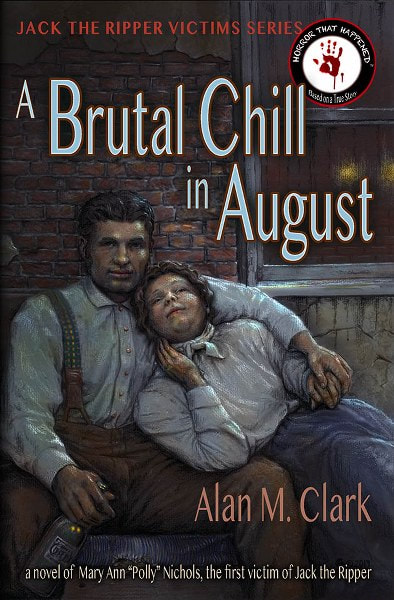
A Brutal Chill in August
The First Victim of Jack the Ripper
by Alan M. Clark
Genre: Crime Horror
Publisher: IFD Publishing
Publication Date: December 7, 2019
We all know about Jack the Ripper, the serial murderer who terrorized Whitechapel and confounded police in 1888, but how much do we really know about his victims?
Pursued by one demon into the clutches of another, the ordinary life of Mary Ann "Polly" Nichols is made extraordinary by horrible, inhuman circumstance. Jack the Ripper's first victim comes to life in this sensitive and intimate fictionalized portrait, from humble beginnings, to building a family with an abusive husband, her escape into poverty and the workhouse, alcoholism, and finally abandoned on the streets of London where the Whitechapel Murderer found her.
With A Brutal Chill in August, Alan M. Clark gives readers an uncompromising and terrifying look at the nearly forgotten human story behind one of the most sensational crimes in history. This is horror that happened.
This novel is part of the Jack the Ripper Victims Series. Each novel in the series is a stand-alone story.
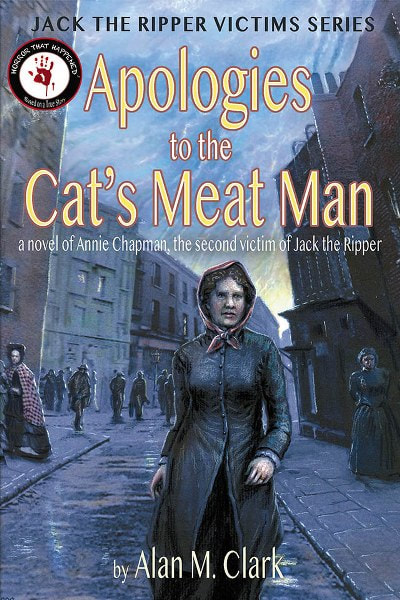
Annie Chapman led a hard, lower class life in filthy 19th century London. Late in life, circumstances and and her choices led her to earn her crust by solicitation. After a bruising brawl with another woman over money and a man, she lost her lodgings and found herself sleeping rough. That dangerous turn of events delivered her into the hands of London's most notorious serial killer, Jack the Ripper.
Contrasting her last week alive with the experiences of her earlier life, the author helps readers understand how she might have made the decisions that put her in the wrong place at the wrong time
This novel is part of the Jack the Ripper Victims Series. Each novel in the series is a stand-alone story.
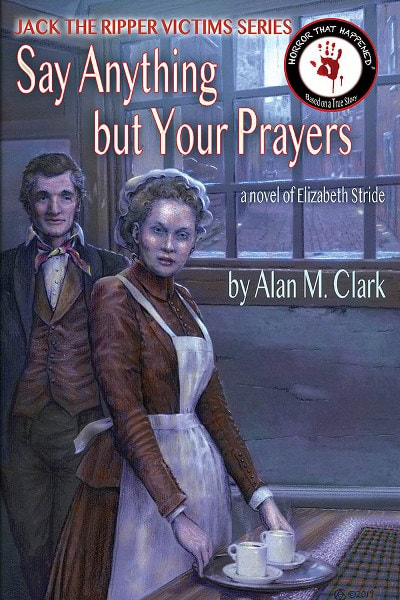
An imaginative reconstruction of the life of Elizabeth Stride, the third victim of Jack the Ripper. The beast of poverty and disease had stalked Elizabeth all her life, waiting for the right moment to take her down. To survive, she listened to the two extremes within herself--Bess, the innocent child of hope, and Liza, the cynical, hardbitten opportunist. While Bess paints rosy pictures of what lies ahead and Liza warns of dangers everywhere, the beast, in the guise of a man offering something better, circles ever closer.
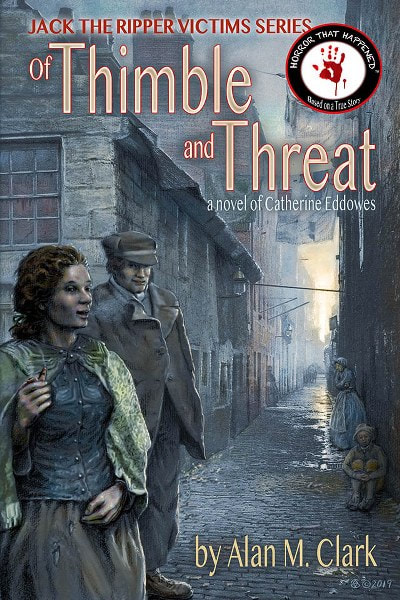
In Victorian London, the greatest city of the richest country in the world, the industrial revolution has created a world of decadence and prosperity, but also one of unimaginable squalor and suffering. Filth, decay, danger, sorrow, and death are ever-present in the streets. Catherine Eddowes is found murdered gruesomely in the city's East End. When the police make their report, the only indicators of her life are the possessions carried on her person, likely everything she owned in the world. In Of Thimble and Threat, Alan M. Clark tells the heartbreaking story of Catherine Eddowes, the fourth victim of Jack the Ripper, explaining the origin and acquisition of the items found with her at the time of her death, chronicling her life from childhood to adulthood, motherhood, her descent into alcoholism, and finally her death. Of Thimble and Threat is a story of the intense love between a mother and a child, a story of poverty and loss, fierce independence, and unconquerable will. It is the devastating portrayal of a self-perpetuated descent into Hell, a lucid view into the darkest parts of the human heart.
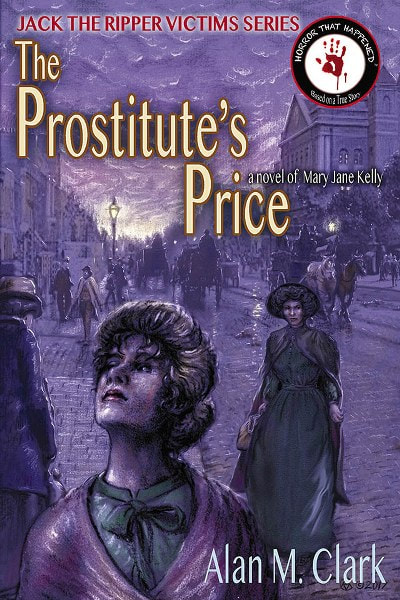
A novel that beats back our assumptions about the time of Jack the Ripper. Not the grim story of an unfortunate drunken prostitute killed before her time, but one of a young woman alive with all the emotional complexity of women today. Running from a man wanting her to pay for her crimes against his brother, Mary Jane Kelly must recover a valuable hidden necklace and sell it to gain the funds to leave London and start over elsewhere. Driven by powerful, if at times conflicting emotion, she runs the dystopian labyrinth of the East End, and tries to sneak past the deadly menace that bars her exit.
Although THE PROSTITUTE'S PRICE is a standalone tale, and part of the Jack the Ripper Victims Series, it is also a companion story to the novel, THE ASSASSIN'S COIN, by John Linwood Grant. The gain a broader experience of each novel, read both.
On November 5, Mary Jane and Joseph sat together, having a meal at the Cock’s Crow Tavern in Mile End Road.
“Our efforts will clear the way for a theft at the Deptford Victualing Yard,” Joseph said, pushing his plate away and finishing off his glass of ale, “the ordinary-looking cove I told you about is the client. I don’t have his name to give you. On the night of the theft, there will be two night rounders, Sims Overton and Roy Nagel, who stand in our client’s way.”
Mary Jane repeated their names to better fix them in her memory. She took another a bite of her rump steak pudding.
“Though they are Government employed,” he said, “as are the stevedores, much like lumpers, they are organized at a local pub. Their master works out of the Evelyn Arms just across Grove Street from the entrance to the Deptford Victualing Yard. They are required to eat and drink at the pub before their shifts. Often they spend breaks there as well. Their shifts are twelve hours long, eight o’clock at night ’til eight o’clock in the morning. They take breaks around midnight, one at a time for fifteen minutes. On Saturday nights, during his midnight break at about a quarter to twelve, Overton goes to the Evelyn Arms, hires a Judy and takes her back to the south gatehouse. The small building is part of the gated entrance to the yard, and has a back door, so she can slip out should anyone come. The hire is prearranged, so you’ll have to attract his attention in the week before, then be available that Saturday night, November 20. Overton and Nagel each take a turn with the woman, one having his way with her while the other stays outside to act as crow, ready to signal should someone approach the gatehouse.”
“They’re helping us without knowing,” Mary Jane said with a smile. Though she had little enthusiasm for the job, she wanted Joseph to see her willingness. She had agreed to help because of the money offered, ten pounds, and because both Joseph and Thomas were important to her.
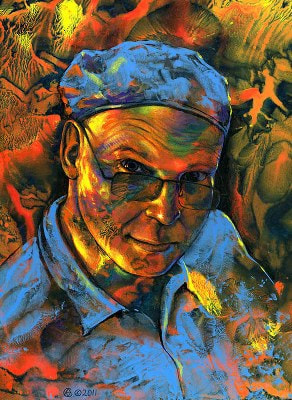
Author and illustrator, Alan M. Clark grew up in Tennessee in a house full of bones and old medical books. His awards include the World Fantasy Award and four Chesley Awards. He is the author of seventeen books, including twelve novels, a couple of novellas, four collections of fiction, some of them lavishly illustrated, and a nonfiction full-color book of his artwork. Mr. Clark's company, IFD Publishing, has released 42 titles of various editions, including traditional books, both paperback and hardcover, audio books, and ebooks by such authors as F. Paul Wilson, Elizabeth Engstrom, and Jeremy Robert Johnson. Alan M. Clark and his wife, Melody, live in Oregon. www.alanmclark.com Visit his blog: https://ifdpublishing.com/blog


.jpg)